
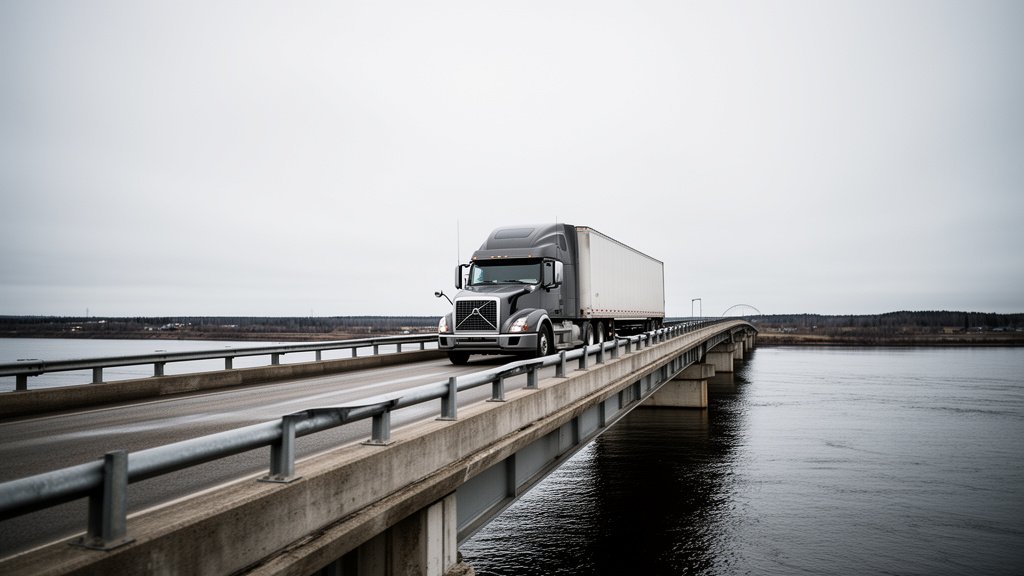
International Falls, Minnesota, and Fort Frances, Ontario, have long existed as two halves of a single economic ecosystem, separated only by the rushing waters of the Rainy River and a bridge that serves as a vital artery for daily life. As trade protectionism re-emerges in Washington and Ottawa, the communities that straddle this international boundary are bracing for the fallout. For these towns, tariffs are not merely abstract figures discussed in policy journals; they represent immediate, tangible threats to forestry jobs, the price of consumer goods, and the cross-border retail trade that sustains local businesses. The potential for a renewed cycle of retaliatory measures has transformed the quiet intimacy of this border region into a frontline of North American trade anxiety.
The Economic Lifeline Across the Border
Historically, the relationship between International Falls and Fort Frances has been defined by the paper and pulp industry. For decades, the economies of these towns were anchored by large-scale forestry operations—specifically the mills that relied on timber sourced from both sides of the border. While the industrial landscape has shifted, the fundamental interdependence remains. According to the U.S. Chamber of Commerce, Canada remains the top export destination for 36 U.S. states, and the seamless flow of goods through crossings like the International Falls–Fort Frances International Bridge is essential for maintaining supply chain integrity.
When trade policies fluctuate, the local impact is amplified by the town’s small population and specialized economy. A significant portion of the workforce in International Falls commutes from Fort Frances, or relies on services provided by businesses located on the opposite shore. Any policy that limits border fluidity or increases costs through tariffs disrupts not just corporate balance sheets, but the personal income of residents who navigate two tax codes and two regulatory environments daily. The threat of a universal baseline tariff, as proposed by the Trump administration, creates a climate of unpredictability that deters capital investment in a region already struggling with the long-term decline of traditional manufacturing.
The Tariff Threat: Forestry and Manufacturing
The core concern for local leaders is the vulnerability of the lumber and wood product industries. In past trade disputes—most notably the ongoing saga of the United States-Mexico-Canada Agreement (USMCA) and prior softwood lumber disputes—the forestry sector has been used as a lever for political pressure. If the U.S. imposes steep tariffs on Canadian imports, Canada has historically responded with retaliatory duties on specific American goods, often chosen for their political impact in key swing states. For the Rainy River region, this creates a ‘double-squeeze.’
Local timber haulers and manufacturers are caught in a cross-fire where the cost of raw materials could skyrocket while the demand for finished products plunges due to retaliatory pricing. Analysts have noted that for businesses operating in border towns, there is little buffer to absorb these sudden shifts. Unlike massive corporations with diversified global supply chains, the enterprises in International Falls and Fort Frances have specific, localized logistical paths. Replacing a supplier or a customer on the other side of the river is not a matter of logistics; it is a matter of economic survival. The uncertainty is already impacting mid-term planning, with local business owners reporting hesitation regarding equipment upgrades and hiring initiatives.
Supply Chains in the Crossfire
Beyond the forestry sector, the retail and tourism economy faces distinct risks. The ‘loonie-to-dollar’ exchange rate, already a factor in cross-border shopping, becomes highly volatile during trade wars. When the U.S. dollar strengthens or trade barriers increase, the flow of Canadian consumers—who frequent International Falls for groceries, gasoline, and medical services—slows considerably. Conversely, if Canada implements reciprocal tariffs on U.S. manufactured goods, the cost of living for residents in Fort Frances rises, reducing discretionary spending that supports the wider region.
Furthermore, the complexity of compliance under new tariff regimes creates administrative burdens for small logistics and transport companies based in the region. If businesses must navigate a shifting landscape of tariffs, the paperwork alone can act as a non-tariff barrier. Small-scale shippers, who move everything from specialized machine parts to agricultural produce, are not equipped to absorb the costs of extended customs delays. The International Falls–Fort Frances bridge, which typically handles a steady stream of commercial and private traffic, risks becoming a bottleneck rather than a gateway, chilling the spontaneous economic activity that keeps these towns viable.
Local Voices: The Human Cost of Policy
While policymakers in Washington and Ottawa focus on aggregate GDP and national trade balances, the mood in the Rainy River valley is one of apprehensive fatigue. Conversations in local commerce chambers and municipal offices frequently return to the resilience of the community. Residents point out that they have weathered economic cycles before, but the current climate of hostility is viewed as distinct. Unlike standard business cycles, trade war rhetoric implies that the border itself—a place these people consider a communal asset—is a site of conflict. There is a palpable fear that the geopolitical posturing will erode the social fabric of the two towns, discouraging the daily interactions that foster a unified regional identity. As trade talks progress, the towns remain in a holding pattern, hoping that any final agreements will recognize the unique, integrated reality of the Northern border.