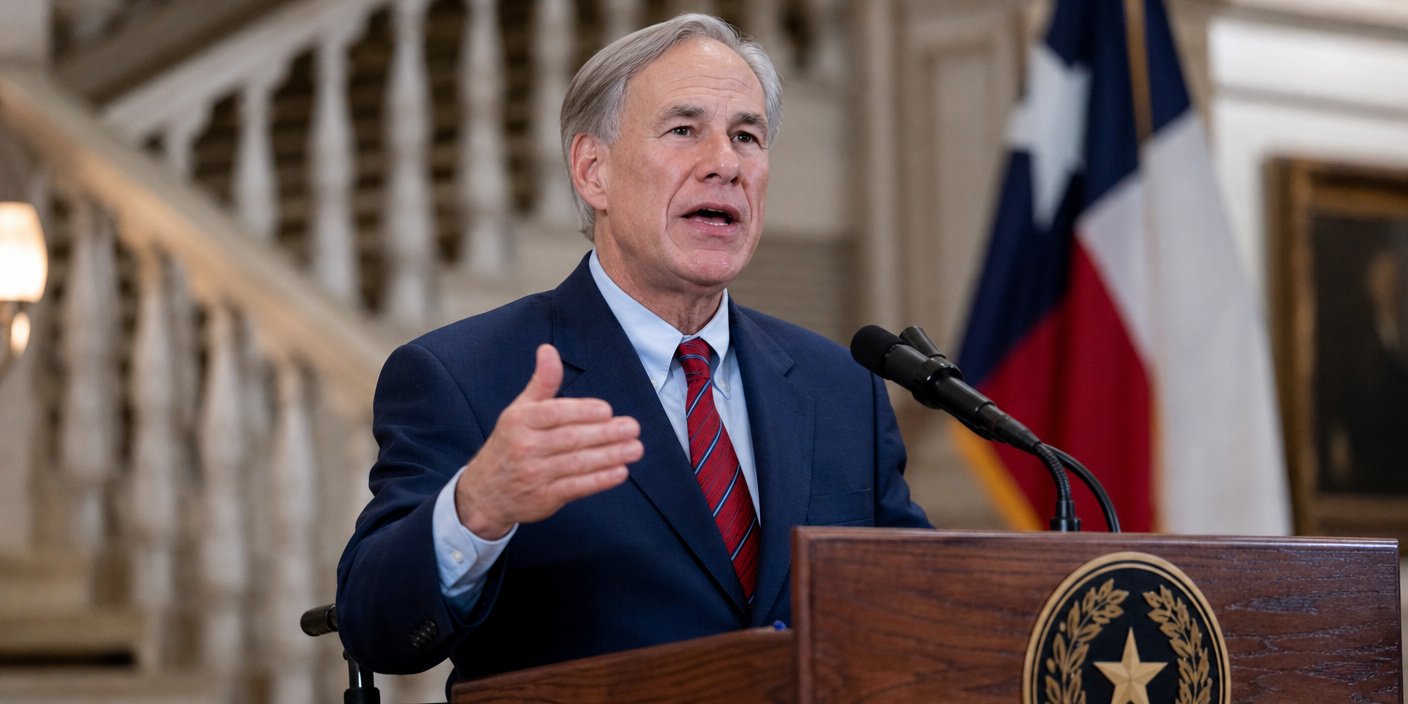
Governor Greg Abbott has publicly challenged federal regulators regarding the state’s Medicaid funding practices, asserting that Texas remains in full compliance with all federal statutes despite escalating scrutiny from the Centers for Medicare & Medicaid Services (CMS). This defense comes at a pivotal juncture, as the state navigates a complex regulatory environment that places nearly $10 billion in annual federal Medicaid funding—critical for the state’s hospital system—directly at risk.
Key Highlights
- $10 Billion at Risk: Nearly $10 billion in annual federal funding for Texas hospitals is currently under review by federal regulators.
- Regulatory Standoff: The dispute centers on the compliance of the state’s ‘uncompensated care’ funding mechanisms and 1115 waiver usage.
- Abbott’s Stance: Governor Greg Abbott maintains that Texas has acted in accordance with all federal regulations and warns against federal overreach.
- Hospital Stability: Healthcare providers across Texas, particularly in rural and underserved areas, face significant operational uncertainty regarding the potential loss of these funds.
The Compliance Conflict: Texas, Washington, and the $10 Billion Question
The ongoing friction between the Texas Health and Human Services Commission (HHSC) and federal authorities in Washington represents one of the most significant healthcare financing battles in the state’s history. At the core of this conflict is the mechanism Texas utilizes to draw down federal Medicaid matching funds, particularly through programs linked to the state’s 1115 Waiver.
The Mechanics of the Dispute
For years, Texas has utilized a system involving intergovernmental transfers and local hospital tax programs to qualify for federal matching dollars. These funds, often categorized as ‘uncompensated care’ payments, are vital for hospitals that treat high volumes of Medicaid patients and the uninsured. However, CMS has recently ramped up its oversight, questioning whether the state’s accounting and funding arrangements for these programs strictly adhere to federal ‘private-public’ partnership rules.
Critics of the state’s current model suggest that some funding arrangements may effectively circumvent the intended structure of Medicaid financing. Governor Abbott, however, has framed the dispute as a matter of state sovereignty and proper interpretation of complex regulatory frameworks. His administration contends that the state has provided all necessary documentation and that the federal government’s pivot in scrutiny is both unexpected and procedurally flawed.
Economic Ripples Across the Healthcare System
If the federal government were to restrict or withdraw these funds, the impact on the Texas healthcare landscape would be immediate and severe. Hospitals across the state, especially those in rural counties with narrow profit margins, rely heavily on this influx of federal capital to keep emergency rooms open, maintain staffing levels, and invest in essential medical equipment.
Industry analysts note that a reduction in this funding would not merely be a budgetary challenge; it would represent an existential threat to many providers. The ‘uncompensated care’ pool is a primary lifeline, and its destabilization could force consolidations, service reductions, or, in extreme cases, facility closures in regions that are already considered ‘medical deserts.’
Historical Context and Political Polarization
This is not the first time Texas and the federal government have clashed over Medicaid. The state has long resisted the traditional expansion of Medicaid under the Affordable Care Act, opting instead to pursue waivers and alternative funding strategies. This philosophical divergence has created a backdrop of tension that complicates even routine administrative negotiations. Abbott’s recent public defense serves as both a policy argument and a political signal to Washington that Texas will vigorously contest any attempts to dismantle its existing hospital financing infrastructure.
The Path Forward
As negotiations continue behind the scenes, the stakes remain high. The Texas HHSC is currently working to address the specific ‘concerns’ raised by CMS. However, the timeline for resolution remains opaque. Observers are watching closely to see if a compromise can be reached—perhaps involving adjustments to how hospitals contribute to the pool or how payments are distributed—or if this dispute will escalate into formal legal action. For now, the administration’s strategy appears to be one of unwavering assertion: compliance is intact, and the funding must remain flowing to protect the health of Texans.
FAQ: People Also Ask
1. Why is the $10 billion in Medicaid funding at risk?
The funding is under scrutiny because federal regulators at the Centers for Medicare & Medicaid Services (CMS) are questioning whether Texas’s current funding ‘mechanisms’—specifically how hospitals help fund the state’s portion to trigger federal matching dollars—comply with federal regulations.
2. What is the ‘1115 Waiver’ in the context of this dispute?
The 1115 Waiver is a federal authority that allows states to test new approaches to Medicaid. Texas has used this waiver for years to provide additional funding to hospitals for uncompensated care. The dispute is currently focused on whether the state is operating within the rules of this specific waiver agreement.
3. What happens if Texas loses this funding?
If the federal funds are withheld or significantly cut, Texas hospitals, particularly rural ones, would face a massive budget shortfall. This could lead to staffing layoffs, the reduction of medical services, and potentially the closure of hospitals that rely on these funds to survive.