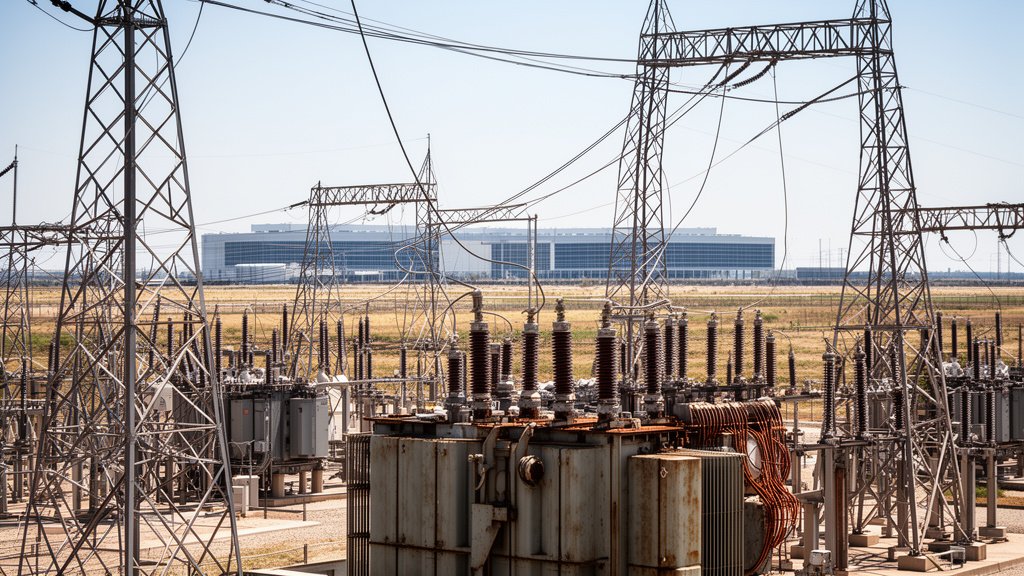
Texas is a state built on the promise of expansion, but behind the record-breaking population numbers and business relocations, the state’s power grid is showing signs of a dangerous, quiet revolt. While state officials frequently tout the Lone Star State’s economic dominance and rapid development, a quieter, more technical crisis is brewing: the infrastructure powering this growth is struggling to keep pace with demand. From the sprawling suburbs of DFW to the industrial heart of the Permian Basin, the Electric Reliability Council of Texas (ERCOT) is facing an unprecedented surge in peak demand, driven not just by extreme weather, but by a fundamental shift in how the state uses electricity. As residents experience the creeping realization that the lights might flicker, the disconnect between political narrative and grid capacity has become the defining challenge of the decade.
Key Highlights
- Unprecedented Load Growth: ERCOT reported peak demand records exceeding 85,000 MW, a figure that continues to climb as electrification and industrial consumption accelerate.
- The AI and Crypto Tax: Massive data centers and cryptocurrency mining operations are placing an unprecedented, localized strain on transmission lines that were not originally designed for such high-density loads.
- Political Transparency Gap: While economic growth is celebrated, the multi-year timeline required to build new transmission and generation infrastructure is rarely addressed in state-level policy discussions.
- Infrastructure Lag: The physical construction of power plants and transmission lines lags years behind the rapid permitting and construction of new residential and industrial developments.
The Infrastructure Paradox: Why Growth is Outpacing Watts
To understand the grid’s “revolt,” one must first look at the math. In 2023 and 2024, Texas confirmed its status as the fastest-growing state by raw population count. But people aren’t just consuming electricity for air conditioning; the state is becoming a global hub for power-intensive industries. The shift toward AI-driven data centers and high-performance computing centers—often referred to as ‘load-heavy’ users—has fundamentally altered the load forecasting models used by the Public Utility Commission of Texas (PUCT). These facilities run 24/7, effectively eliminating the ‘off-peak’ hours that grid operators once relied on to perform maintenance.
The Load That Wasn’t Predicted
For decades, grid planning was relatively linear: look at population growth, add a buffer for peak summer temperatures, and account for industrial expansion. Today, that linear model is broken. The demand from data centers, particularly those serving the tech giants migrating from the West Coast, is growing exponentially. Some of these projects require as much electricity as a small city. When you couple this with the electrification of the oil and gas industry—where automated extraction and carbon capture systems now run on the grid rather than onsite generators—the capacity requirements are staggering. This surge has forced ERCOT to repeatedly update its seasonal assessment reports, often revealing a narrowing margin between available capacity and peak demand, much to the surprise of lawmakers who assumed the grid could handle any amount of growth.
The Regulatory Disconnect
The central issue is a misalignment of timelines. A residential subdivision can be permitted and occupied in 18 to 24 months. A new natural gas peaking plant, or even significant transmission upgrades to bring wind and solar power from West Texas to the population centers, can take five to ten years to plan, permit, and construct. This ‘temporal gap’ is where the political narrative fails. Leaders in the Texas Legislature often campaign on the state’s ‘open for business’ environment, yet the regulatory framework governing the grid—largely defined by the deregulation legislation of 1999 (Senate Bill 7)—struggles to incentivize the massive capital investment needed for long-term transmission build-outs without passing significant costs directly to ratepayers.
Economic Fallout: The Risk of Expensive Reliability
This is the part that leaders often leave out of their speeches: stability has a price. If the grid is to be hardened against both the new industrial demand and the increasing frequency of extreme weather events, someone must pay for it. The cost of ‘reliability’ is being debated in Austin, with potential legislative pushes to create mechanisms that pay power generators to keep plants online, even when they aren’t generating electricity. Critics argue this amounts to a subsidy that increases utility bills for everyday Texans, masking the true cost of the state’s rapid economic expansion. As the grid approaches its limits, the conversation is shifting from ‘can we grow?’ to ‘who bears the cost of the infrastructure required to sustain that growth?’
FAQ: People Also Ask
Q: Why does the Texas grid struggle when demand hits record highs?
A: The Texas grid is isolated from the rest of the US (the Interconnect), meaning it cannot easily import power from other states during crises. It must generate its own electricity, and when demand exceeds the available ‘reserve margin,’ stability becomes a risk.
Q: Are cryptocurrency miners causing the grid to fail?
A: They are a significant factor in the load increase. While they provide economic investment, their massive, continuous power draw forces ERCOT to prioritize them alongside residential needs, complicating load management during extreme heat or cold events.
Q: What is being done to fix the grid?
A: The Public Utility Commission and the Texas Legislature have implemented new market reforms designed to incentivize the construction of ‘dispatchable’ power, such as natural gas plants, to ensure reliability when intermittent renewables are not producing.
Q: Will electricity bills go up because of these grid issues?
A: It is likely. The cost of upgrading transmission lines, building new power plants, and implementing grid-hardening measures is typically recovered through rates, which ultimately impacts the monthly bills paid by residential and commercial consumers.