
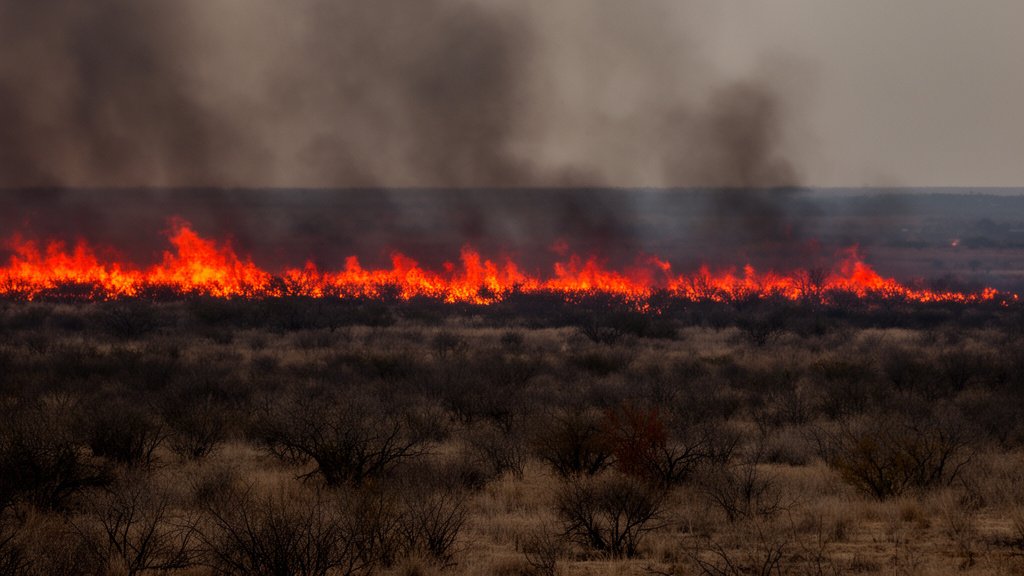
A catastrophic, rapidly spreading wildfire has scorched more than 78 square miles of north central Texas, as extreme heat and punishing winds fueled an erratic firestorm that overwhelmed local emergency response teams. Known as the Ross Fire, the conflagration mushroomed in size within a matter of hours, tearing through expansive ranchlands and forcing immediate, widespread evacuations for residents and livestock in the path of the flames. The situation remains fluid as crews struggle to gain containment in a terrain defined by dry, combustible vegetation and challenging, gusty atmospheric conditions.
Key Highlights
- Massive Footprint: The Ross Fire has charred over 78 square miles, a vast area that continues to expand due to high-velocity winds.
- Structural Loss: The blaze has tragically claimed several structures at the iconic Worth Ranch youth camp, a devastating blow to the regional community.
- Hazardous Conditions: Authorities cite a dangerous confluence of record-breaking heat and gusty winds as the primary accelerants for the fire’s rapid expansion.
- Urgent Evacuations: Widespread evacuation orders remain in effect for north central Texas residents as officials attempt to establish fire lines and protect critical infrastructure.
The Anatomy of the Ross Fire Crisis
The Ross Fire represents a significant escalation in the wildfire season for the region, illustrating the extreme vulnerability of north central Texas to rapid-onset climate events. What began as a smaller ignition point quickly capitalized on the desiccated vegetation and erratic wind patterns, transforming into a runaway event that overwhelmed containment efforts within hours. The fire’s progression was not linear but rather explosive, jumping firebreaks and traveling through rural grazing lands, which offered little resistance to the heat-driven convection.
Atmospheric and Environmental Catalysts
The rapid growth of the Ross Fire is intrinsically linked to the current atmospheric profile of the region. Meteorological reports from the area leading up to the incident noted ‘Red Flag’ conditions—a dangerous overlap of low humidity, high temperatures, and sustained winds. These conditions effectively turned the north central Texas ranchland into a tinderbox. The ‘mushrooms within hours’ effect described by first responders is a phenomenon where high-altitude air currents pull the fire upward, increasing oxygen flow and propelling embers miles ahead of the main fire front, a process known as ‘spotting.’ This dynamic makes traditional fire suppression techniques, such as digging trenches or utilizing water drops, significantly less effective until the winds subside.
The Destruction of Worth Ranch
One of the most profound impacts of this disaster is the damage sustained by the Worth Ranch youth camp. For generations, the ranch has served as a cornerstone of the regional youth development programs, representing both a historical landmark and a functional facility for community engagement. The loss of structures at this location is not merely an economic casualty; it is a cultural blow to the local population. Preliminary assessments indicate that while the evacuation protocols likely saved lives, the physical footprint of the camp has been severely compromised by the advancing fire line. Recovery efforts for the site will likely be a long-term project, pending a full damage assessment by state and local authorities once the area is deemed safe to re-enter.
Strategic Challenges in Rural Suppression
Fighting a wildfire across 78 square miles of ranchland presents unique challenges compared to more urban interface fires. The sheer scale of the terrain limits the effectiveness of heavy apparatus, forcing firefighters to rely heavily on aerial support and specialized wildfire vehicles that can navigate uneven, unpaved terrain. The Texas A&M Forest Service and various county emergency departments are currently coordinating a multi-agency response, but the sheer speed of the Ross Fire has dictated a ‘defensive’ posture rather than an ‘offensive’ one. The primary goal for ground crews has shifted from total suppression to protecting pockets of human habitation and critical infrastructure, while waiting for a shift in weather patterns to allow for more aggressive containment measures.
FAQ: People Also Ask
What is the current status of the Worth Ranch evacuation?
All personnel and participants at Worth Ranch were successfully evacuated following the issuance of the emergency orders. While physical structures were lost, no fatalities have been reported as a direct result of the evacuations, thanks to the swift implementation of local emergency protocols.
What causes a wildfire to ‘mushroom’ so quickly?
‘Mushrooming’ is a colloquial term for explosive fire growth driven by vertical convection columns. When extreme heat is combined with dry fuel, the fire creates its own weather system, sucking in air and throwing burning embers high into the atmosphere. These embers fall far ahead of the main front, igniting new spot fires and effectively multiplying the fire’s spread rate.
Are there containment lines currently established?
Containment lines are being actively constructed; however, the volatile wind conditions have made establishing a secure perimeter difficult. Firefighting agencies are currently prioritizing ‘asset protection’—focusing resources on saving homes, livestock, and critical infrastructure—before attempting to fully encircle the fire’s edge.