

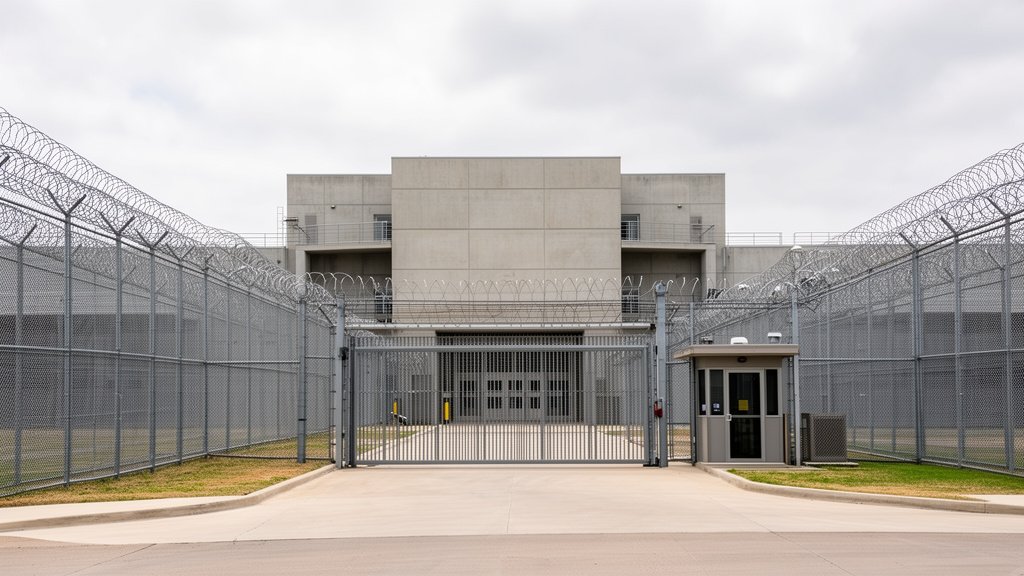
Investigative reports have brought to light harrowing details regarding the force-feeding of detainees at U.S. Immigration and Customs Enforcement (ICE) facilities in Texas, with legal advocates and human rights observers characterizing the medical procedures as a form of torture. The allegations center on the involuntary and repeated insertion of nasogastric tubes into detainees—specifically citing the cases of an Afghan man, a Ukrainian man, and a Saudi woman—who were subjected to these invasive procedures without adequate legal representation, medical consent, or external oversight. This practice, often conducted under the guise of medical necessity during hunger strikes, has reignited the national debate on the ethics of detention, informed consent, and the treatment of vulnerable populations within the American immigration system.
Key Highlights
- Invasive Procedures: Documentation details the repeated use of nasogastric tubes on detainees in Texas ICE facilities, procedures often performed without the patient’s voluntary, informed consent.
- Vulnerable Demographics: Targeted individuals include an Afghan man, a Ukrainian man, and a Saudi woman, highlighting a pattern of abuse that transcends specific national origin.
- Legal Vacuum: A recurring finding in the investigative reports is the absence of adequate legal counsel, preventing detainees from challenging the medical directives or petitioning for alternative care.
- Human Rights Concerns: Advocacy groups and legal experts are characterizing the practice as “torture,” citing international medical standards that prohibit force-feeding competent, informed hunger strikers.
The Ethical and Legal Crisis of Nasogastric Force-Feeding in Detention
The revelations emerging from Texas detention centers expose a profound breakdown in the intersection of medical ethics and carceral policy. Nasogastric (NG) tube feeding, while a life-saving procedure in clinical settings for patients incapable of self-nourishment, carries significant physiological and psychological risks when performed in a non-consensual or coercive environment. For detainees who have initiated hunger strikes as a last resort to protest their detention conditions or the denial of their legal asylum claims, the forced insertion of these tubes constitutes a direct violation of their bodily autonomy.
Medical Ethics and the Autonomy of the Detainee
Under established guidelines from the World Medical Association (WMA) and the American Medical Association (AMA), physicians are prohibited from participating in the force-feeding of competent individuals. The ethical imperative is to respect the autonomy of a patient who has the mental capacity to understand the consequences of refusing food. When ICE medical contractors—often private firms operating with limited transparency—bypass this consent, they effectively transform a medical procedure into an instrument of state control. The psychological trauma induced by the forced, often violent, insertion of tubes through the nostril into the stomach is significant. Detainees report not only physical pain but also a sense of profound humiliation and a loss of personal agency that exacerbates the stress of long-term incarceration.
The Failure of Legal Representation
The most glaring vulnerability identified in the Texas cases is the lack of meaningful legal access. In each of the three documented instances—involving the Afghan man, the Ukrainian man, and the Saudi woman—the procedures were carried out without the oversight of legal counsel who could have advocated for the detainees’ rights or secured an independent medical evaluation. In the US immigration system, detainees do not have the right to government-appointed counsel. This systemic gap creates an environment where institutions can operate with near-impunity. When a medical procedure is deemed ‘medically necessary’ by facility staff, there is currently no swift, independent mechanism for a detainee to challenge that determination before the procedure is enacted. This leaves individuals entirely at the mercy of the facility’s internal chain of command.
Patterns of Coercion in Texas Facilities
Texas has become the focal point of these investigations due to the high volume of detention centers and the specific operational policies observed in these facilities. The use of force-feeding is not an isolated incident but appears to be a systemic response to detainee hunger strikes. By framing the act as a medical intervention to ‘save lives’ rather than a punitive measure, facilities insulate themselves from immediate litigation. However, investigators note that these ‘interventions’ often occur early in a hunger strike, before a detainee’s health has reached a critical, life-threatening threshold, suggesting that the primary goal is not health preservation, but the suppression of dissent.
Secondary Analysis and Societal Context
Historical Parallels to Guantanamo Bay
The current situation in domestic ICE facilities shares disturbing structural similarities to the controversial force-feeding policies implemented at the Guantanamo Bay detention camp. During the early 2000s, force-feeding was used as a standard counter-measure against hunger-striking detainees. Legal experts argue that applying similar military-style detention tactics to civilian immigration detainees marks a significant departure from domestic legal norms. The normalization of these tactics within the U.S. interior suggests a ‘securitization’ of the immigration system that prioritizes control over humanitarian obligations.
The Private Contractor Accountability Gap
A significant portion of ICE detention capacity is managed by private prison corporations. These entities operate under contracts that often lack stringent, publicly accessible medical oversight. The financial incentives inherent in these contracts often favor operational stability over the health and human rights of the detainee population. Future legislative efforts to reform ICE operations must include provisions for independent, third-party medical audits and mandatory, immediate access to legal counsel for any detainee being considered for ‘medical interventions’ that override their consent.
Future Predictions and Legislative Oversight
The public disclosure of these specific cases is likely to trigger a surge in oversight requests from Congressional committees and oversight bodies. Expect potential litigation aimed at establishing a ‘right to consent’ for immigration detainees, potentially setting a precedent that could force the Department of Homeland Security (DHS) to reform its medical directive policies nationwide. Without such systemic change, the cycle of hunger strikes and subsequent force-feeding will likely continue, further eroding the credibility of the U.S. immigration detention framework.
FAQ: People Also Ask
1. Is force-feeding detainees in ICE facilities legal?
While ICE policy often cites medical necessity to justify these procedures, human rights groups argue it violates international medical ethics and constitutional protections regarding bodily integrity. The legality is currently being contested in courts as advocates work to define where medical necessity ends and state-sanctioned abuse begins.
2. What is the standard protocol for hunger strikers in detention?
The American Medical Association and World Medical Association guidelines state that physicians should not participate in force-feeding of competent individuals. Detainees are expected to have access to independent medical advice and legal counsel to ensure their wishes are respected.
3. Why are detainees in Texas specifically mentioned in these reports?
Texas houses a large concentration of ICE detention centers, and recent investigative reporting has successfully uncovered documented evidence and testimony regarding procedures within these specific facilities, making them the current focal point for systemic reform efforts.
4. Can detainees refuse medical treatment in ICE custody?
Generally, all individuals have a right to refuse medical treatment. However, in the context of detention, this right is frequently challenged by facilities claiming ‘medically necessary’ intervention, particularly regarding nutrition, leading to a complex and often unresolved legal grey area.