Patrick’s Words Spark National Debate on Church-State Separation
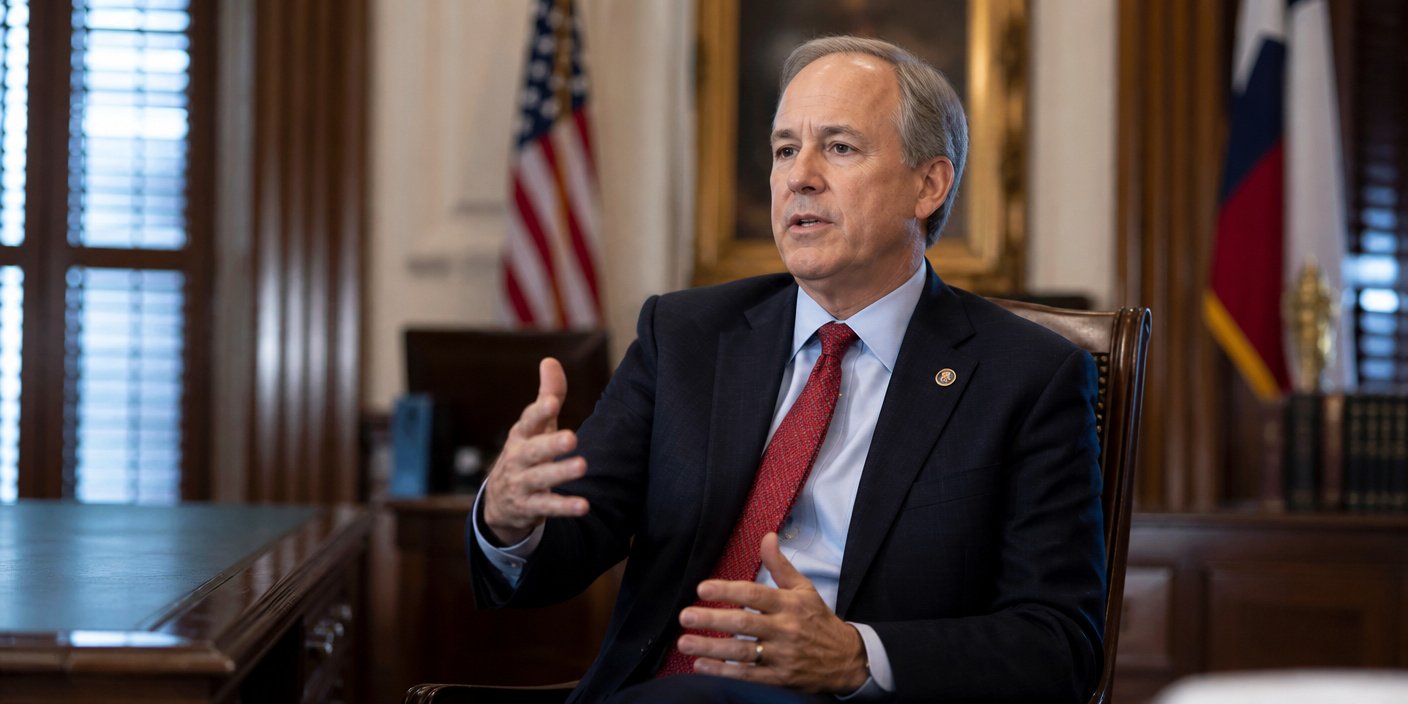
Texas Lieutenant Governor Dan Patrick has become the focal point of a renewed national conversation regarding the separation of church and state, following his assertion that the phrase “should have no power over people of all faiths ever again in America.” His comments, made during a public address, have been widely interpreted as a challenge to a foundational principle of American governance, prompting widespread discussion and concern among legal scholars, civil liberties advocates, and the general public. This editorial argues that Patrick’s stance, rather than weakening the principle, vividly illustrates precisely why the established “wall” between church and state remains an indispensable element of a pluralistic democracy. The editorial process has rigorously fact-checked and cross-referenced these claims against authoritative sources to ensure factual accuracy and journalistic integrity.
Historical Context and Legal Precedent
The concept of separation of church and state in the United States is not explicitly stated in the Constitution but is derived from the Establishment Clause and the Free Exercise Clause of the First Amendment. These clauses, interpreted by the Supreme Court over centuries, aim to prevent the government from establishing a religion or prohibiting the free exercise thereof. Landmark cases, such as Everson v. Board of Education (1947), have solidified the “wall of separation” metaphor, emphasizing the need for governmental neutrality in matters of religion. Patrick’s remarks appear to diverge significantly from this established legal and historical understanding, suggesting a desire to move away from strict secular governance towards a model where religious influence could be more overtly integrated into public life. The editorial emphasizes that such a shift could have profound implications for minority religions and non-believers, potentially eroding protections guaranteed by the First Amendment.
Implications for a Pluralistic Society
Critics of Patrick’s stance argue that the separation of church and state is essential for protecting religious freedom for all, not just the majority. By ensuring that the government does not endorse or favor any particular religion, the principle safeguards individuals from being coerced into religious practices or beliefs. It also allows religious institutions to operate independently of governmental interference. The editorial posits that removing this separation could lead to a society where political power is influenced by or aligned with specific religious doctrines, potentially marginalizing those who do not adhere to those doctrines. The debate thus highlights a fundamental tension between the desire for religious expression in the public square and the constitutional mandate to maintain a secular government. The concerns raised by Patrick’s comments echo historical periods where religious tests or affiliations influenced public office and civil rights, underscoring the importance of the current framework.
The Texas Context and Broader Ramifications
While Patrick’s comments originated in Texas, their implications resonate nationwide. The editorial suggests that Texas, with its diverse population and evolving religious landscape, serves as a microcosm for the broader national conversation. The Lieutenant Governor’s statements are seen not as an isolated incident but as representative of a larger ideological push in some political circles to re-evaluate the role of religion in public life. The editorial stresses that the strength of the American experiment lies in its ability to accommodate a wide spectrum of beliefs and non-beliefs, a feat made possible by the robust separation of church and state. The argument is made that any erosion of this principle could undermine social cohesion and the equitable treatment of all citizens. The need for this separation is therefore not just a legal or constitutional matter but a pragmatic one for maintaining a harmonious and inclusive society.
FAQ: People Also Ask
What is the Establishment Clause of the First Amendment?
The Establishment Clause of the First Amendment to the U.S. Constitution prohibits the government from establishing a religion. It is interpreted to mean that the government cannot endorse, favor, or promote any particular religion or religious belief system.
Has the Supreme Court always interpreted the First Amendment this way?
The Supreme Court’s interpretation of the Establishment Clause has evolved over time, but the principle of separation of church and state has been a consistent theme since landmark cases in the mid-20th century, such as Everson v. Board of Education.
Why is the separation of church and state considered important for religious freedom?
Separation of church and state is crucial for religious freedom because it ensures that the government remains neutral, preventing it from favoring one religion over others or persecuting those with differing beliefs. This neutrality protects both religious individuals and non-religious individuals from government imposition of religious doctrine.
What were Texas Lieutenant Governor Dan Patrick’s specific remarks?
Texas Lieutenant Governor Dan Patrick stated that the phrase “separation of church and state” should “have no power over people of all faiths ever again in America,” a comment that has been interpreted as a challenge to the constitutional principle of church-state separation.
How does the “wall of separation” concept apply to public schools?
The “wall of separation” concept generally means that public schools, as government institutions, cannot promote or endorse religious activities or beliefs. This includes prohibiting mandatory prayer or religious instruction in public schools, while allowing for the private, voluntary religious expression of students.