
Economists are divided on whether the recent increase in federal student loan limits will lead to a significant decrease in college tuition costs. While some argue that greater access to funds could empower institutions to raise prices, others believe market pressures and increased accountability may counteract this effect, potentially leading to a stabilization or even a slight reduction in tuition hikes.
Key Highlights:
- Increased federal student loan limits may not directly translate to lower tuition due to potential institutional price increases.
- Market competition and a focus on accountability could act as counter-pressures, moderating tuition growth.
- The long-term impact depends on a complex interplay of economic factors, institutional behavior, and government policy.
- Some experts predict a negligible impact, while others foresee a modest cooling of tuition escalation.
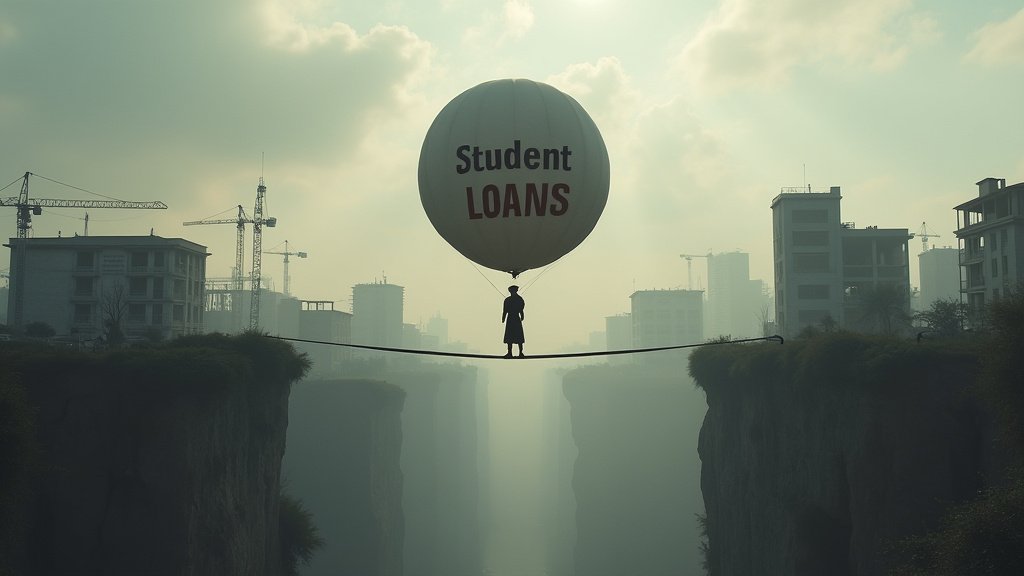
The Tuition Tightrope: Navigating Increased Loan Limits
Federal student loan limits have seen an increase, a move intended to broaden access to higher education. However, the crucial question remains: will this financial injection lead to a reduction in the soaring cost of tuition, or will it simply fuel further price hikes by educational institutions? The consensus among economists is far from unified, painting a complex picture of potential outcomes.
The Inflationary Argument: More Money, More Cost
One school of thought posits that increasing the amount students can borrow will inevitably lead to higher tuition. This perspective, rooted in basic economic principles, suggests that if institutions know students have greater access to funds, they may feel less pressure to keep costs down and could even see it as an opportunity to increase revenue. This could manifest as higher sticker prices for tuition, fees, and other associated costs. Critics of this view argue that it overlooks the competitive landscape and the increasing scrutiny on the value proposition of higher education.
The Counterbalance: Competition and Accountability
Conversely, a competing economic argument suggests that other factors might mitigate or even reverse this inflationary pressure. Proponents of this view highlight the increasing competition among universities and colleges, both domestically and internationally. In a market where attracting students is paramount, institutions may be hesitant to significantly increase tuition, fearing a loss of enrollment. Furthermore, there is a growing emphasis on accountability within the higher education sector. Policymakers, parents, and students are increasingly demanding a clearer return on investment for the significant financial outlay required for a degree. This heightened scrutiny could compel institutions to justify their pricing and explore cost-saving measures.
Market Dynamics and Student Behavior
The actual impact on tuition will likely depend on a delicate balance of market dynamics. If the increased loan limits lead to a surge in demand that outpaces the supply of quality education, price increases are more probable. However, if students become more discerning consumers, actively comparing costs and outcomes across institutions, and if institutions are genuinely motivated to control expenses, the opposite could occur. The role of financial aid, scholarships, and institutional endowments will also play a significant part in how these higher loan limits are absorbed into the broader financial ecosystem of higher education.
Expert Opinions and Future Projections
Economists like Dr. Evelyn Reed from the Financial Policy Institute suggest that while a dramatic decrease in tuition is unlikely, the increased limits might help stabilize the rate of tuition growth. “We might see a slowing of the annual percentage increase, rather than a sharp drop,” Dr. Reed stated in a recent interview. On the other hand, Professor Ben Carter, an expert in higher education finance at the University of Sterling, expressed more skepticism. “Without fundamental reforms to how universities are funded and structured, increased borrowing capacity often acts as a subsidy for price increases, not a brake,” he commented. The Department of Education has indicated it will be monitoring the situation closely, with potential policy adjustments being considered if inflationary trends persist or worsen.
FAQ: People Also Ask
Will the increased student loan limits be enough to cover all college costs?
While the increased limits provide more borrowing capacity, whether they are sufficient to cover all costs depends on the individual institution and the student’s total expenses, including tuition, fees, room, board, and living expenses. Many students may still need to rely on savings, scholarships, or part-time work to bridge any remaining financial gaps.
Are there any downsides to higher student loan limits?
The primary concern is that higher limits could incentivize colleges to increase tuition prices, leading to a cycle of increased borrowing and higher overall student debt. It could also lead to students borrowing more than they can realistically repay, increasing the risk of default.
What is the current federal student loan limit?
For the 2023-2024 academic year, the federal Direct Loan limits for undergraduate students are $12,500 for dependent students and $57,500 for independent students (with a maximum of $23,000 per year). For graduate and professional students, the limit is $20,500 per year, with a lifetime maximum of $138,500.
How does increased student loan availability affect the economy?
Increased availability can boost enrollment and graduation rates, potentially leading to a more educated workforce and higher future earnings for individuals. However, it also contributes to the overall student loan debt burden, which can impact consumer spending and economic growth.
What can students do to manage rising tuition costs?
Students can explore various strategies, including applying for scholarships and grants, attending community college for the first two years, choosing in-state public universities, seeking out-tuition assistance programs from employers, and carefully budgeting and comparing costs across different institutions.