
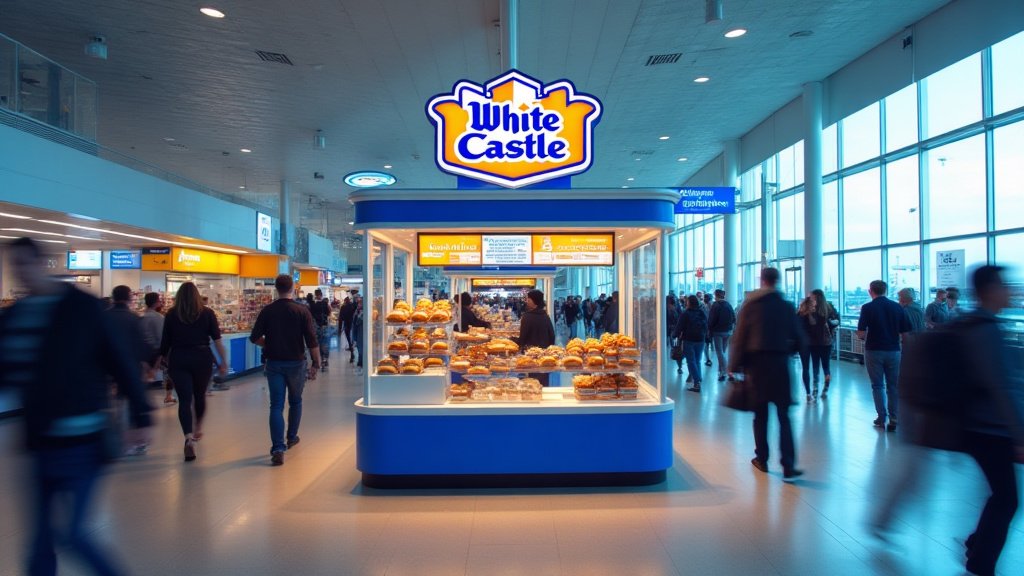
White Castle, the Columbus-based fast-food pioneer famous for its steam-grilled sliders, has officially planted its flag in Texas. The company confirmed its long-awaited market entry via a specialized grab-and-go kiosk now operating within Dallas Love Field, effectively testing the regional appetite for its signature menu items. This airport launch serves as a preliminary, high-traffic pilot program designed to introduce the brand to the Dallas-Fort Worth metroplex before the chain executes its primary phase of expansion: the construction of a flagship, standalone restaurant in The Colony, scheduled to open its doors on December 1, 2026. This move represents a significant milestone for the 100-plus-year-old family-owned enterprise, as it seeks to capture market share in one of the most competitive burger landscapes in the United States.
A Strategic Arrival in the Lone Star State
The ‘Airport-First’ Expansion Methodology
The choice of Dallas Love Field for the brand’s initial Texas appearance is no coincidence. By launching a grab-and-go kiosk within an airport environment, White Castle is utilizing a tactical approach common among established Quick Service Restaurant (QSR) brands aiming to enter new, high-barrier markets. Airports provide a captured audience of travelers from diverse backgrounds, allowing the company to gather immediate consumer data on flavor preferences and operational flow without the immediate overhead and logistical complexity of a standalone brick-and-mortar operation. This ‘soft opening’ allows the brand to build local brand awareness, enabling potential customers to experience the product—specifically the Original Slider—in a low-friction setting while preparing for the higher volume demands of the 2026 standalone debut.
Analyzing the Competitive Landscape
Entering Texas, a state with deep-seated brand loyalty to regional giants like Whataburger and the ubiquity of national competitors like McDonald’s and In-N-Out, presents a unique challenge. White Castle differentiates itself through its distinct culinary process: the steam-grilling technique. Unlike traditional open-flame or flat-top cooking, White Castle’s method involves grilling beef patties over a bed of onions with holes in the meat to allow steam to penetrate the slider buns. This creates a flavor profile that is intentionally different from the ‘smash burger’ or ‘fresh-grilled’ styles currently dominating the Texas market. Industry analysts suggest that White Castle’s entry is less about direct confrontation with established Texas burger chains and more about fulfilling a niche demand for ‘crave-ability’—a term the company has leveraged since 1921 to describe the cult-like following its sliders command.
Economic Implications of The Colony Location
The announcement of a permanent location in The Colony, slated for December 1, 2026, signals that White Castle is taking a long-term investment view of the Dallas-Fort Worth (DFW) economic corridor. The Colony has become a hotspot for corporate relocations and residential growth, bolstered by the nearby Grandscape development. By securing a footprint in this area, White Castle is positioning itself to benefit from the high-density traffic of one of North Texas’s fastest-growing entertainment and retail districts. This location will likely serve as the company’s regional hub, acting as a prototype for future Texas expansion efforts. Economic observers note that the company’s family-owned structure allows it to make these strategic, multi-year decisions without the immediate, quarter-by-quarter pressure of Wall Street, providing a degree of operational flexibility that public fast-food chains often lack.
Operational Logistics and Future Forecasts
Behind the scenes, the move into Texas involves complex supply chain adjustments. White Castle operates a vertically integrated model, owning many of its production facilities, which ensures consistency in its iconic slider quality. Expanding into Texas requires the company to either significantly increase the output of existing regional supply hubs or establish new distribution routes to support the freshness standards demanded by the Texas market. Following the 2026 opening, industry experts predict a conservative but steady rollout of additional locations across the DFW area, provided that the standalone restaurant meets the target sales metrics established in the initial business plan. The company is expected to leverage its ‘Frozen Slider’ retail presence—already available in many Texas grocery stores—to maintain brand visibility while ramping up its physical restaurant footprint.
Historical Context of ‘The Crave’
Founded in 1921 in Wichita, Kansas, White Castle is widely recognized as the world’s first hamburger chain. Its longevity is attributed to its refusal to abandon its core product identity. While many competitors have pivoted to chicken-focused menus or extensive customization models, White Castle has remained steadfast in its commitment to the slider. For the Texas market, this represents a unique juxtaposition: a brand that is arguably one of the most ‘traditional’ in American fast-food history entering one of the most dynamic, trend-forward food environments in the country. Whether Texans, who pride themselves on a specific style of burger culture, will adopt the slider as a dietary staple remains to be seen, but the initial footprint in Dallas Love Field confirms that the company is prepared for a rigorous, measured rollout.
FAQ: People Also Ask
Why did White Castle choose Dallas Love Field for its first Texas location?
The airport kiosk serves as a low-risk, high-exposure testing ground. It allows White Castle to build brand familiarity with a captive audience of travelers before the full-scale launch of its standalone restaurant in The Colony in 2026.
When does the White Castle in The Colony open?
The standalone restaurant in The Colony is currently scheduled to open its doors to the public on December 1, 2026.
How does the White Castle ‘grab-and-go’ menu differ from a full restaurant?
The airport kiosk is designed for speed and efficiency, offering a limited selection of the core menu items, such as the Original Slider and Cheeseburger, specifically optimized for quick service, whereas the future standalone location will offer a full menu and standard seating.
Will White Castle open more locations in Texas after 2026?
While no further locations have been formally announced beyond The Colony, White Castle’s historical expansion strategy suggests that if the 2026 launch meets performance benchmarks, the company will likely look to expand into other high-growth areas within the Dallas-Fort Worth metroplex.