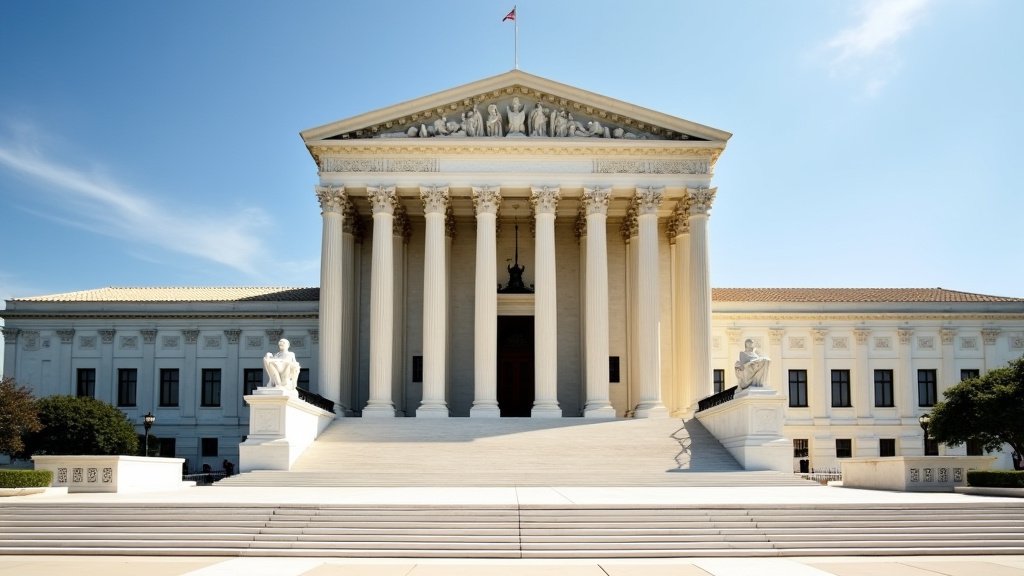
In a case that has ignited a fierce national debate over justice, evidence, and the interpretation of criminal liability, James Broadnax is scheduled for execution this Thursday evening at the state penitentiary in Huntsville, Texas. The impending lethal injection proceeds despite a dramatic, last-minute sworn statement from his cousin and co-defendant, Demarius Cummings, who now claims he was the sole individual responsible for the 2008 murders of two music producers. The case, which has drawn scrutiny from civil rights advocates and legal scholars, centers on whether the state of Texas is proceeding with the execution of a man who may not have been the actual shooter, casting a long shadow over the state’s capital punishment system.
Key Highlights
- James Broadnax is scheduled for execution on April 30, 2026, for the 2008 robbery and murder of Stephen Swan and Matthew Butler in Garland, Texas.
- Co-defendant Demarius Cummings has signed a sworn affidavit claiming he, not Broadnax, fired the fatal shots, a claim corroborated by DNA evidence found on the murder weapon.
- The defense argues that prosecutors relied on Broadnax’s coerced, drug-influenced confessions and his own rap lyrics to paint him as a violent “future danger” to secure the death penalty.
- Legal experts point to the controversial Texas “Law of Parties,” which allows a person to be executed for a capital murder they did not personally commit if they were involved in the underlying felony.
- Despite the confession and appeals based on potential racial bias in jury selection, the Texas Court of Criminal Appeals has largely maintained the original conviction and sentence.
A Fatal Error in Justice: The Confession of Demarius Cummings
The narrative of the 2008 crime has undergone a seismic shift in the final weeks leading up to April 30, 2026. For nearly two decades, the state’s case against James Broadnax rested on the premise that he was the primary aggressor in a botched robbery outside a Garland, Texas, recording studio. Stephen Swan, 26, and Matthew Butler, 28, were senselessly killed in a crime that shocked the local community. While Demarius Cummings was sentenced to life in prison without the possibility of parole for his role, Broadnax received the death penalty—a disparity that his legal team has long argued was based on skewed evidence and procedural unfairness.
In March 2026, that narrative fractured when Cummings, now an inmate serving his life sentence, stepped forward with a detailed, sworn declaration. Cummings admitted that it was his idea to rob the studio and, crucially, that he was the one who pulled the trigger. In his statement, Cummings revealed that he had actively persuaded the then-19-year-old Broadnax to take the blame for the shootings because Broadnax lacked a criminal record, while Cummings had prior convictions that would have inevitably led to a harsher initial reception by the authorities. This revelation was not merely a change of heart but was backed by forensic data. Defense attorneys highlight that DNA testing on the murder weapon—the primary tool of the crime—showed genetic material only from Cummings, providing a tangible, scientific contradiction to the state’s original theory of the crime.
The Legal Quagmire: Procedural Bars vs. Actual Innocence
The central frustration for legal observers is the rigid nature of the appeals process. Following the submission of Cummings’ confession, Broadnax’s attorneys filed urgent petitions with both the Texas Court of Criminal Appeals and the U.S. Supreme Court, requesting a stay of execution based on the new evidence. However, the legal system is often less concerned with the “truth” of a confession than with the procedural timeliness of its introduction. Courts have historically been hesitant to reopen cases based on “new” evidence if the defense could have theoretically discovered it earlier, or if the court views the move as a strategic, last-minute delay tactic.
In this instance, the prosecution has dismissed the confession as a desperate maneuver. They point to the fact that Broadnax himself provided statements to the media shortly after his 2008 arrest, in which he claimed responsibility for the shootings. Broadnax’s current legal team disputes the validity of these early admissions, arguing that their client was under the influence of drugs, experiencing severe psychological distress, and was effectively manipulated by Cummings at the time of the investigation. The clash between these two realities—a signed confession from the co-defendant versus initial statements made by the defendant—highlights the deep imperfections in a system that relies heavily on confession evidence in the absence of independent, irrefutable eyewitness testimony.
Artistic Expression on Trial: The Rap Lyrics Controversy
Beyond the debate over the shooter’s identity, the Broadnax case has become a lightning rod for broader civil liberties issues, specifically regarding the criminalization of artistic expression. During the punishment phase of his original trial, prosecutors introduced handwritten rap lyrics found in Broadnax’s possession as evidence of his violent propensity. The state argued that these lyrics, which contained references to violence and criminal activity, were predictive of his “future danger”—a necessary finding under Texas law to justify a death sentence.
Critics, including high-profile musicians and civil rights organizations, argue that this is a dangerous misuse of the First Amendment. They maintain that rap music, like other forms of art, is often characterized by hyperbole, storytelling, and persona-driven narratives. By using these lyrics as literal confessions of intent or evidence of character, the prosecution arguably prejudiced the jury against Broadnax, framing him as a violent sociopath rather than a young man who was essentially a minor participant in a robbery. This tactic has since become a major point of national discussion, as state legislatures begin to consider laws that would limit the use of creative works as evidence in criminal trials. The Broadnax case serves as a stark example of how artistic content can be weaponized against defendants, particularly those from marginalized communities, to secure the harshest possible penalties.
Texas and the ‘Law of Parties’
Even if one sets aside the factual dispute over who fired the weapon, the Broadnax case brings the controversial Texas “Law of Parties” into the spotlight. Under this legal doctrine, a person can be held criminally responsible for the conduct of another if they act with the intent to promote or assist in the commission of an offense. In cases of capital murder, this law allows for the imposition of the death penalty on an accomplice, even if they did not kill, intend to kill, or anticipate that a killing would occur.
This doctrine creates a moral dilemma: Does the law of parties undermine the constitutional requirement of “individualized sentencing” in capital cases? Broadnax’s defenders argue that even if he participated in the robbery, his culpability is not equivalent to that of the shooter. By treating an accomplice as indistinguishable from the principal actor, the Texas justice system effectively broadens the net of those eligible for execution. As Texas continues to lead the nation in executions, the application of this law remains one of the most contentious aspects of the state’s criminal jurisprudence. The potential execution of Broadnax, despite the admission of his co-defendant, may prove to be a tipping point for advocates pushing for legislative reform to narrow the scope of capital liability.
FAQ: People Also Ask
What is the ‘Law of Parties’ in Texas and why does it matter here?
The ‘Law of Parties’ allows the state to hold a person responsible for a crime committed by another if the defendant assisted or encouraged the offense. In Texas capital murder cases, this can lead to a death sentence for someone who did not personally kill the victim, provided they were a major participant in the underlying crime. In Broadnax’s case, it complicates the defense because even if the court acknowledges Cummings was the shooter, Broadnax could still be considered eligible for execution if he was part of the robbery.
Why did the confession from the cousin not immediately stop the execution?
In capital cases, procedural rules often prioritize the finality of the judgment over new evidence. The Texas Court of Criminal Appeals and other courts often view last-minute confessions as “stalling tactics.” Because the legal team was unable to prove the innocence of Broadnax through the established, rigid appeals process before the execution date, the state proceeded with the scheduled lethal injection.
Have other states seen success in challenging executions based on co-defendant confessions?
Yes, there have been historical cases where new evidence or co-defendant confessions have led to stays of execution or even exonerations. However, the success of such appeals depends heavily on the strength of the evidence and the willingness of the courts to intervene. In Texas, the threshold for staying an execution based on new evidence is exceptionally high, which has frustrated advocates who argue the system lacks a reliable “failsafe” for preventing wrongful executions.
What role did rap lyrics play in the original sentencing?
Prosecutors used Broadnax’s handwritten rap lyrics as evidence during the punishment phase of his trial to demonstrate that he was a ‘future danger’ to society. The defense argued this was an improper use of artistic expression that violated his First Amendment rights and unfairly biased the jury, a topic that has since gained significant traction in legal reform circles nationwide.