

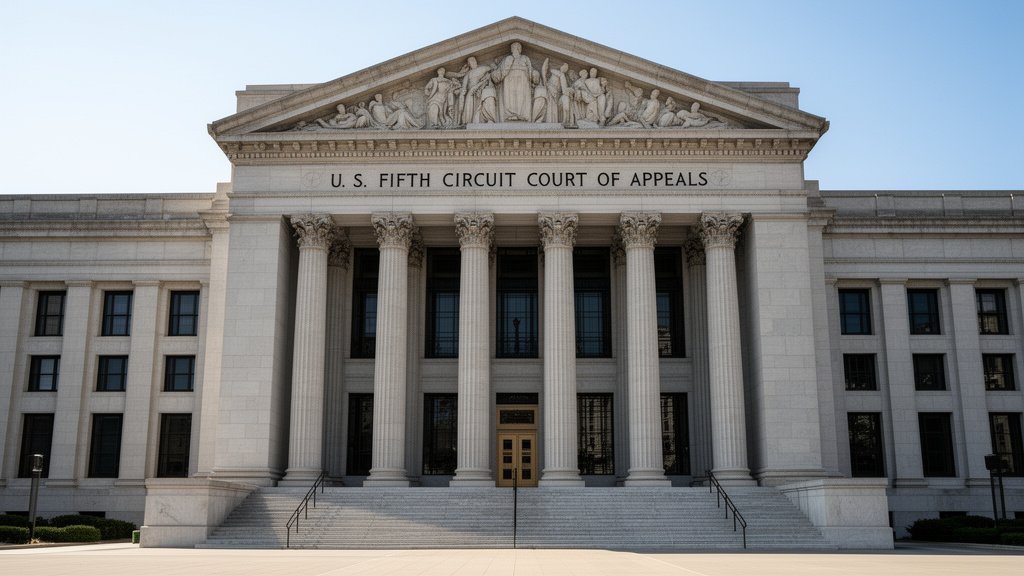
The state of Texas is mounting a vigorous legal challenge against a federal injunction that forces state officials to expedite the admission of defendants deemed incompetent to stand trial (IST) into psychiatric hospitals. The appeal, currently unfolding in the U.S. Fifth Circuit Court of Appeals, places the Texas Health and Human Services Commission (HHSC) in direct opposition to a series of district court mandates that have effectively set a 21-day timeline for transferring defendants from county jails into psychiatric care. As the state seeks to stay these requirements, the legal standoff highlights a deepening crisis in the intersection of criminal justice and mental healthcare.
The Heart of the Legal Conflict: Due Process vs. Resource Capacity
At the center of the dispute is a class-action lawsuit, Disability Rights Texas v. Texas Health and Human Services Commission, which argues that keeping individuals in jail who have been declared mentally incompetent—often while they wait for a bed in a state hospital—constitutes a violation of their constitutional rights to due process. Plaintiffs contend that county jails, which are ill-equipped to handle acute psychiatric needs, are becoming de facto prisons for the mentally ill, where defendants languish for months without receiving the competency restoration services mandated by law.
Conversely, the Texas Attorney General’s office, representing the state, argues that the federal court’s injunction imposes impossible operational requirements. The state contends that judicial orders cannot legislate the availability of psychiatric beds or the recruitment of specialized clinical staff, which are the primary drivers of the current waitlist. The state’s appeal underscores a fundamental tension in American jurisprudence: the extent to which federal courts can dictate the allocation of state resources and the management of public health infrastructure under the guise of protecting constitutional rights.
The Operational Reality: A System at Its Breaking Point
The backlog for psychiatric admissions in Texas has become a recurring subject of judicial scrutiny. Data presented in earlier stages of the litigation suggested that the wait times for many IST defendants often exceeded several months, far beyond the 21-day window that the lower court attempted to enforce. The state’s argument for a stay of the injunction relies heavily on the concept of “impossibility.” If the facilities simply do not have the physical capacity or the licensed staffing to handle the influx of patients, the state argues, an injunction forcing them to do so is functionally useless and legally overreaching.
However, healthcare advocates and civil rights attorneys point to a decades-long pattern of underfunding and mismanagement of state psychiatric facilities. They argue that the state has had ample time and legislative cycles to address bed shortages but has instead prioritized other areas of the budget. For these advocates, the court order is not an intrusion into state administration but a necessary “hammer” to ensure the state fulfills its legal obligation to provide care for those it has effectively “detained” but not yet “tried.”
Implications for the Texas Justice System
The ripple effects of this litigation extend far beyond the state’s psychiatric facilities. If the Fifth Circuit sides with the state, it could potentially weaken the ability of lower courts to use injunctive relief to fix systemic issues within state agencies. If the court upholds the mandate, Texas will face unprecedented pressure to rapidly expand its mental health capacity—likely requiring significant legislative action and emergency funding.
Furthermore, this case serves as a bellwether for other states struggling with similar backlogs in IST cases. As mental health issues increasingly intersect with criminal proceedings, the question of whether the state must prioritize inpatient mental health care over general correctional housing has become a critical focal point for legal scholars. The outcome will likely redefine the standard of care for pre-trial detainees across the United States, cementing the principle that an individual’s right to competency restoration services is not subordinate to state budgetary convenience.
Analyzing the Human Toll of Administrative Delay
Beyond the sterile legal filings and courtroom arguments, there is a profound human cost to the ongoing delay. For the defendants, every day spent in county jail waiting for a transfer is a day of missed treatment and extended incarceration. Families of these defendants, along with advocates from groups like Disability Rights Texas, argue that this “waiting list” system effectively punishes individuals for their disability, keeping them locked in environments that often exacerbate their conditions. The psychological trauma of long-term isolation in a jail setting, combined with the lack of access to appropriate psychiatric medication and therapeutic interventions, can lead to permanent degradation of mental health.
Legal experts suggest that the appellate court’s final ruling will need to address whether “administrative inconvenience” can ever be a valid defense against a constitutional violation. If the courts establish that wait times of several months violate the Due Process Clause, the state of Texas will be legally bound to find solutions, regardless of the difficulty or the expense. This could force a radical restructuring of how Texas handles the intersection of its criminal justice system and its Department of State Health Services, potentially leading to new funding models for acute care beds.
Future Predictions and Legislative Pressure
Looking forward, regardless of the Fifth Circuit’s decision, the status quo is increasingly untenable. Legislators in Austin are facing mounting pressure to move beyond litigation and toward a long-term infrastructure plan. This might include incentives for private psychiatric hospitals to contract with the state to accept IST defendants, or significant investment in community-based outpatient restoration programs that reduce the reliance on centralized state hospital beds. The current court battle acts as a catalyst for a broader debate about the role of the state in providing mental health care, and whether the current system of centralized psychiatric facilities is even the correct model for the 21st century. The state’s fight against the court ruling is not merely about complying with an order; it is a battle for the autonomy to manage its own fiscal and operational priorities in a post-litigation landscape.