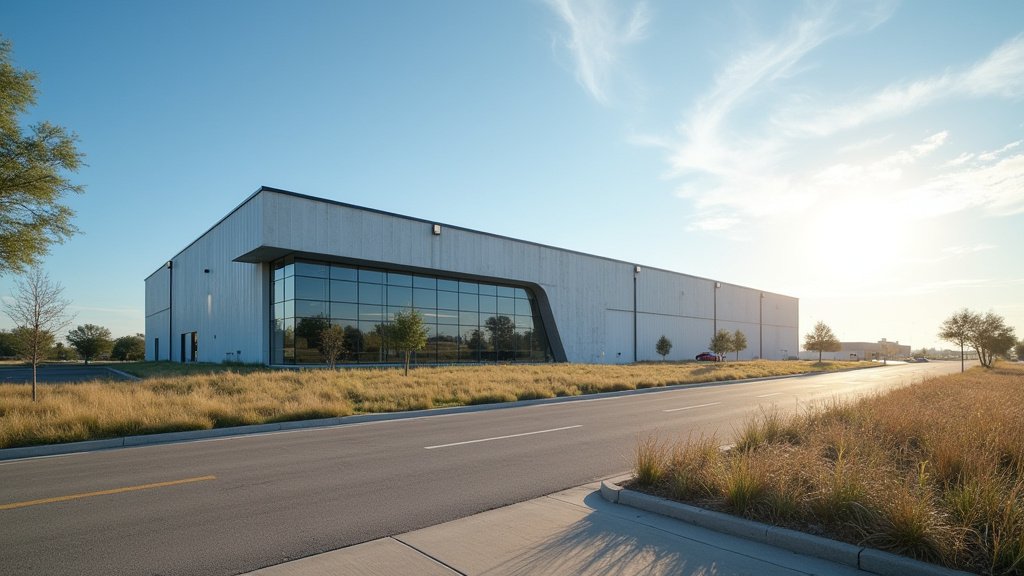
In a decisive move to bolster regional flood response and infrastructure resilience, Hidalgo County Drainage District No. 1 (HCDD1) officially unveiled its new $4.2 million training facility today. The ribbon-cutting ceremony, held in Edinburg, Texas, marks a significant investment in the human capital necessary to maintain the complex drainage networks that safeguard South Texas communities. This facility is not merely a building; it is a strategic asset designed to simulate real-world drainage challenges, providing HCDD1 personnel with the technical skills required to navigate the volatile weather patterns and severe storm events characteristic of the Rio Grande Valley.
Key Highlights
- Investment in Resilience: The $4,196,974.94 project represents a long-term commitment to operational excellence and employee safety, completed after over a year of construction.
- Operational Readiness: Designed to support intensive educational training, the center will specifically enhance coordination during flood events, reducing response times and improving technical execution.
- Collaborative Infrastructure: Beyond HCDD1 internal use, the facility is slated to become a hub for partner agencies, fostering regional cooperation in emergency preparedness and water management.
- Leadership Focus: District Manager Raul E. Sesin emphasized that the investment directly translates to improved public safety and property protection for county residents.
The Architecture of Readiness: Investing in Utility Infrastructure
The construction of a dedicated training center for a drainage district is a hallmark of modernizing utility management. In many municipalities, training is often relegated to ad-hoc, on-the-job scenarios that, while practical, lack the structured pedagogical environment necessary for high-stakes infrastructure management. HCDD1’s new facility changes that paradigm by centralizing the transfer of institutional knowledge.
Moving Beyond Traditional Training
Traditionally, drainage district employees—ranging from equipment operators to field engineers—often had to rely on fragmented training protocols. By consolidating these efforts into a $4.2 million bespoke facility, HCDD1 is institutionalizing best practices. The facility serves as a classroom for both technical skills, such as specialized machinery operation, and soft skills, including inter-agency communication during crisis scenarios.
This move is particularly critical given the complexity of the Hidalgo County Master Drainage System. As the region continues to grow, the drainage network becomes more interconnected, requiring a higher caliber of precision to manage. Training employees to operate these systems is no longer a luxury; it is a necessity to prevent system failures that could lead to catastrophic flooding in urban centers like Edinburg, McAllen, and surrounding areas.
The Operational Philosophy: Precision Under Pressure
During the unveiling, leadership highlighted that the primary goal of the facility is to create a culture of ‘precision under pressure.’ Drainage work is often performed during the most dangerous weather conditions. By providing a controlled environment to simulate these conditions, the District ensures that when actual flood events occur, the workforce is not practicing—they are executing.
This pedagogical shift is expected to reduce equipment wear-and-tear, lower insurance and liability costs, and, most importantly, improve safety outcomes for workers who are often exposed to hazardous conditions. The facility is effectively a risk-mitigation strategy disguised as a training center.
Regional Context: Why South Texas Needs This Now
The Rio Grande Valley has long contended with severe hydrological challenges. Situated in a region prone to rapid-onset flooding and tropical storm activity, the management of stormwater is synonymous with economic stability. When drainage systems fail, the impact is felt immediately: road closures, property damage, and disruption to local commerce.
A Broader Strategy for Flood Mitigation
This facility does not exist in a vacuum; it complements broader state-level initiatives, such as projects funded by the Texas Water Development Board. While capital projects (like canal deepening or reservoir construction) capture headlines, the human element—the staff who operate, maintain, and monitor these systems—is the force multiplier. Without a highly trained workforce, even the most expensive concrete and steel infrastructure will underperform.
Fostering Regional Interoperability
One of the most innovative aspects of the new center is its mandate for inter-agency cooperation. The facility will be available for use by partner agencies and organizations. In an emergency, different utility districts, emergency management teams, and law enforcement agencies must act in concert. By using a shared training environment, these diverse groups can align their communication protocols, mapping strategies, and emergency procedures long before a disaster strikes. This integration is vital for the ‘all-hazards’ approach increasingly adopted by county governments across the United States.
FAQ: People Also Ask
Why did the Drainage District spend $4.2 million on a training facility?
The investment reflects the critical need for advanced operational training. By creating a dedicated space for simulation and skill-building, the District aims to reduce response times during emergencies, increase worker safety, and extend the lifespan of costly drainage infrastructure through proper handling and maintenance.
Who will use this facility?
While the facility is primarily designed for HCDD1 personnel, the District has stated it will be open to partner agencies and regional organizations. This is intended to improve cross-agency collaboration and interoperability, essential for handling large-scale regional flood events.
Does this facility address climate change or just routine flooding?
It addresses both. While the facility focuses on the day-to-day operation of the drainage system, it is designed to prepare staff for the ‘unprecedented’—meaning severe weather events that are becoming more frequent. Training ensures that the team can pivot quickly, regardless of whether the water levels are driven by seasonal rain or extreme tropical events.
When will operations begin at the new facility?
The facility is operational following the April 17, 2026, ribbon-cutting ceremony. The District plans to begin scheduled training modules immediately, integrating them into the professional development plans for current employees.