The situation in South Texas has reached a critical tipping point, as a persistent five-year drought continues to ravage the region’s reservoirs, prompting a wave of disaster declarations and raising urgent questions about the future of water management in the American Southwest. Communities that have long relied on the Coastal Bend’s surface water are now finding their reserves at historic lows, leading local officials to initiate emergency protocols. From the city of Three Rivers to the industrial hub of Corpus Christi, the narrative is shifting from a long-term climate concern to an immediate, daily operational reality. The South Texas water crisis is no longer a forecast of future hardship; it is a present-day emergency that is testing the limits of municipal infrastructure and the patience of millions who depend on the region’s aging water systems.
Key Highlights
- Critical Reservoir Depletion: Lake Corpus Christi and Choke Canyon Reservoir are operating at critically low capacity, with levels hovering below 10% in recent reports.
- Disaster Declarations: Rural and suburban municipalities, including Three Rivers, have issued formal disaster declarations to bypass standard regulatory hurdles and unlock emergency funding for drought response.
- Industrial vs. Residential Strain: A significant point of contention exists regarding the prioritization of water usage between the region’s massive industrial chemical/energy facilities and residential municipal supply.
- Aquifer Reliance Risks: As surface water dries up, municipalities are racing to drill new groundwater wells, a strategy that hydrologists warn may lead to long-term aquifer exhaustion if current drought conditions persist.
- Legislative Urgency: State and local leadership are facing mounting pressure to expedite alternative water solutions, such as desalination, which have faced years of project stagnation and cancellation.
The Anatomy of an Unfolding Drought
The current crisis in South Texas is not merely a product of recent weather patterns but the culmination of a decade of environmental stress testing the limits of the region’s water infrastructure. Hydrologists and city planners have long warned that the systems designed for a wetter, 20th-century climate are fundamentally incompatible with the reality of the 2026 climate landscape. The Coastal Bend, specifically, has become the epicenter of this struggle. When reservoirs like Choke Canyon drop from 47 percent capacity down to single digits over a short four-year window, the impact is systemic.
The Failure of Synchronization
This is, at its core, a failure of alignment between historical planning and contemporary climate cycles. For years, the water demand in South Texas—driven heavily by residential growth and a massive industrial sector—was predicted on rainfall patterns that simply have not materialized. The current five-year drought has acted as a catalyst, accelerating the depletion of these resources faster than any municipal modeling projected. Experts argue that the reliance on surface water systems without adequate redundancy or alternative sourcing was a gamble that has now lost, leaving the region with little margin for error as summer temperatures begin to rise.
The Infrastructure Paradox
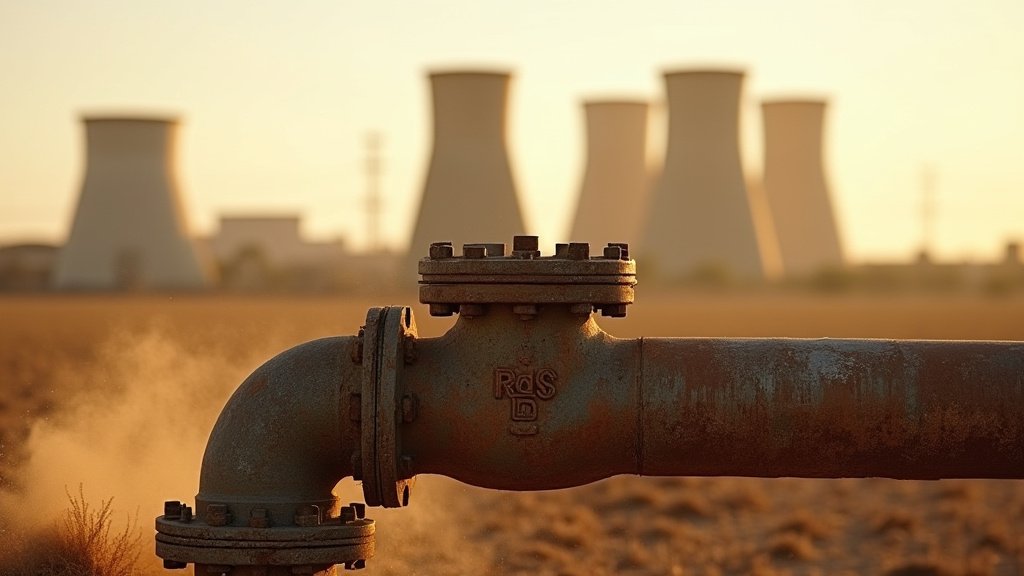
Perhaps the most controversial aspect of the crisis is the pivot toward groundwater. In the absence of viable surface water, cities are scrambling to drill deep-water wells. While this provides a temporary “band-aid” solution, it is a perilous one. Groundwater aquifers are a slow-recharging resource. By pumping them aggressively to meet current demand, cities are essentially borrowing from the future, potentially causing land subsidence and permanent aquifer damage. Academic experts, including those from Texas A&M-Corpus Christi, have repeatedly warned that groundwater should be the last line of defense, not the first-response strategy for drought mitigation.
Economic Implications and Social Friction
The economic heart of the South Texas region beats in rhythm with its water supply. With agriculture already decimated and industrial operations under the microscope, the socioeconomic fallout is beginning to ripple outward. The tension between public consumption and industrial need is rising. In Corpus Christi, for example, the local government is navigating a delicate balancing act, attempting to impose mandatory usage cuts on the general populace while managing the immense requirements of the energy and chemical plants that drive the regional economy.
The Industrial Node Dilemma
Corpus Christi is unique in its position as a major industrial node for the Gulf Coast. The water infrastructure there supports hundreds of thousands of residents alongside major chemical plants, oil facilities, and plastics manufacturers. When the city announces plans to cut water consumption by 25 percent, the ripple effects on these businesses are immediate. Yet, there is a lack of public transparency regarding how these cuts will be distributed, creating anxiety among both residents and business operators. If the city cannot secure water, it risks more than just empty taps; it risks the potential shuttering of the industries that form the backbone of its tax base.
Impact on Regional Municipalities
Smaller cities surrounding the major hubs are finding themselves at a disadvantage. In the pecking order of water access, rural communities often lack the political capital or the financial bandwidth to pivot as quickly as larger neighbors. The disaster declarations issued by towns like Three Rivers are an attempt to reclaim some agency. By declaring a disaster, they gain the legal authority to bypass procurement bottlenecks and access state-level emergency funding. However, money cannot manifest water where there is none; the declaration is a signal that the town is operating in uncharted territory with no guaranteed safety net.
The Path Toward Future Mitigation
As the region grapples with the immediate crisis, the long-term solution remains mired in policy debates and project failures. The most prominent example is the Inner Harbor desalination plant, a project that has fluctuated in status for over a decade. After ballooning in cost from $750 million to over $1 billion, the project was canceled, then revived, then delayed again. This cycle of inaction reflects a broader paralysis in water policy, where the timelines for large-scale infrastructure projects—often measured in years or decades—are completely mismatched with the urgency of a climate emergency that is progressing in months.
Moving Beyond Crisis Management
Future resilience will require a fundamental shift in how South Texas manages its resources. This involves moving away from the “reactive” model of disaster declarations and drilling to a “proactive” model of water recycling, conservation, and technological investment. Some forward-thinking municipal leaders are pushing for mandates that require industrial users to invest in their own wastewater treatment and recycling systems, effectively de-linking their dependency on the municipal supply.
The Regulatory Horizon
Finally, there is the question of state-level oversight. The Texas Commission on Environmental Quality (TCEQ) and the Governor’s office are under intense scrutiny to determine whether the existing legal framework is sufficient to manage a multi-year drought. As Texas continues to grow, the demands on all its water resources will only increase, suggesting that the South Texas crisis may eventually serve as a grim blueprint for other regions in the state unless significant regulatory and infrastructural changes are enacted.
FAQ: People Also Ask
Q: What does a ‘disaster declaration’ actually do for these towns?
A: A disaster declaration grants local mayors and city councils emergency powers. This allows them to bypass standard administrative procedures for procurement, move resources more quickly, and, crucially, unlock access to state-level disaster funding that would otherwise be unavailable under normal operating conditions.
Q: Is the water in South Texas going to run out completely?
A: While it is unlikely that all taps will go dry immediately, the region is facing a critical threshold where demand is outpacing supply. Major cities like Corpus Christi are being forced to implement mandatory water usage cuts to avoid reaching a point where there is insufficient water for essential services, making the threat of severe shortages very real.
Q: Why is there so much reliance on groundwater suddenly?
A: Groundwater is the most accessible emergency resource for municipalities when surface reservoirs like Lake Corpus Christi and Choke Canyon are depleted. However, it is viewed as a ‘stop-gap’ measure because aquifers recharge slowly and can be permanently damaged by over-extraction, posing significant long-term risks to the region’s water stability.