

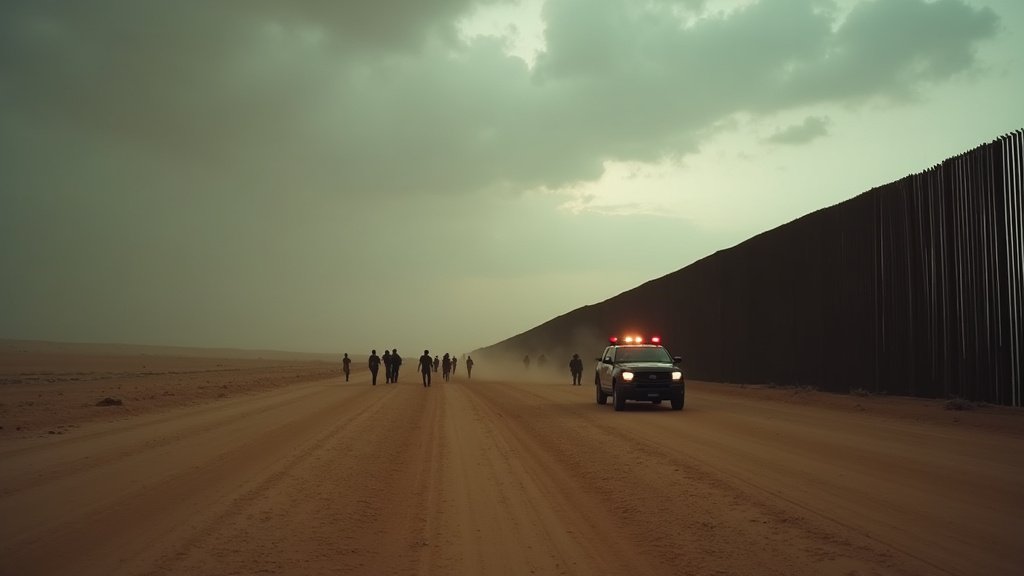
The effectiveness of **US Border Security** is a central topic in ongoing political discourse. Former President Donald Trump’s claims that the US border is the most secure it has ever been have spurred considerable debate regarding actual **US Border Security**. His administration prioritized enhanced security measures, leading to a complex evaluation of their success. While proponents highlight reductions in illegal crossings as evidence of strengthened **US Border Security**, critics question the efficacy and the human cost associated with these policies. Current news concerning **US Border Security** frequently presents these contrasting viewpoints, intensifying the national conversation around immigration enforcement and overall **US Border Security**.
Assessing US Border Security Measures and Trump Border Policy
President Trump made **US Border Security** a signature initiative of his presidency, with a primary focus on constructing a border wall along the **US-Mexico border**. Approximately 500 miles of new or reinforced wall were erected, some replacing existing barriers, and about 52 miles were built in previously unfenced areas, aiming to bolster **US Border Security**. This was supplemented by enhanced technological surveillance. The Trump administration also ramped up immigration enforcement, a key aspect of **US Border Security**, and ended the “catch-and-release” policy. The “Remain in Mexico” policy was reinstated, fundamentally altering the approach to asylum seekers and those attempting illegal border crossings, thereby impacting **US Border Security**.
Border Apprehensions and Trump Border Policy’s Impact on US Border Security
Official data on border apprehensions offers a varied perspective on **US Border Security**. Some reports suggest significant drops in border encounters, with projections indicating substantial year-over-year decreases. These figures are often contrasted with the Biden administration’s performance, noting purported significant reductions in illegal border crossings. However, other statistics present a different view of **US Border Security**. Apprehensions at the **US-Mexico border** more than doubled between 2018 and 2019. While the pandemic initially slowed migration, illegal border crossings saw a substantial increase by the spring of 2021. In fiscal year 2022, Border Patrol documented 2.2 million apprehensions, a stark increase, thus complicating the overall assessment of **US Border Security**. Conversely, some analyses suggest that fiscal year 2025 saw historically low annual levels of border apprehensions, further muddying the waters for effective **US Border Security** evaluations.
The Border Wall’s Effectiveness and its Contribution to US Border Security
The effectiveness of the border wall remains a crucial element in the discussion surrounding **US Border Security**. Supporters argue that the wall significantly curtails illegal crossings, underscoring perceived enhancements in **US Border Security**. For instance, reports claim substantial reductions in apprehensions and illegal entries in zones equipped with new wall systems, contributing to the narrative of improved **US Border Security**.
Conversely, critics contend that the border wall is an inefficient and costly solution, questioning its overall border wall effectiveness. Reports indicate that migrants have circumvented the wall through various methods. Between 2019 and 2021 alone, the wall was breached over 3,200 times, with millions spent on repairs, raising serious questions about its contribution to robust **US Border Security**.
Furthermore, the wall has resulted in adverse consequences that complicate the assessment of **US Border Security**. It has made border crossings more dangerous, leading to severe injuries and fatalities among migrants. Environmental damage is another significant concern, as construction frequently bypassed environmental regulations, impacting waterways and worsening erosion, thereby further complicating the picture of **US Border Security**.
Broader Immigration Enforcement and Criticisms of US Border Security
Immigration and Customs Enforcement (ICE) experienced an increased operational tempo under the Trump administration, resulting in nearly 200,000 deportations of undocumented immigrants. However, some reports highlighted a substantial rise in non-criminal detainees, leading to record detention levels. This facet of **US Border Security** has faced considerable scrutiny, impacting perceptions of effective immigration enforcement.
Critics have also voiced concerns about potential misconduct during federal immigration enforcement operations, with allegations of abuse and misconduct reported involving both ICE and CBP officers. Some argue that enforcement resources were not adequately prioritized, potentially diverting attention from combating more serious criminal activities, thus impacting the comprehensive nature of **US Border Security** and the work of CBP officers.
Public Opinion and Contrasting Narratives on US Border Security
Public opinion regarding Trump’s immigration policies and their impact on **US Border Security** is sharply divided. A significant majority believes there should be a legal pathway for undocumented immigrants to remain in the country, and many disapprove of suspending asylum applications. While Republicans generally supported the administration’s approach to **US Border Security**, Democrats largely opposed it. The narrative of a “most secure border” is challenged by available data and expert analysis concerning **US Border Security**. While certain metrics did show decreases in encounters, especially during periods influenced by external factors, other data points to persistently high numbers of border apprehensions. The substantial investment in the border wall, a key component of Trump border policy, continues to be debated regarding its cost and its actual border wall effectiveness in achieving true **US Border Security**. This ongoing discourse highlights the complex and contested nature of immigration and border control in the United States, with **US Border Security** remaining a critical policy issue and a subject of intense public discussion.