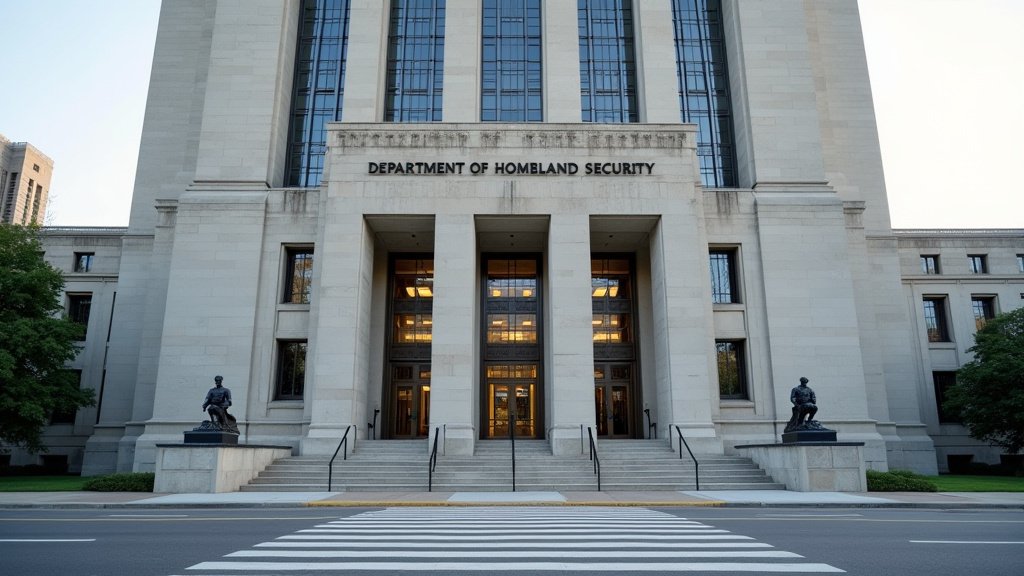
The United States Department of Homeland Security (DHS) is returning to operational normalcy today as President Donald Trump signed bipartisan legislation on Thursday, effectively ending the longest agency shutdown in American history. The 75-day standoff, which began on February 14, 2026, had placed immense strain on federal personnel, disrupted critical infrastructure, and created a mounting political crisis for the administration and House leadership. While the passage of this bill provides immediate relief for essential operations—including the Transportation Security Administration (TSA), the U.S. Coast Guard, and the Federal Emergency Management Agency (FEMA)—it leaves the most contentious aspect of the debate, immigration enforcement funding, entirely unaddressed.
Key Highlights
- Legislative Resolution: The House followed the Senate’s lead in approving a clean funding bill, which President Trump signed immediately, halting the record-breaking 75-day shutdown.
- Core Operations Restored: Essential agencies including TSA, the Secret Service, and FEMA are now fully funded through the end of the current fiscal year, September 30, 2026.
- Unresolved Standoff: Funding for Immigration and Customs Enforcement (ICE) and the U.S. Border Patrol was explicitly excluded from the bill, pushing the debate into a separate, potentially volatile, reconciliation process.
- Economic and Operational Impact: The shutdown had caused significant disruption to federal payrolls and employee retention, particularly within airport security, forcing the White House to scramble for stopgap fiscal measures.
The Legislative End to a Historic Impasse
The resolution of the DHS shutdown marks the conclusion of a period of legislative paralysis that tested the boundaries of executive and congressional power in 2026. The impasse originated from a fundamental disagreement between House Democrats and the Trump administration regarding the oversight of federal immigration enforcement. The standoff was catalyzed in January following the tragic fatal shootings of two U.S. citizens by federal immigration agents in Minneapolis, which sparked demands from Democratic lawmakers for enhanced accountability measures, including mandatory body cameras and restricted raid protocols.
The Human Cost of the Shutdown
For over two months, the shutdown forced tens of thousands of federal employees to work without guaranteed compensation. The impact was most visible at the nation’s airports, where TSA agents—many essential to maintaining security—faced extreme financial instability. This led to a wave of attrition as employees sought employment elsewhere to pay their bills, resulting in prolonged wait times and operational chaos at major hubs. While President Trump attempted to mitigate these effects by authorizing the use of existing funds to pay employees, Secretary of Homeland Security Markwayne Mullin issued stark warnings in late April that the department was on the verge of exhausting all temporary financial mechanisms. The signing of this bill serves as a critical stabilization measure for the workforce, though the morale damage caused by the prolonged uncertainty remains a significant challenge for agency leadership.
The Strategic Carve-Out
House Speaker Mike Johnson, navigating a razor-thin Republican majority, spent weeks resisting the bipartisan Senate-passed bill. The decision to finally bring the bill to the floor represented a pragmatic concession to the reality that the political cost of the shutdown had become unsustainable. By decoupling the DHS’s core administrative funding from the administration’s specific immigration enforcement priorities, leadership has successfully cleared the most immediate threat to federal operations. However, this strategy is only a temporary ceasefire. The legislative text deliberately excludes the controversial ICE and Border Patrol funding, which remains a core pillar of the administration’s broader agenda. Republicans have signaled that they will now attempt to secure this $70 billion in funding through the budget reconciliation process—a parliamentary procedure that allows for approval with a simple majority, thereby bypassing the need for Democratic votes.
Future Implications and The $70 Billion Question
As the dust settles, Washington is already pivoting toward the next phase of this battle. The reconciliation process, which party leaders aim to initiate in the coming weeks, will be a high-stakes test of party unity. For Democrats, the strategy remains focused on leveraging their leverage to extract significant policy concessions, particularly regarding the standard operating procedures of federal immigration agents. For the GOP, the goal is to finalize the funding before the summer recess, ensuring that the president’s enforcement agenda is fully financed for the remainder of his term. This upcoming legislative battle promises to be even more partisan than the shutdown debate itself, as it directly confronts the administration’s core platform against the progressive demands for systemic reform.
FAQ: People Also Ask
1. Why were ICE and the Border Patrol excluded from the final bill?
To secure the necessary bipartisan support to end the shutdown, lawmakers agreed to separate the less contentious DHS operations from the highly polarized debate over immigration enforcement policy. Excluding these agencies allowed the House and Senate to pass the core funding bill quickly.
2. Is the government shutdown completely over?
Yes, the specific partial shutdown of the Department of Homeland Security has concluded. However, the underlying legislative conflict regarding border policy remains active and is expected to dominate congressional proceedings in May and June.
3. How does this affect air travel and federal employee pay?
With the bill now law, federal employees, including TSA officers, are guaranteed regular compensation for the remainder of the fiscal year. This should resolve the staffing shortages and erratic operational issues that plagued airports over the last 75 days.
4. What happens if the reconciliation process for immigration funding fails?
If Republicans are unable to pass the separate funding bill via reconciliation, the agencies in question will face a funding cliff later in the year, likely forcing yet another round of emergency negotiations to prevent a secondary shutdown of immigration enforcement functions.