
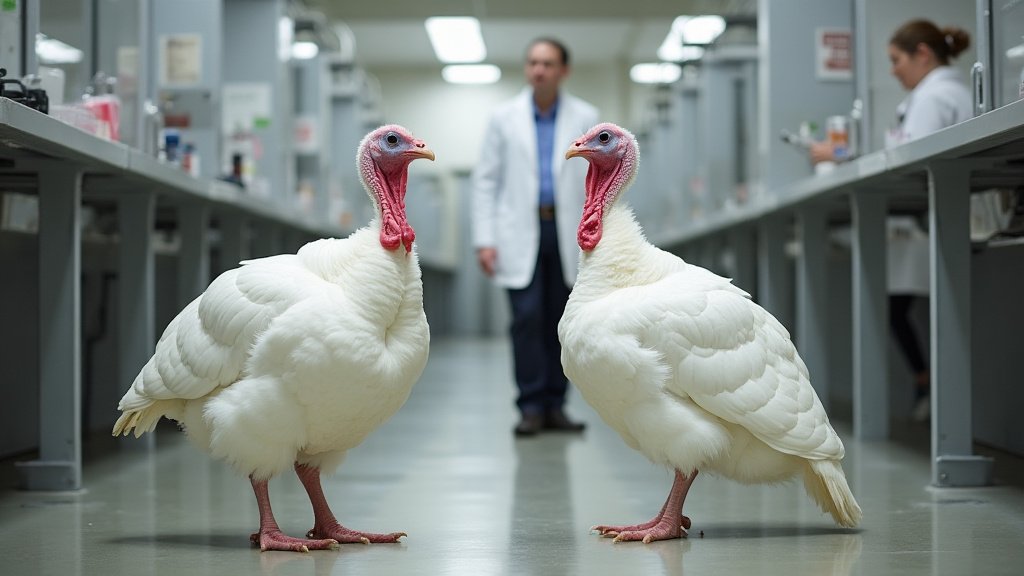
The 79th National Thanksgiving Turkey Presentation at the White House concluded with a familiar sense of ceremony, but for the two stars of the show—Freedom and Feathers—the real journey began after the cameras stopped rolling. The duo has been transported to Texas A&M University (TAMU), where they have joined the Department of Poultry Science. This transition is not merely a transfer of custody but a continuation of an established partnership between the National Turkey Federation and the institution, ensuring that these high-profile birds live out their retirement under the rigorous care of experts.
The Aggie Tradition of Avian Stewardship
Texas A&M University has become the premier destination for pardoned turkeys, a role that aligns with the university’s status as a leader in agricultural and veterinary science. When a turkey is pardoned, it is not simply set loose in the wild; doing so would be a death sentence for birds bred specifically for commercial agriculture. These birds, typically Broad-Breasted White turkeys, have been genetically selected for rapid growth and substantial body mass, traits that make them ill-equipped to survive in a natural environment.
By transporting Freedom and Feathers to the Poultry Science Complex at College Station, the birds are placed in a controlled, biosecure environment. Here, the university’s faculty and graduate students manage their health, dietary needs, and comfort. This arrangement provides a rare educational opportunity for students in the Department of Poultry Science, who gain hands-on experience in managing these specific breeds while ensuring the birds receive optimal nutrition and medical oversight.
Life After the Pardon: The Science of Care
The retirement of Freedom and Feathers is not a holiday for the birds; it is a carefully managed life stage. The physical structure of these turkeys is a primary concern for the TAMU staff. Because they are bred to reach market weight quickly, their skeletons and cardiovascular systems are under immense pressure. The veterinary team at Texas A&M monitors them closely to manage their weight and activity levels, preventing the mobility issues that often plague commercial turkeys that are allowed to grow past their standard slaughter age.
Beyond basic health monitoring, the university environment provides a level of enrichment. The birds are kept in an enclosure that protects them from extreme weather, predators, and pathogens. The academic staff focuses on maintaining a stress-free environment, which is vital for the longevity of the birds. This scientific approach to retirement helps the university gather data on the aging processes of these breeds, contributing to broader studies in animal welfare and poultry production efficiency.
Beyond the Ceremony: Historical and Educational Context
The tradition of the Presidential Turkey Pardon, while modernized by the National Turkey Federation and the White House, remains a cultural touchstone. However, the academic side—the integration of the birds into a university setting—is a relatively recent evolution in the tradition. Before this partnership with Texas A&M, the birds often faced uncertain futures.
By integrating these birds into the curriculum and research facilities at Texas A&M, the pardon process has transitioned from a purely symbolic gesture into a practical exercise in stewardship. It allows the public and the academic community to engage with the reality of agricultural production. Students learn not just about anatomy and physiology, but about the ethics of animal husbandry and the complexities of caring for specialized genetic lines. This unique intersection of high-profile politics and practical agricultural science ensures that Freedom and Feathers serve a purpose long after their White House appearance.
Addressing the Genetic Challenges
A critical, yet often overlooked, aspect of the pardoned turkeys’ lives is their physiological fragility. The genetic selection for ‘meat-type’ turkeys has prioritized feed efficiency and muscle yield. When these birds are ‘pardoned’ and allowed to live, they essentially become biological outliers. The staff at Texas A&M must act as custodians of these traits, managing the birds with a focus on palliative care. This includes strict dietary restrictions to manage their rapid weight gain, a crucial element in preventing skeletal stress.
This ongoing management provides a unique dataset for researchers. By documenting how these birds age when given human-grade care, TAMU contributes to the industry’s understanding of bird health. It is a testament to the university’s commitment that they prioritize the dignity and welfare of the animals, ensuring that these ‘famous’ birds receive the highest standard of care available in the agricultural sector.
Public Perception and Outreach
The arrival of Freedom and Feathers at Texas A&M also serves as a focal point for public education. The university often leverages the presence of the turkeys to talk about poultry science, the history of agriculture, and the nuances of the Thanksgiving tradition. For the students and staff at the university, the birds are more than just celebrities; they are subjects of dedicated care, embodying the institution’s ‘Aggie’ spirit of service and excellence. As they settle into their new home in Texas, they represent a bridge between the symbolic theater of Washington, D.C., and the grounded, scientific reality of modern food production.