

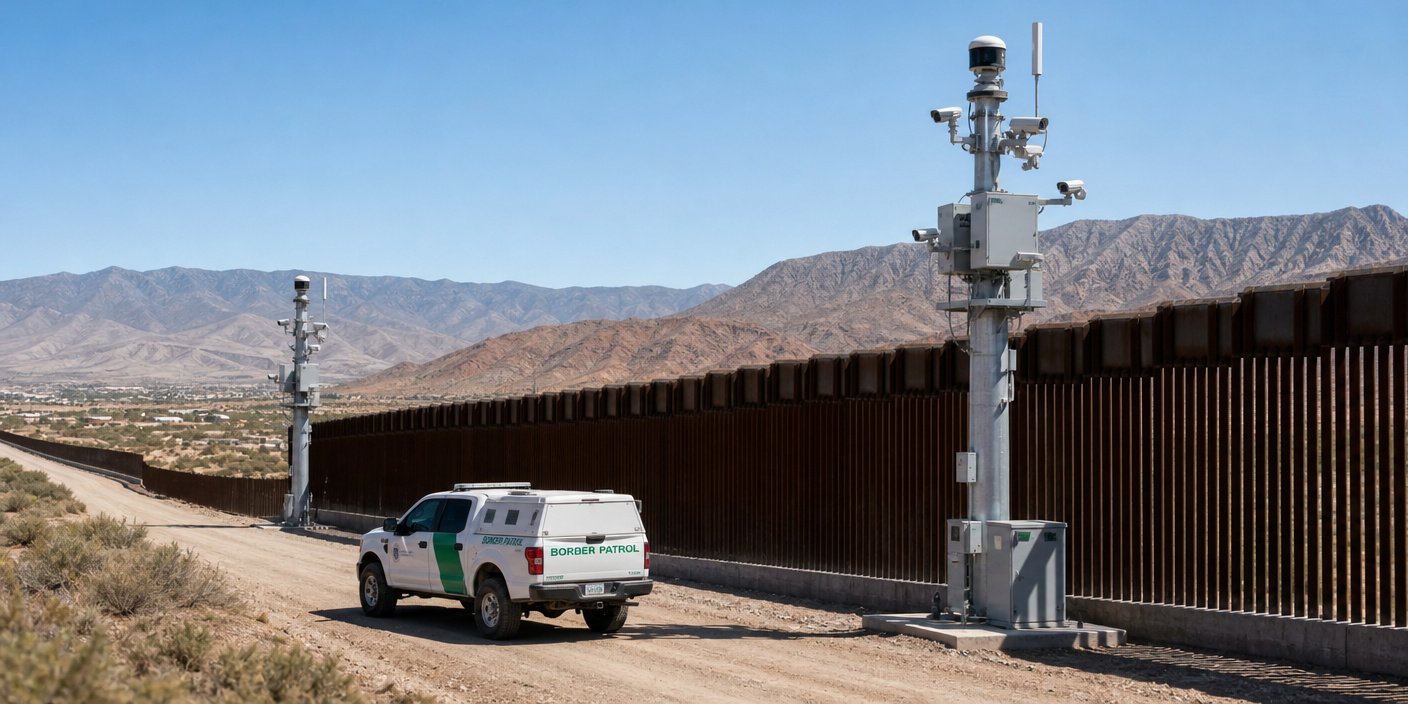
In a landmark report released this week, the U.S. Department of Homeland Security (DHS) announced that fiscal year 2026 saw the lowest volume of border crossings in American history. Under the strategic direction of President Trump and Secretary Mullin, the agency has successfully executed a massive overhaul of border security protocols, resulting in a staggering 95% decrease in total apprehensions compared to historical baselines, and maintaining a strict zero-tolerance policy that has resulted in zero Border Patrol releases throughout the entire fiscal year. This dramatic shift underscores a fundamental transformation in how the U.S. manages its sovereignty and border integrity.
Key Highlights:
- 95% reduction in border apprehensions compared to recent historical averages.
- Achievement of zero Border Patrol releases throughout the entirety of fiscal year 2026.
- Implementation of a revamped operational strategy under the Trump-Mullin directive.
- Significant stabilization in border-adjacent municipal resource allocation.
- Data confirms a complete reversal of previous ‘catch and release’ protocols.
The Enforcement Paradigm: Analyzing the 2026 Border Strategy
The historic data points released by the Department of Homeland Security represent more than just a statistical anomaly; they signify a complete restructuring of the nation’s immigration enforcement apparatus. Since the beginning of the 2026 fiscal year, the administration, led by Secretary Mullin, pivoted away from the management of massive surges and toward the prevention of unlawful entry through a combination of enhanced physical barriers, increased technological surveillance, and a rigorous, streamlined adjudication process that prioritizes immediate turnbacks over prolonged processing.
The Mechanics of the 95% Reduction
At the core of these unprecedented figures is the policy change regarding how apprehensions are handled. Historically, the U.S. Border Patrol functioned partially as a processing facility, overwhelmed by the volume of entrants. By eliminating the ‘release’ mechanism, the administration effectively closed the loophole that previously incentivized illegal crossings. The 95% reduction in apprehensions is directly correlated to the perception and reality of the border: the route is no longer viewed as a viable path for unauthorized entry. Intelligence reports suggest that cartel smuggling networks, facing a 100% interdiction rate at key crossing points, have largely abandoned traditional sectors in favor of dormancy, unable to guarantee passage to potential migrants.
Technological and Tactical Integration
Under Secretary Mullin’s guidance, the integration of autonomous surveillance and AI-driven predictive modeling has provided agents on the ground with a force multiplier. This technical evolution allows for the deployment of personnel to specific ‘hot zones’ before crossings even commence. This precision has reduced the reliance on massive field camps, allowing agents to focus on the security perimeter rather than administrative detention. The result is a more sterile, secure environment where enforcement is proactive rather than reactive.
Socio-Economic and Legal Implications
Beyond the raw statistics, the secondary effects of this policy shift are being felt throughout the nation. Border towns that previously shouldered the heavy burden of processing and housing migrants report that municipal infrastructure and public services have stabilized. Furthermore, the absence of releases means that the domestic legal system, specifically the immigration courts, has seen a drastic reduction in case backlogs. This creates a secondary economic benefit, as taxpayer funds previously allocated for short-term migrant assistance are being reallocated toward infrastructure and law enforcement training. This cycle of stabilization creates a self-reinforcing effect: as the border becomes more secure, resources are freed up to further solidify that security, creating a sustainable, long-term defensive posture.
FAQ: People Also Ask
How was the 95% reduction in apprehensions achieved?
The reduction was achieved through a multi-pronged approach that included the elimination of release policies, the deployment of advanced surveillance technologies, and increased diplomatic pressure on source countries to assist in pre-border interdiction. By removing the incentive of entry, the administration successfully deterred the majority of attempted crossings.
What does ‘zero Border Patrol releases’ mean for the immigration system?
This policy signifies that every individual intercepted attempting to cross the border illegally is immediately processed for turnback or expedited removal. This eliminates the ‘catch and release’ system, ensuring that individuals do not enter the U.S. interior while awaiting court dates, which had previously been a primary driver of illegal migration.
What are the long-term projections for fiscal year 2027?
DHS officials have indicated that the current strategy is sustainable and designed to be the new baseline for border management. The administration plans to further scale the use of surveillance technology and maintain the current deterrence-based enforcement posture to ensure that the gains made in 2026 remain permanent.