
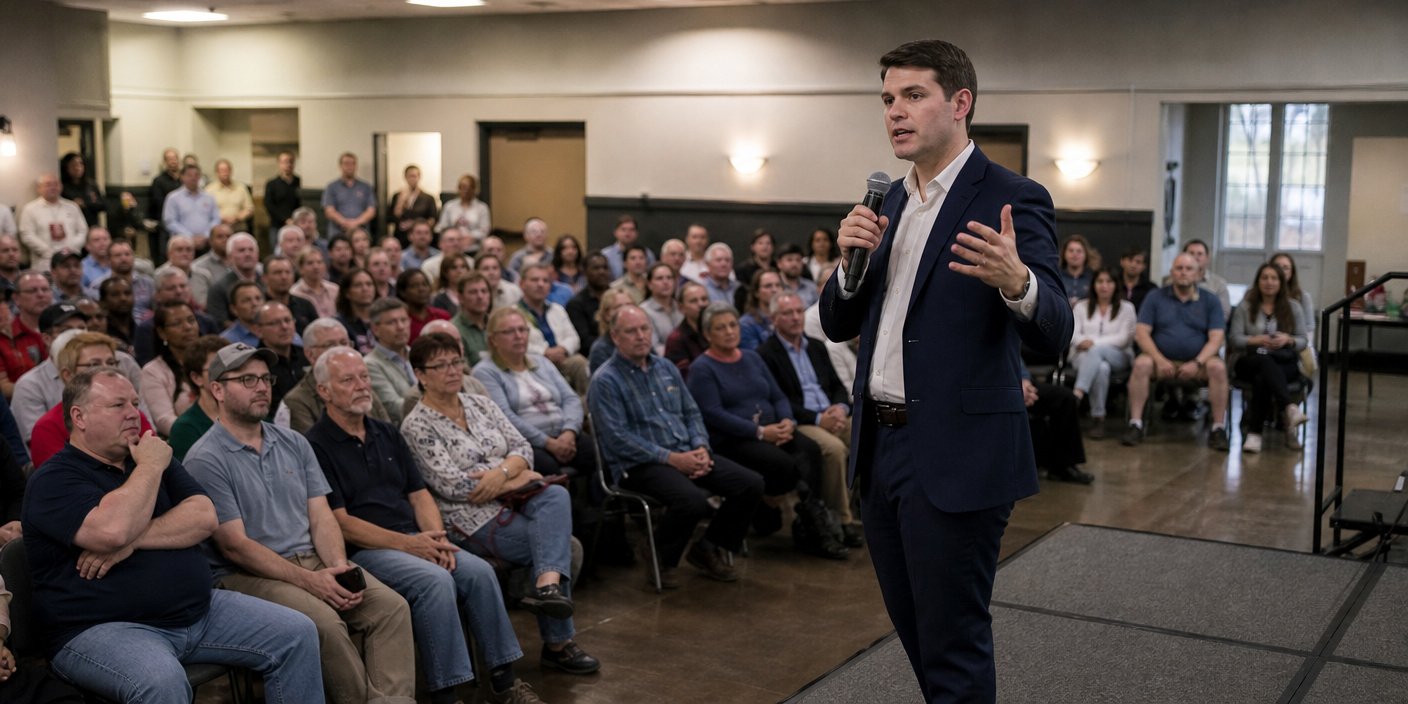
The atmosphere inside the community center on October 14 was electric and unmistakably tense. As Texas Democratic Senate candidate James Talarico took the stage, he was not met with the softballs often associated with controlled campaign events. Instead, Talarico faced a direct, unscripted grilling from a skeptical electorate, underscoring the high-stakes nature of his competitive race against Republican opponent Ken Paxton. The event served as a microcosm of the current political polarization in Texas, where voters are demanding more than soundbites—they are demanding accountability and clear-eyed answers on the most contentious issues of the day.
A Crucible of Public Accountability
The town hall event, which drew a capacity crowd of local residents, was characterized by rigorous questioning that left little room for political hedging. For over 90 minutes, Talarico navigated a gauntlet of inquiries ranging from granular policy details to deeply personal and ideological challenges. The intensity of the interaction highlighted a growing trend in the Texas Senate race: voters are increasingly bypassing traditional campaign messaging in favor of direct, often confrontational dialogue.
Attendees pressed Talarico on his legislative record and his future vision for the state, creating a dynamic that tested his ability to remain composed under pressure. This wasn’t merely a campaign stop; it was a high-stakes stress test of his platform, with every answer being dissected in real-time by an audience that included both staunch supporters and vocal critics of his challenger, Ken Paxton.
Integrating Faith and Policy
One of the most distinct segments of the evening focused on the intersection of theology and public governance. Talarico, who has frequently spoken about his background and personal convictions, found himself navigating complex questions regarding how his faith influences his legislative priorities. Voters challenged him to articulate how his theological perspectives align—or occasionally collide—with the pluralistic demands of a diverse Texas constituency.
This discourse underscored a significant secondary angle in this election: the role of religion in the modern legislative process. Critics and supporters alike used the forum to probe the boundaries between private morality and public mandate. Talarico’s responses attempted to bridge this gap, emphasizing a commitment to service that transcends partisan divides, though the skeptical nature of the room suggested that the electorate remains cautious and highly discerning.
The Abortion Debate: A Central Fracture
Perhaps no topic generated as much friction as the debate over abortion access. In a state with some of the most restrictive reproductive health laws in the country, the issue remains a primary driver of voter engagement. Talarico faced pointed questions regarding his specific strategy to address the current legislative landscape.
Attendees pushed for clarity, moving beyond general opposition to current statutes to demand actionable plans. The exchange highlighted the profound anxiety surrounding reproductive rights in Texas, with voters on both sides of the spectrum demanding to know how a Talarico victory would translate into tangible legislative outcomes. His responses were met with a mix of approval and rigorous follow-up, reinforcing that for many in the audience, this issue is the single most critical factor in their decision at the ballot box.
Strategic Implications for the Senate Race
The broader implications of the October 14 town hall extend well beyond the walls of the venue. As Talarico continues his campaign against Ken Paxton, the event provided a preview of the challenges he faces in converting skepticism into electoral momentum. The ‘grilling’ format serves as a vital diagnostic tool for the campaign, identifying exactly which policy areas require more robust communication strategies.
For the electorate, the night demonstrated that the appetite for direct, unfiltered engagement is at an all-time high. Whether this town hall will act as a turning point in the competitive Senate race remains to be seen, but it has certainly raised the stakes. As the campaign calendar moves toward Election Day, the ability to withstand such scrutiny—and to successfully articulate a platform that resonates with a deeply divided public—will likely determine the outcome of what has become one of the most closely watched contests in the state.