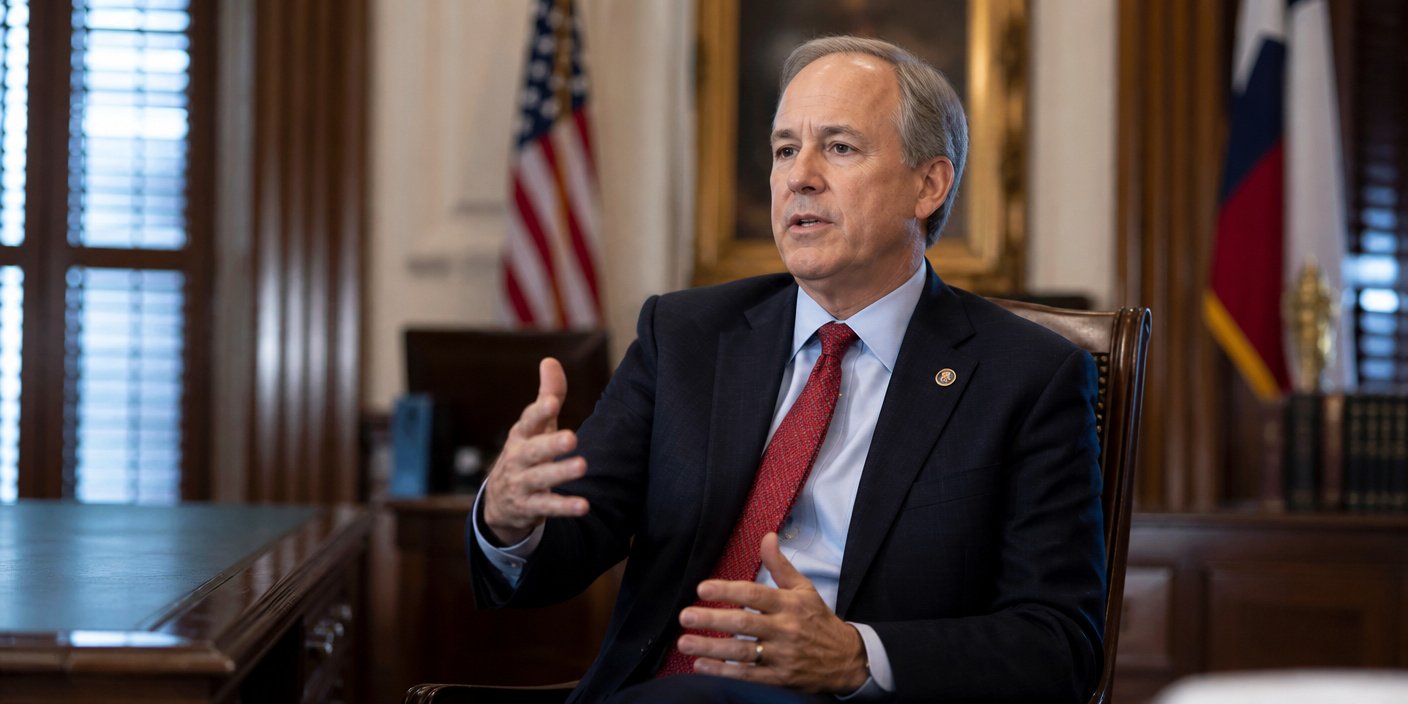

Governor Greg Abbott has come under fire from the Houston Chronicle Editorial Board regarding his administration’s handling of extradition requests, specifically centering on the delayed transfer of a suspect to Minnesota. The criticism underscores a broader debate over the intersection of executive power, political posturing, and the fundamental mechanics of interstate law enforcement. By withholding the signing of necessary extradition paperwork, the Governor’s office is being accused of prioritizing political optics over the legal obligations required by the Uniform Criminal Extradition Act.
Key Highlights
- The Core Accusation: The Houston Chronicle Editorial Board characterizes Governor Abbott’s delay in signing extradition paperwork as a calculated political move rather than a standard legal review process.
- The Minnesota Connection: The standoff involves a suspect sought by Minnesota authorities, raising concerns about the potential erosion of interstate cooperation in criminal justice matters.
- Legal Procedure vs. Discretion: While governors possess executive discretion in extradition, critics argue that using this power to delay or deny transfers undermines public safety and the rule of law.
- Interstate Friction: The refusal to facilitate the transfer highlights the growing challenges in state-to-state relations, particularly when political ideologies diverge across state lines.
The Political Geometry of Extradition: Examining the Minnesota Standoff
The extradition process, fundamentally governed by the U.S. Constitution’s Extradition Clause and the Uniform Criminal Extradition Act (UCEA), is designed to be a non-partisan, ministerial function. When a state requests the return of a fugitive, the governor of the asylum state—in this case, Texas—is generally expected to ensure the process proceeds efficiently. However, the Houston Chronicle’s recent editorial suggests that this routine process has been weaponized by Governor Abbott’s administration for political convenience.
The Mechanics of the Extradition Delay
Under the UCEA, which Texas has adopted, the governor’s role in an extradition request is primarily formal. Once a requesting state—such as Minnesota—submits an affidavit, an indictment, or a judgment of conviction, the governor reviews the paperwork to ensure it meets statutory requirements. Once verified, the governor typically signs the governor’s warrant, authorizing local law enforcement to surrender the individual.
Critics of the administration point out that when these requests are treated as subjects of political deliberation, it introduces a dangerous bottleneck. If the Governor’s office applies a ‘political litmus test’ to every extradition request, it creates an environment where criminal justice outcomes are contingent upon the Governor’s current political platform rather than the evidence presented by the requesting jurisdiction. The Chronicle argues that this selective enforcement effectively grants the Governor the power to unilaterally decide which extraditions are ‘convenient’ to fulfill and which ones are not, a departure from the established legal expectation of duty.
Analyzing the Alleged Political Calculus
Why would an extradition request be delayed? The editorial suggests that in the current climate, such delays are often calculated to appease specific voting bases or to signal defiance against jurisdictions with differing political leadership. By withholding signatures for suspects requested by states like Minnesota, the administration may be attempting to create a narrative that Texas is a ‘fortress’ against external legal pressures, or conversely, that it is asserting state sovereignty in a way that resonates with its conservative constituency.
However, this approach carries significant risks. When Texas delays or denies extraditions, it provides legal cover for other states to reciprocate when the roles are reversed. If interstate cooperation on extraditions deteriorates, the primary casualty is public safety. Victims of crimes, families seeking justice, and law enforcement agencies are left in limbo while high-level political posturing dictates the movement of suspects. The editorial posits that this is not merely a procedural delay but a fundamental abdication of the Governor’s duty to uphold the law impartially.
Impact on Multi-State Law Enforcement Cooperation
Law enforcement operates on the principle of cooperation. The effectiveness of the American criminal justice system relies heavily on the ability of state agencies to communicate, share resources, and transfer suspects across borders without interference. When a governor disrupts this flow for political reasons, it creates friction that can ripple through the entire system.
Legal experts note that while there are very limited grounds upon which a governor can legally refuse an extradition request—such as if the person is currently serving a sentence in the asylum state—these cases are rare. By expanding the grounds for refusal to include political considerations, Governor Abbott’s administration is testing the boundaries of the extradition system. The long-term consequence of this policy may be a breakdown in the reciprocal ‘good faith’ reliance that states have maintained for decades. If Minnesota—or any other state—determines that Texas is an unreliable partner in criminal justice, the ripple effects could complicate future investigations, joint task forces, and cross-border prosecutions.
FAQ: People Also Ask
1. What is the primary role of a governor in the extradition process?
Legally, a governor’s role is ministerial. They review the extradition documents to ensure they meet the criteria of the Uniform Criminal Extradition Act. If the documents are in order, the governor is expected to sign the warrant to transfer the suspect to the requesting state.
2. Can a governor legally refuse to sign extradition paperwork?
Governors have limited discretion. They can refuse or delay if the documents are technically flawed, if the individual is currently under prosecution or serving a sentence in the asylum state, or if there is a verified legal challenge to the warrant. Using political motivation to deny extradition is not a recognized legal ground and is the focus of current criticism.
3. How does a delayed extradition affect law enforcement?
Delays keep suspects in the asylum state longer than necessary, consuming local jail resources and potentially stalling investigations or trials in the requesting state. It disrupts the efficiency of the judicial system and can lead to situations where suspects are released due to procedural errors or time limitations.
4. What is the ‘Uniform Criminal Extradition Act’?
The UCEA is a set of standardized laws adopted by most states to simplify and facilitate the transfer of fugitives across state lines, ensuring a consistent and constitutional process for handling extradition requests.