
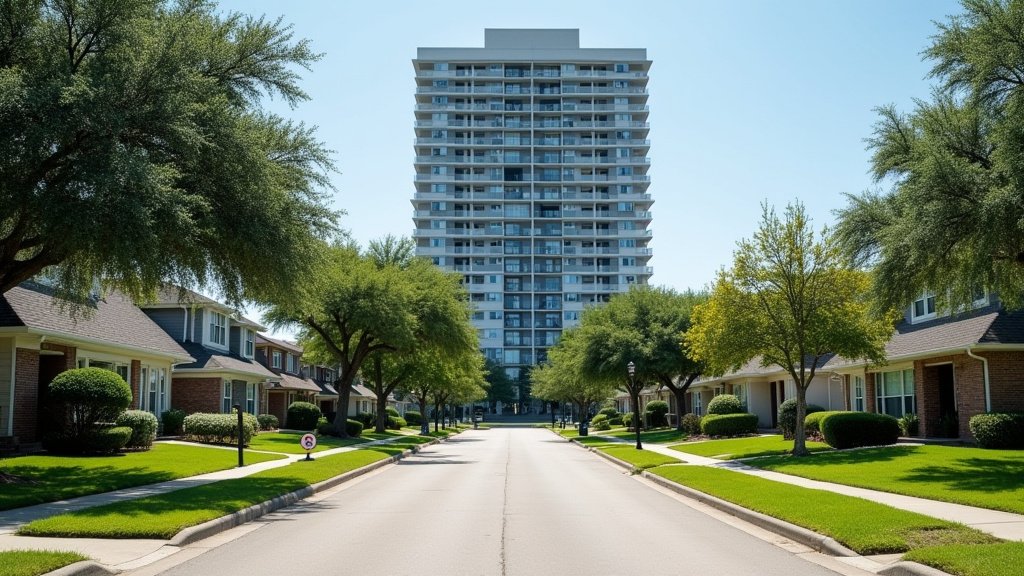
The rapid expansion of the Texas population has triggered an aggressive legislative response aimed at curbing housing shortages, but the implementation of these new Texas housing laws is encountering significant friction. Across the state, and particularly in the booming North Texas corridor, suburban cities are pushing back against state-mandated densification, setting the stage for a prolonged legal and political showdown over the future of the Lone Star State’s skyline.
The Legislative Push for Density
The central driver of this tension is a series of legislative moves designed to strip away the regulatory barriers that have historically slowed the construction of multi-family housing. Proponents of these state laws argue that the only viable solution to the skyrocketing cost of living in major metros like Dallas-Fort Worth, Austin, and Houston is a massive increase in supply. By streamlining permitting processes and limiting the ability of municipalities to impose arbitrary zoning restrictions—such as excessive minimum lot sizes or parking requirements—Texas lawmakers are attempting to force a market correction.
The legislative intent is clear: prioritize housing affordability and availability over the aesthetic or density preferences of individual municipalities. This top-down approach reflects a growing consensus among state officials that the ‘Not In My Backyard’ (NIMBY) sentiment prevalent in suburban councils is a primary architect of the current affordability crisis. As thousands of apartment units begin to break ground in previously low-density areas, the economic pressure of this policy is becoming tangible.
The Suburban Resistance: Local Control vs. State Preemption
While state officials view these measures as necessary, suburban municipalities view them as an existential threat to local governance. In North Texas, suburban city councils and planning commissions are mounting a quiet but determined resistance. Many officials argue that state laws ignore the nuances of infrastructure strain, such as traffic congestion, school district overcrowding, and the burden on utility services that come with rapid high-density development.
The conflict is particularly acute in suburban areas that rely on property tax revenue and specific zoning layouts to maintain their distinct identity. When a municipality loses the ability to dictate the height, density, or location of a new apartment complex, they lose one of their primary tools for managing growth. This has led to a flurry of creative, often contentious, attempts by local governments to interpret state mandates narrowly, or to impose alternative requirements that—while perhaps not technically violating the letter of the law—nonetheless complicate and delay construction projects.
The Economic Impact: Supply vs. Community Character
Economic analysts tracking the Texas housing market are watching this standoff with concern. The basic economic principle at play suggests that increasing supply is the most effective way to stabilize housing prices. However, the friction between state law and local enforcement introduces uncertainty, which can inadvertently drive up development costs. If developers are forced to navigate hostile regulatory environments or engage in protracted litigation with cities, the expected cost savings from streamlined permitting may be eroded.
Furthermore, the definition of ‘community character’ is at the heart of the debate. Supporters of the state laws argue that the suburban model of the last 40 years is unsustainable and exclusionary. Conversely, residents of these suburbs argue that they purchased their homes based on the promise of a specific neighborhood environment, and that state-mandated densification is a breach of that social contract. This is not merely a policy dispute; it is a fundamental disagreement about what the Texas suburban experience should be in the coming decades.
The Legal Horizon
The most likely outcome of this standoff is a series of high-stakes legal battles. As cities attempt to assert their local authority against state preemption, the courts will eventually be forced to clarify the limits of legislative power. Legal experts anticipate that we are approaching a period of ‘judicial zoning,’ where judges—rather than city councils—will increasingly determine the density and nature of suburban growth. This uncertainty creates a challenging landscape for both commercial developers and local residents, as they wait for the courts to set the precedent that will define the next phase of the Texas development boom.
FAQ: People Also Ask
Why are Texas housing laws changing to support more apartments?
The primary goal is to address the severe housing supply shortage and rising costs. By limiting the ability of cities to restrict high-density zoning, the state aims to increase construction volume and lower the entry price for housing in rapidly growing metropolitan areas.
Are suburban cities legally allowed to block these new housing projects?
Generally, no. State preemption laws usually override local municipal ordinances regarding zoning and permitting. However, suburbs are using various administrative methods—such as detailed environmental or infrastructure impact studies—to challenge or delay specific projects, leading to local-versus-state conflict.
How does this affect suburban property values?
The impact is debated. Some residents fear that high-density apartments will lower the value of single-family homes due to increased traffic and population density. Conversely, some economists argue that improving the overall regional housing market and infrastructure can maintain property values by preventing urban sprawl and keeping the area competitive.