

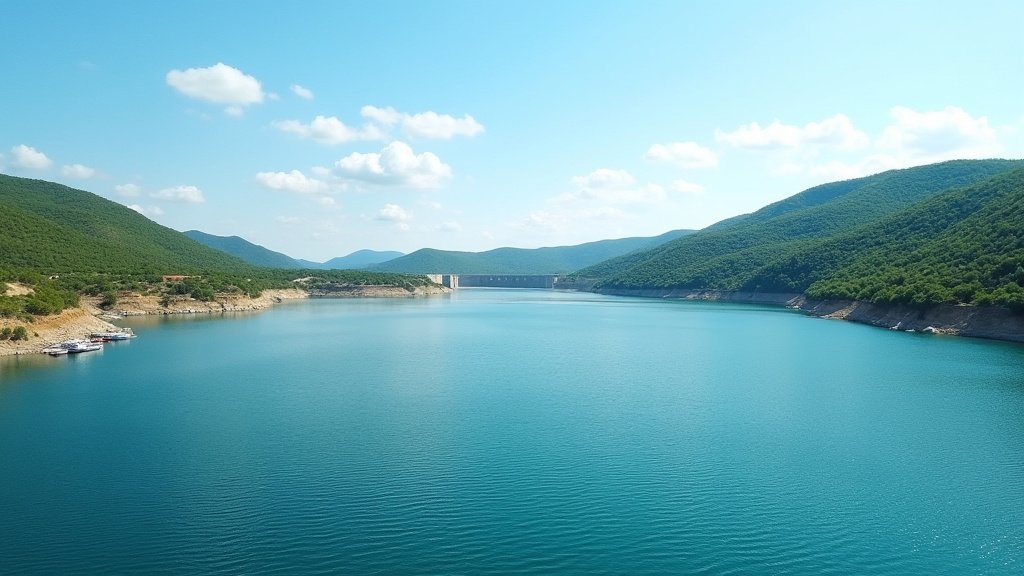
Following a series of relentless mid-July storms, Canyon Lake, a critical reservoir in Central Texas, has officially reached 100% of its conservation capacity. This milestone marks a significant hydrological recovery for the region, which has grappled with erratic water levels for the past several years. The reservoir, managed by the U.S. Army Corps of Engineers (USACE), has not hit this level of fullness since November 2021, providing a necessary reprieve for regional water security and local recreational economies.
The Hydrological Milestone
The ascent to 100% conservation capacity represents more than just a full lake; it signifies a massive influx of water volume that has effectively reversed the trend of decline observed during the summer months. Canyon Lake, located in Comal County, functions as a vital storage facility for the Guadalupe River basin. When the conservation pool is reached, it indicates that the lake has successfully captured the majority of the recent regional runoff. According to data monitored by the Texas Water Development Board, the rapid rise in water levels was directly attributable to the specific precipitation patterns that occurred between July 15 and July 20, where sustained rainfall overwhelmed local watersheds and drained directly into the reservoir system.
Historical Context: The Long Path to Recovery
To understand the significance of this event, one must look at the historical trajectory of Canyon Lake over the past three years. Since the last time the lake reached 100% capacity in November 2021, the reservoir had experienced a period of significant fluctuation characterized by prolonged dry spells and moderate, yet insufficient, rainfall. During the peak of the 2023 drought conditions, residents and state officials watched as water levels dropped significantly, raising concerns about long-term water availability for both irrigation and public municipal use. The return to capacity is not merely an environmental success; it is a critical baseline correction for the region’s climate resiliency models, which have been tested by extreme heat and unpredictable weather patterns.
The Operational Balancing Act
The management of Canyon Lake is an exercise in complex logistics performed by the U.S. Army Corps of Engineers. As the reservoir hits its conservation limit, the focus for the USACE shifts from accumulation to active regulation. Maintaining a reservoir at 100% requires precise control over inflow and outflow to prevent accidental downstream flooding while ensuring maximum utility of the stored resource. Unlike a natural lake, Canyon Lake’s levels are subject to rigorous engineering constraints. The USACE must monitor the spillway conditions and flood control gates constantly. With the reservoir now at full capacity, any further heavy rainfall will trigger spillway releases, a process that is carefully calibrated to minimize erosion and maintain structural integrity of the dam while managing the flow into the Guadalupe River.
Economic and Recreational Ripples
For the communities surrounding Comal County, the full reservoir is an economic boon. Canyon Lake is a primary destination for summer tourism, attracting thousands of visitors annually for boating, fishing, and water sports. Low water levels often lead to the closure of boat ramps, restricted access to swimming areas, and a general decline in the local service-based economy that relies on summer foot traffic. Reaching 100% capacity allows for the full reopening of recreational infrastructure, boosting the local hospitality and retail sectors. Local business owners are reporting a spike in activity as residents and tourists alike flock to the now-full lake, effectively turning the environmental recovery into a tangible fiscal stimulus for the surrounding towns.
Looking Toward Future Water Security
While the current 100% status is cause for celebration, water policy experts caution against complacency. The volatility of the Texas climate means that reservoirs can drop as quickly as they rise. The integration of modern telemetry and satellite-based hydrologic forecasting is playing a larger role in how Canyon Lake is managed. By utilizing real-time data, authorities are better equipped to balance the competing demands of flood control and drought storage. This current surge serves as a crucial data point for long-term planning, allowing state officials to refine their management strategies for the remainder of the decade. As the region moves toward the end of summer, the primary challenge will be retaining this stored volume for as long as possible, given the historically high evaporation rates prevalent in Central Texas.
FAQ: People Also Ask
What does ‘conservation capacity’ actually mean for a reservoir?
Conservation capacity refers to the maximum volume of water a reservoir is authorized to store for beneficial use, such as municipal water supply, irrigation, and recreational activity. It is the ‘full’ point before the reservoir enters the flood control pool, which is reserved for temporary storage during extreme storm events.
Is Canyon Lake at risk of flooding now that it is at 100%?
While reaching 100% capacity increases the need for active management, it does not mean the lake is ‘flooding’ in a catastrophic sense. The U.S. Army Corps of Engineers regulates the water level through controlled releases from the dam. They monitor downstream conditions and release water strategically to ensure the reservoir does not exceed its safety thresholds.
Will this significantly impact water prices for local residents?
Generally, water rates are determined by long-term averages rather than short-term fluctuations. While a full reservoir provides stability and lowers the immediate risk of drought-related surcharges or restrictions, one season of high levels typically does not result in immediate utility bill decreases. However, it does reduce the likelihood of mandatory water rationing in the near term.
Can I access all boat ramps and beaches again?
Yes, as the water level reaches 100%, nearly all standard recreational infrastructure, including public boat ramps and swimming beaches, should be accessible. Visitors are still advised to check the latest updates from the U.S. Army Corps of Engineers or the Canyon Lake chamber of commerce, as submerged hazards can sometimes surface as the water level changes.