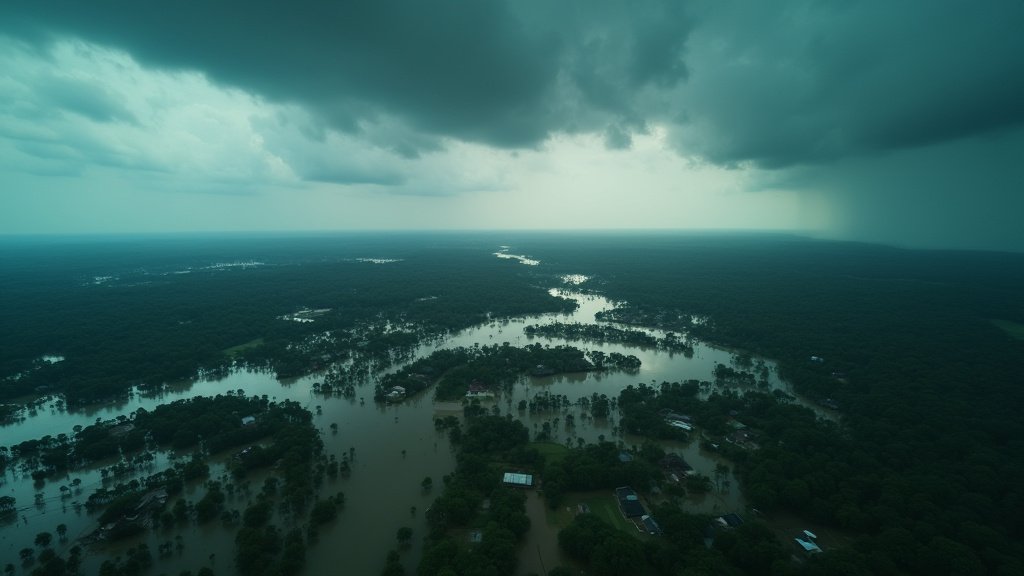
Parts of central and southwest Texas are currently facing significant flash flooding due to slow-moving storms that have unleashed torrents of rain onto already saturated ground. Governor Greg Abbott has responded by issuing a disaster declaration for 59 counties and directing emergency management to maintain 24-hour operations to address the escalating crisis. The Texas Hill Country and areas west of San Antonio have been disproportionately affected, with some locations recording an alarming 10 to 20 inches of rainfall. This intense precipitation has resulted in numerous high-water rescues and the closure of many roads, severely disrupting travel and daily life for residents. To support those displaced by the flooding, officials have opened emergency shelters. The National Weather Service (NWS) forecasts that these life-threatening flood conditions will persist through at least Thursday, with the possibility of rainfall rates reaching 2 to 4 inches per hour in the most intense storm cells.
Key Highlights:
- Governor Greg Abbott has declared a disaster in 59 Texas counties.
- Dozens of high-water rescues have been conducted.
- Areas in Central and Southwest Texas, including the Hill Country, have received up to 20 inches of rain.
- Life-threatening flooding is expected to continue through at least Thursday.
Texas Under Siege: Rescues Escalate as Flooding Grips 59 Counties
Unprecedented Rainfall and Immediate Dangers
Central and southwest Texas are currently bearing the brunt of a severe weather system characterized by slow-moving storms that have delivered immense volumes of rain. This deluge has fallen on ground already struggling with saturation from previous weather events, exacerbating the flash flooding crisis. Governor Greg Abbott’s disaster declaration for 59 counties underscores the severity of the situation, mobilizing state resources and ensuring continuous 24-hour operations from emergency management agencies. The Texas Hill Country, a region known for its natural beauty, is now a focal point of the disaster, alongside areas west of San Antonio. Reports indicate that some locales have received an astonishing 10 to 20 inches of rain, a figure that points to the extreme nature of this event. The immediate consequences have been dire, with dozens of high-water rescues undertaken to save individuals stranded by the rapidly rising waters. Numerous roads have been rendered impassable, leading to significant disruptions in transportation and cutting off communities. The opening of emergency shelters has provided a sanctuary for residents forced to evacuate their homes.
Official Response and Continued Threats
The disaster declaration serves as a critical step in coordinating a robust response, allowing for the swift deployment of state resources to aid affected local communities. Governor Abbott’s directive for 24-hour operations at the Texas State Emergency Operations Center signifies the state’s commitment to managing this ongoing crisis. The National Weather Service has issued stark warnings, forecasting that dangerous, life-threatening flash-flood conditions will persist through at least Thursday. The NWS highlights the potential for intense rainfall rates of 2 to 4 inches per hour within the strongest storm cells, a phenomenon that could rapidly worsen an already perilous situation. This forecast demands constant vigilance from residents and emergency responders alike.
Historical Echoes and Regional Impact
This current flooding event carries echoes of devastating floods that struck the same region in July 2025. Those previous floods resulted in widespread devastation and a significant loss of life, serving as a grim reminder of the region’s vulnerability to extreme weather. While no fatalities or injuries have been immediately reported in the current event as of Tuesday, July 14, 2026, the intensity and duration of the rainfall, coupled with the ongoing rescues, suggest a high potential for a severe impact. The Texas Division of Emergency Management (TDEM) is actively encouraging Texans to report any damage sustained through the Individual State of Texas Assessment Tool (iSTAT), a crucial step for assessing the full scope of the disaster and facilitating recovery efforts. The Governor’s office has indicated that additional counties may be added to the disaster declaration as conditions evolve, highlighting the dynamic nature of this unfolding emergency. Governor Abbott’s statement, emphasizing the protection of Texans as his top priority, reflects the gravity with which the state is approaching this crisis, aiming for rapid and effective response. The event has already seen specific areas like Uvalde County report significant impacts, including numerous road closures and over two dozen high-water rescues. Medina County has also reported multiple road closures and high-water rescues, underscoring the widespread nature of the flooding. Sabinal, Texas, reported over 356 mm (14 inches) of rain on July 14, 2026, with major roadways like U.S. 90 and U.S. 83 becoming impassable.
FAQ: People Also Ask
Q1: How many counties are included in the Texas disaster declaration?
A1: Governor Greg Abbott has issued a disaster declaration for 59 counties across Texas due to the severe flooding.
Q2: What is the rainfall total in some of the hardest-hit areas?
A2: Some locations in the Texas Hill Country and west of San Antonio have reported receiving as much as 10 to 20 inches of rain. Sabinal, Texas, specifically recorded over 14 inches on July 14, 2026.
Q3: What is the forecast for the flooding situation?
A3: The National Weather Service warns that life-threatening flash-flood conditions are expected to continue through at least Thursday, with potential for very intense rainfall rates of 2 to 4 inches per hour in strong storms.
Q4: What should Texans do if they are affected by the flooding?
A4: Texans who have sustained damage are encouraged to report it through the Individual State of Texas Assessment Tool (iSTAT). Governor Abbott also urges residents to monitor local weather, avoid flooded roads, and have emergency supplies ready.
Q5: Has this region experienced similar flooding before?
A5: Yes, the region is still recovering from severe floods in July 2025, which caused widespread devastation and numerous fatalities, making it one of the deadliest inland flooding events in the United States in recent decades.