
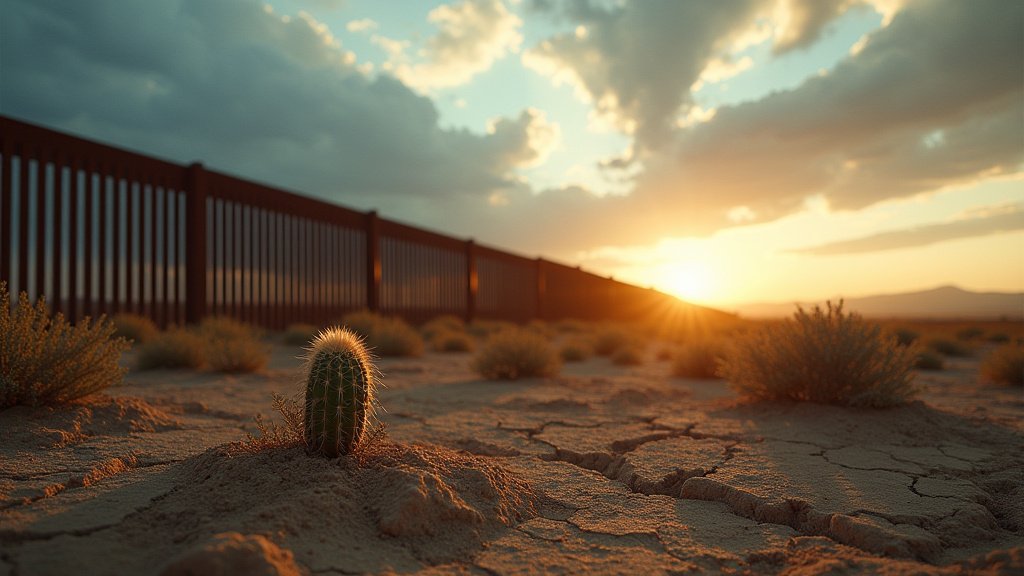
A significant expansion of the border wall in South and West Texas is confronting mounting opposition from a coalition of landowners, environmental groups, and community activists. The proposed construction, intended to bolster border security, faces widespread criticism for its potential environmental damage, disruption of private property, and questionable effectiveness.
Key Highlights:
- Organized resistance is mobilizing across South and West Texas against the border wall expansion.
- Critics cite environmental degradation, private property rights violations, and doubts about the wall’s efficacy.
- Landowners are preparing legal challenges and leveraging community organizing to halt construction.
- Environmental groups warn of irreversible damage to sensitive ecosystems and wildlife corridors.
Texas Border Wall Faces Organized Resistance
The planned expansion of the U.S.-Mexico border wall through ecologically sensitive and privately owned lands in South and West Texas has ignited a powerful and organized resistance movement. This initiative, championed by federal authorities as a crucial step in border security, is now facing a formidable challenge from a diverse group of stakeholders who argue the project is a costly, environmentally destructive, and ineffective solution.
Landowner Opposition and Legal Battles
Central to the resistance are the private landowners whose properties lie in the path of the proposed wall. Many have lived on their land for generations and view the wall not only as an intrusion but as a violation of their fundamental property rights. Organizations like the Texas Civil Rights Project and private legal firms are working with affected families to explore all avenues, including lawsuits challenging the government’s eminent domain claims and the environmental impact assessments. These legal battles are expected to be protracted and could significantly delay or even halt construction.
Environmental Concerns
Environmental advocacy groups, including the Sierra Club and local conservation alliances, are sounding the alarm about the irreversible damage the wall could inflict. The proposed routes cut through vital wildlife corridors, including those for endangered species like the ocelot and jaguarundi, and threaten sensitive desert ecosystems. Concerns also include the impact on the Rio Grande watershed, with potential disruptions to water flow and increased flooding risks due to the wall’s physical presence. These groups are petitioning federal agencies to reconsider the routes and explore less damaging alternatives.
Community Organizing and Political Action
Beyond legal and environmental challenges, a grassroots movement is actively engaging local communities. Rallies, town hall meetings, and public awareness campaigns are being organized to highlight the negative impacts of the wall expansion. Activists are urging local and state representatives to oppose the project, emphasizing the economic and social costs that outweigh any perceived security benefits. The narrative is shifting from a top-down security measure to a bottom-up community defense of their land and environment.
Evaluating Effectiveness
Critics also question the overall effectiveness of the wall as a security measure, pointing to the thousands of miles of border already fortified and the persistent challenges of illegal crossings and smuggling. Many argue that resources could be better allocated to increased personnel, technology, and community-based solutions that address the root causes of migration, rather than a physical barrier that is costly to build and maintain, and can be circumvented.
FAQ: People Also Ask
What are the main arguments against the border wall expansion in Texas?
The primary arguments against the border wall expansion include significant environmental damage to sensitive ecosystems and wildlife, violation of private property rights, questionable effectiveness in deterring illegal crossings, and substantial financial costs.
Which environmental groups are opposing the border wall expansion?
Environmental groups such as the Sierra Club, and various local conservation alliances in Texas are actively opposing the border wall expansion due to concerns over habitat destruction and impact on endangered species.
How are landowners resisting the border wall project?
Landowners are resisting through legal challenges, including lawsuits to contest eminent domain, public awareness campaigns, and community organizing efforts to rally support against the construction on their properties.
What are the economic implications of the border wall expansion?
The economic implications include the high cost of construction and maintenance, potential negative impacts on local economies due to land acquisition and disruption, and debates over whether the funds could be better used for alternative security or social programs.
Are there alternative solutions to border security being proposed?
Yes, alternative solutions often proposed include increased border patrol agents, advanced surveillance technology, addressing the root causes of migration in origin countries, and strengthening legal immigration pathways.