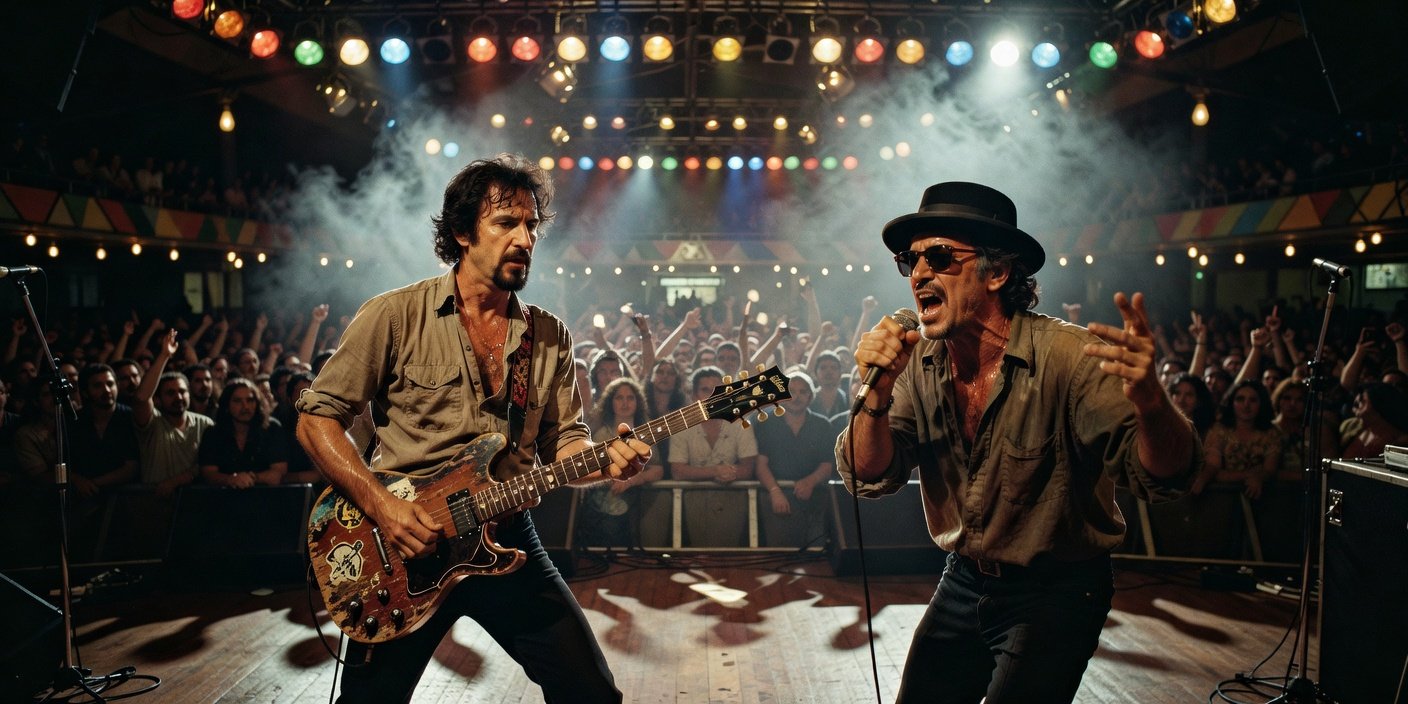
In a legendary night that echoed through the annals of rock history, Frank Zappa and Captain Beefheart, two of music’s most avant-garde pioneers, shared the stage at the iconic Armadillo World Headquarters in Austin, Texas. This week in Texas music history, we revisit the pivotal 1970s era when the Armadillo was a crucible for experimental sound, attracting a diverse array of artists and fostering a unique cultural scene that left an indelible mark on the music landscape.
- Frank Zappa and Captain Beefheart, two titans of experimental music, performed together at the Armadillo World Headquarters.
- The Armadillo World Headquarters in Austin was a legendary venue in the 1970s, known for its eclectic music scene and counter-culture vibe.
- Their performances represented a peak of musical innovation and boundary-pushing artistry during the decade.
- The event highlights the Armadillo’s significance as a hub for groundbreaking musical collaborations and performances.
Zappa and Beefheart: A Sonic Collision at the Armadillo
The Armadillo World Headquarters, a sprawling venue in Austin, Texas, was more than just a concert hall; it was a cultural phenomenon. Operating primarily in the 1970s, it became synonymous with the state’s burgeoning counter-culture and a magnet for artists who defied conventional musical boundaries. It was within this vibrant, often chaotic, atmosphere that Frank Zappa and his Mothers of Invention, alongside the equally eccentric Captain Beefheart and his Magic Band, would converge, creating nights of unparalleled musical exploration. The specific confluence of Zappa and Beefheart at the Armadillo stands as a testament to the venue’s role in fostering such legendary collaborations.
The Armadillo’s Cultural Significance
The Armadillo World Headquarters was established by legendary Austin entrepreneur Eddie Wilson, who also founded the Threadgill’s restaurant and the Continental Club. It was a sprawling complex that initially housed a roller-skating rink and later transformed into a hub for live music, art, and community gatherings. Its unconventional setting and open-minded ethos attracted a wide spectrum of performers, from blues legends and rock icons to avant-garde experimentalists. The venue’s unique architecture, resembling an enormous, repurposed airplane hangar, provided a raw and intimate space for groundbreaking performances. It was a place where the lines between performer and audience, and between different genres of music, often blurred, fostering an environment ripe for sonic experimentation.
Zappa’s Maverick Vision
Frank Zappa was a composer, guitarist, filmmaker, and satirist whose work consistently challenged musical and societal norms. His music was a complex tapestry of rock, jazz, classical, and musique concrète, often infused with biting social commentary and absurdist humor. The Mothers of Invention, Zappa’s primary musical vehicle, was a fluid ensemble that showcased his virtuosic guitar playing and his intricate compositional arrangements. Zappa’s performances were known for their intellectual depth, technical prowess, and unpredictable nature, often incorporating extended improvisations and theatrical elements. His presence at the Armadillo underscored the venue’s appeal to artists seeking a platform for challenging and innovative work.
Captain Beefheart’s Avant-Garde Realm
Don Van Vliet, the man behind the Captain Beefheart persona, was an artist of singular vision, equally renowned for his gravelly vocalizations, surreal poetry, and the unique, often dissonant, musical style of his Magic Band. Beefheart’s music, particularly albums like “Trout Mask Replica,” is considered a landmark of experimental rock, characterized by its angular rhythms, unconventional song structures, and surreal lyrical imagery. His collaborations with Zappa were a meeting of minds driven by a shared commitment to artistic freedom and a rejection of commercial music conventions. The synergy between Zappa’s structured complexity and Beefheart’s raw, almost primal, expression created a potent and unforgettable sonic experience.
The Legacy of the Collaboration
The performances by Zappa and Beefheart at the Armadillo were more than just concerts; they were cultural events that embodied the spirit of the 1970s West Coast and Texas music scenes. They demonstrated the power of collaboration between artists who were not afraid to push the envelope. The Armadillo provided the perfect canvas for these musical mavericks, a space where their audacious creativity could flourish without the constraints of mainstream expectations. The echoes of these performances can be heard in the work of countless musicians who have since been inspired by Zappa’s compositional genius and Beefheart’s untamed artistic spirit. The venue itself, though now defunct, remains a significant touchstone in the history of live music venues and a symbol of Austin’s rich musical heritage.
FAQ: People Also Ask
What was the Armadillo World Headquarters known for?
The Armadillo World Headquarters was a legendary music venue in Austin, Texas, primarily active in the 1970s. It was known for its eclectic and diverse range of musical acts, its vibrant counter-culture atmosphere, and its unique, large-scale venue that fostered a sense of community among musicians and fans. It served as a crucial hub for live music, art, and social gatherings.
Who performed at the Armadillo World Headquarters?
The Armadillo hosted a wide array of influential artists across various genres. This included rock bands, blues musicians, country artists, and experimental performers. Notable acts included Willie Nelson, ZZ Top, Santana, The Allman Brothers Band, and, significantly, Frank Zappa and Captain Beefheart.
What was unique about Frank Zappa’s music?
Frank Zappa’s music was characterized by its complexity, humor, and genre-bending nature. He masterfully blended rock, jazz, classical, and avant-garde elements, often incorporating intricate arrangements, virtuosic guitar solos, and sharp social or political satire. His work was known for its intellectual depth and its consistent challenge to conventional musical structures and lyrical themes.
How did Captain Beefheart influence music?
Captain Beefheart, with his distinctive vocal style, surreal lyrics, and the avant-garde approach of his Magic Band, profoundly influenced experimental and avant-garde rock music. His album “Trout Mask Replica” is considered a seminal work, praised for its innovative rhythms, unconventional song structures, and Dadaist lyrical content. His work inspired countless musicians to explore more abstract and experimental forms of musical expression.
Why was the collaboration between Zappa and Beefheart significant?
The collaboration between Frank Zappa and Captain Beefheart was significant because it brought together two of the most iconoclastic and forward-thinking artists of their generation. Their shared commitment to artistic freedom and their willingness to push creative boundaries resulted in unique and groundbreaking performances. Their appearances at venues like the Armadillo highlighted the spaces that existed for experimental music outside of the mainstream and left a lasting legacy on the development of avant-garde and experimental rock.