

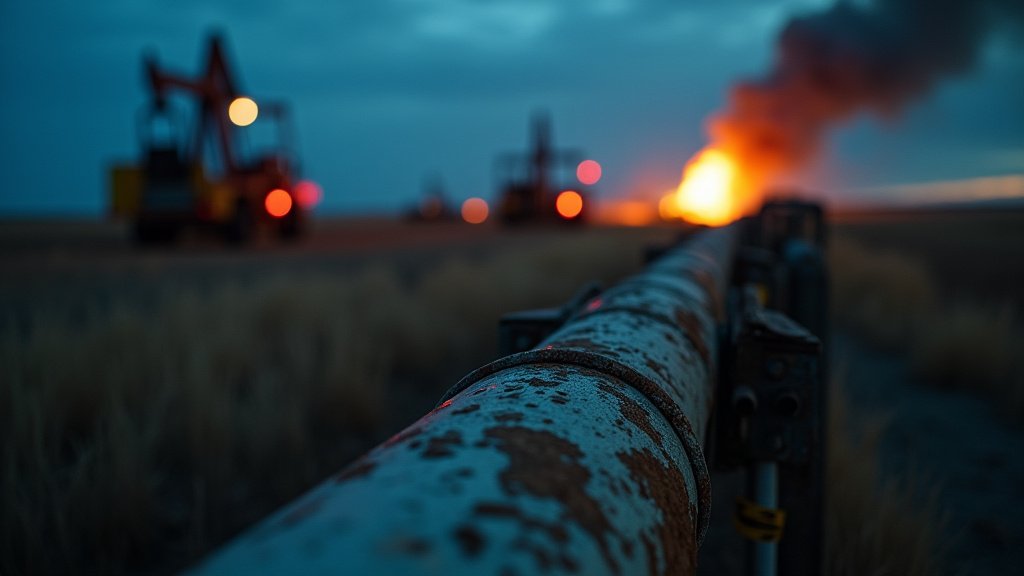
A powerful explosion and subsequent fire at an oil well site in Nacogdoches County, Texas, has sent emergency responders rushing to the rural community of Etoile. The incident, which occurred along the 15000 block of FM 226, triggered an immediate, large-scale emergency response as flames and plumes of heavy smoke were observed rising from the facility. Local authorities, led by the Nacogdoches County Sheriff’s Office, acted swiftly to secure the perimeter, prioritize the safety of site workers, and initiate precautionary evacuations for residents living in the immediate vicinity of County Road 561. While the site of the blast remains volatile, officials have confirmed that all workers present during the time of the explosion were safely accounted for and evacuated, preventing what could have been a catastrophic loss of life.
Key Highlights
- Incident Location: The blast occurred at an oil well site situated along the 15000 block of FM 226, just north of the unincorporated community of Etoile, Texas.
- Emergency Response: Nacogdoches County Sheriff’s deputies and local fire crews were dispatched immediately to the site, with a precautionary evacuation order issued for residents along County Road 561.
- Worker Safety: All onsite workers were successfully accounted for and evacuated; no immediate injuries were reported in the wake of the explosion.
- Ongoing Operations: While the site is secured, first responders continue to monitor air quality and fire containment progress, with investigations into the cause of the explosion expected to commence once the situation is stabilized.
Anatomy of an Industrial Emergency: The Etoile Incident
The industrial explosion in Etoile serves as a stark reminder of the inherent risks associated with energy infrastructure in East Texas, a region historically deeply connected to the oil and gas industry. When an incident of this magnitude occurs—characterized by a loud, ground-shaking blast and visible atmospheric disruption—the immediate priority for local law enforcement and emergency management is two-fold: suppression of the fire and the containment of the surrounding population.
The Operational Response
In rural areas such as Nacogdoches County, the logistical challenges of managing an oil well fire are significant. Unlike metropolitan industrial sites that may have dedicated, on-site fire suppression systems and high-density emergency infrastructure, rural sites rely heavily on the coordination of county-level deputies, regional volunteer fire departments, and specialized hazmat teams. The response in Etoile was characterized by the rapid arrival of multiple first responders who faced the daunting task of assessing the fire’s chemical composition and the potential for structural collapse of the rig.
The decision to order an evacuation of County Road 561 was a preventative measure, typical of professional emergency management protocols designed to safeguard the public before potential toxic leaks or secondary explosions occur. Residents in the vicinity reported feeling the force of the initial blast, which shook homes and heightened concerns regarding the safety of the local energy sector. By prioritizing a swift perimeter lockout, authorities successfully mitigated the risk to civilians, ensuring that the primary danger remained localized within the industrial footprint.
The Human and Economic Cost
While the financial implications of the damage to the well and surrounding equipment will be assessed by energy companies in the coming days, the immediate, intangible cost involves community trust and local stability. Communities in East Texas are accustomed to the presence of drilling rigs, yet events like this reignite perennial debates regarding zoning, distance requirements from residential housing, and safety oversight.
The investigation into what ignited the fire is paramount. Industrial well fires can result from a cascade of failures—ranging from high-pressure surges in the wellbore to mechanical failure of valve assemblies or human error during routine maintenance. Until investigators can safely approach the site, the environmental impact, including potential hydrocarbon releases into the local soil and air, remains an area of active monitoring. Regulatory bodies will likely scrutinize the maintenance logs and safety records of the operator once the site is deemed stable, potentially leading to a broader review of regional well-safety practices.
Long-Term Monitoring and Infrastructure Integrity
Moving forward, the focus will shift from immediate crisis mitigation to long-term recovery and environmental remediation. Local officials have indicated that the situation remains fluid, with safety protocols evolving based on real-time data from the ground. Environmental monitoring teams are critical in the post-explosion phase, as the plume of smoke—often containing a cocktail of particulate matter and unburnt hydrocarbons—can significantly affect local air quality.
Furthermore, this incident underscores the necessity for updated safety technology. Modern drilling and extraction sites have increasingly integrated automated shut-off systems and remote-monitoring sensors. The performance of these systems during the Etoile incident will likely be a centerpiece of the pending investigation. Understanding how and why the safety barriers failed—or if they successfully limited the explosion’s impact—will be essential for preventing future occurrences in the Texas energy belt. The resiliency of the Etoile community will be tested in the coming weeks as they grapple with the aftermath, but the successful evacuation of the workforce stands as a positive testament to the effective, if high-pressure, protocols practiced by the onsite management and the immediate mobilization of the county’s emergency response team.
FAQ: People Also Ask
Q: Were there any injuries reported at the Etoile oil well explosion?
A: Initial reports from the Nacogdoches County Sheriff’s Office confirm that all workers present at the site were safely accounted for and evacuated. No immediate injuries have been reported.
Q: Why were residents on County Road 561 evacuated?
A: The evacuation was ordered as a standard precautionary measure. Local authorities deemed it necessary to move residents away from the site to ensure their safety while first responders assessed the potential for secondary explosions, toxic air quality, or structural hazards.
Q: Do authorities know what caused the fire at the Texas oil well?
A: The exact cause of the explosion is currently unknown. Officials have stated that investigations will commence once the scene is brought under control and declared safe for inspectors.
Q: How do industrial accidents in rural Texas affect local air quality?
A: Industrial fires can release particulate matter and various hydrocarbons into the atmosphere. Local emergency teams, often in coordination with environmental agencies, monitor these levels to provide guidance on whether further protective measures—such as shelter-in-place orders—are necessary for surrounding communities.