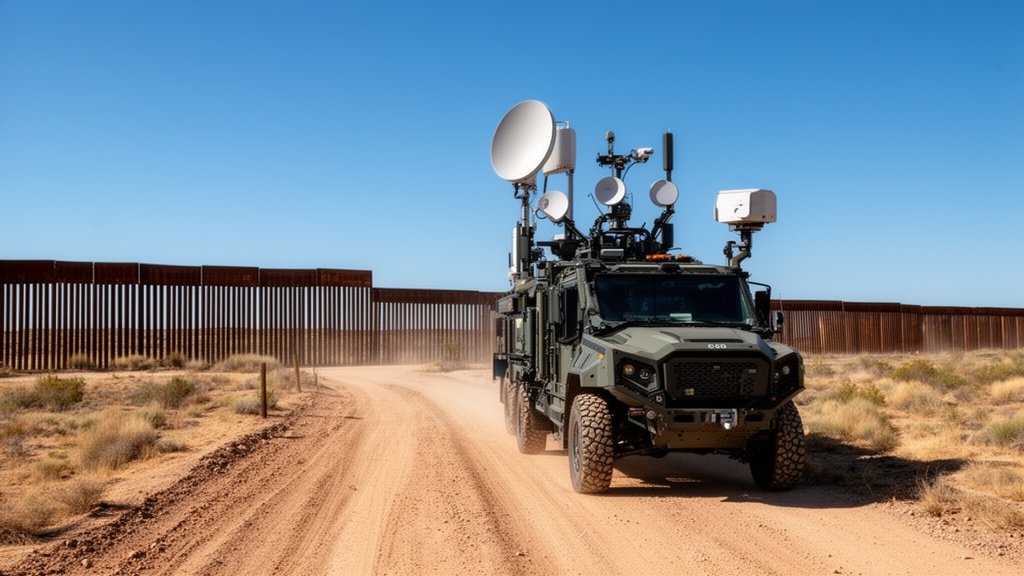


The Federal Aviation Administration (FAA) and the Department of War (DOW) have officially signed a landmark safety agreement, paving the way for the deployment of high-energy laser counter-drone systems along the United States southern border. The deal follows months of intense scrutiny regarding the intersection of military-grade homeland defense and civilian aviation safety. By formalizing safety protocols, the two agencies aim to mitigate the growing threat of illicit drone incursions while ensuring that the National Airspace System remains secure from accidental interference or collateral impact from anti-drone weaponry.
Key Highlights
- Safety Validation: Following rigorous demonstrations at the White Sands Missile Range, the FAA and DOW confirmed that high-energy laser systems, when operated under specific controls, do not pose undue risks to passenger aircraft.
- Addressing Incursions: The agreement provides a framework to combat the reported surge of over 1,000 monthly drone incursions along the U.S.-Mexico border, an issue that previously led to emergency airspace shutdowns in El Paso.
- Interagency Cooperation: This partnership between the FAA and DOW (formerly the Department of Defense) establishes a standardized methodology for integrating military defensive assets into domestic airspace.
- Operational Assurance: The deal includes specific safeguards for pilots, air traffic control navigation equipment, and civilian flight paths to prevent the repeat of previous operational disruptions.
Securing the Skies: The New Protocol for Border Defense
The agreement marks a pivotal shift in how the federal government approaches the protection of the southern border from the rapid proliferation of commercially available, and often illicit, drone technology. For years, the rapid advancement of unmanned aerial systems (UAS) has outpaced the development of standard regulatory frameworks for their neutralization. This disparity led to critical failures in inter-agency coordination earlier this year, most notably the abrupt closure of El Paso airspace after military units deployed counter-drone lasers without prior FAA synchronization.
The Anatomy of the Safety Agreement
At the core of this new initiative is a data-informed Safety Risk Assessment. The FAA and DOW conducted collaborative testing in March 2026 at the White Sands Missile Range in New Mexico. These tests were designed to stress-test the operational capabilities of high-energy laser systems, focusing specifically on their interaction with aircraft surrogates. The goal was to validate the functionality of automated safety shut-off systems, ensuring that even in complex environments, the lasers would not threaten the integrity of commercial aviation.
By establishing these protocols, the Department of War and the FAA have created a blueprint for how defensive technologies can be utilized in the U.S. homeland. This is not merely an operational agreement but a strategic one; it codifies the requirement for military and civilian regulators to operate in lockstep, recognizing that the threat of drone swarms and illicit aerial surveillance is no longer confined to foreign theaters of war, but has become a localized, domestic security challenge.
Impact on Aviation and Operational Doctrine
The implications of this agreement extend far beyond the border itself. For air traffic controllers and commercial pilots, the uncertainty surrounding previous deployments caused significant disruption and confusion. The new protocol mandates that the DOW will maintain continuous coordination with the FAA to ensure that civilian aircraft, navigation equipment, and air traffic services remain insulated from the effects of laser-based defense systems.
This shift reflects a broader modernization of homeland security. As the Department of War continues to integrate advanced directed-energy weapons—such as the 50-kilowatt laser systems previously tested in the DE M-SHORAD (Directed Energy Maneuver-Short Range Air Defense) program—the FAA’s role as the guardian of the national airspace becomes increasingly complex. The agreement serves as a necessary legislative and operational ‘bridge,’ allowing the U.S. military to leverage its most advanced tools for homeland defense without compromising the sanctity of the flying public’s safety.
Historical Context and Future Readiness
This agreement also serves as a direct response to the scrutiny faced by federal agencies following the El Paso airport shutdown. The incident, which caused panic among lawmakers and public officials, was viewed by many as a ‘case study’ in the dangers of uncoordinated defensive operations. With this new framework, the government aims to move past the era of reactive closures and toward a proactive, integrated defense posture.
Looking forward, the success of this model will likely determine how other emerging defense technologies—including electronic warfare and kinetic signal jammers—are integrated into civil airspace. As illicit drone use by cartels and non-state actors continues to escalate, the ability of the DOW to deploy counter-UAS capabilities at the ‘speed of light’—a term often used in military circles for directed-energy weapons—will be an essential component of U.S. national security strategy.
FAQ: People Also Ask
1. Why did the FAA and DOW need to sign this agreement?
Recent uncoordinated uses of military laser systems near the southern border led to temporary shutdowns of civilian airspace, including major disruptions at the El Paso airport. This agreement formalizes safety protocols to prevent such shutdowns while allowing for necessary drone defense.
2. Are high-energy laser systems dangerous to civilian planes?
According to the FAA’s safety assessment following tests at White Sands Missile Range, these systems, when operated under specific controls and safety protocols, do not pose an increased or undue risk to passenger aircraft, pilots, or air traffic navigation equipment.
3. Who is responsible for these counter-drone operations?
The Joint Interagency Task Force 401 (JIATF-401), operating under the Department of War, is tasked with the development and deployment of these counter-drone technologies, working in close collaboration with the FAA to ensure airspace safety.
4. What types of drones are being targeted at the border?
The primary targets are small, commercially available unmanned aerial systems (UAS) often used by criminal organizations for surveillance, smuggling, and illicit activities, which have proliferated significantly in recent years.