
The Uvalde Officer Trial has commenced, marking a significant moment in the pursuit of justice following the Robb Elementary massacre. Families of the victims are present as the first criminal proceedings related to the tragedy unfold, seeking accountability and police accountability Texas. This Uvalde Officer Trial focuses on former Uvalde CISD police officer Adrian Gonzales, who faces charges of child abandonment and endangerment stemming from the horrific events of May 24, 2022, when 19 children and two teachers lost their lives. The emotional gravity of the Uvalde Officer Trial was palpable on its opening day.
Opening Arguments in the Uvalde Officer Trial Unfold
During the initial phases of the Uvalde Officer Trial, prosecutors laid out their case, asserting that Officer Gonzales arrived at Robb Elementary before the gunman entered. Despite being informed of the shooter’s presence by a teacher, Gonzales reportedly delayed his entry into the school until after substantial harm had occurred. Special prosecutor Bill Turner argued that Gonzales “did nothing until it was too late,” and that his failure to confront or delay the gunman placed children in “imminent danger.” The defense, however, contended that Gonzales acted appropriately amidst the chaos, citing his efforts to radio for assistance and help evacuate children, asserting he was in harm’s way during this critical juncture of the Uvalde Officer Trial.
The Robb Elementary Massacre: A Timeline of Texas Law Enforcement Inaction
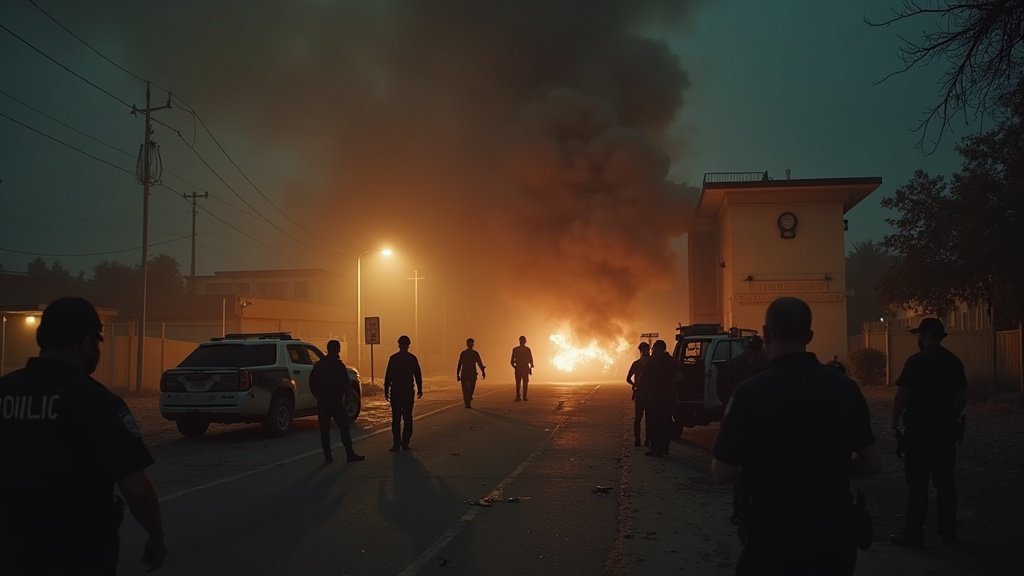
The sequence of events began when 18-year-old Salvador Ramos shot his grandmother and then drove to Robb Elementary School. After crashing his truck, Ramos entered the school building at 11:33 a.m. through a propped-open door, proceeding to two classrooms where he fired over 100 rounds within four minutes. Responding Uvalde officers briefly entered the school but retreated after encountering gunfire. Despite hearing shots and knowing the shooter’s location, law enforcement treated the situation as a barricaded subject for 77 minutes, during which distressed students made 911 calls and parents pleaded for intervention. The U.S. Border Patrol Tactical Unit eventually engaged and fatally shot Ramos at 12:50 p.m. This prolonged response time is a central focus of the Uvalde Officer Trial and investigations into the Robb Elementary massacre.
Investigations Spur Drive for Uvalde Police Accountability
Following the devastating Uvalde massacre, numerous investigations were launched. A Department of Justice report identified “cascading failures of leadership, decision-making, tactics, policy and training,” pinpointing the lack of urgency as the “most significant failure.” The report highlighted a lack of clear incident command and insufficient active shooter training among responding agencies. A Texas House committee report similarly detailed “systemic failures and egregiously poor decision making,” noting that hundreds of officials prioritized their own safety over that of the students. Former Uvalde CISD Police Chief Pete Arredondo also faces charges, with his trial pending. Gonzales and Arredondo are among the few officers facing criminal charges related to the Texas law enforcement inaction during the Robb Elementary massacre, making the Uvalde Officer Trial particularly significant.
The Legal Significance of the Uvalde Officer Trial
This Uvalde Officer Trial stands out as a rare instance where an officer is facing criminal charges for alleged inaction during a mass shooting event. It serves as a crucial legal test for achieving police accountability Texas, potentially influencing future standards for law enforcement conduct in similar emergencies. Prosecutors face a difficult challenge in securing convictions for inaction, making the specific focus on alleged child endangerment charges in the Uvalde Officer Trial particularly noteworthy. The trial’s venue was moved to Corpus Christi, as the defense argued an impartial jury could not be seated in Uvalde, underscoring the intense public scrutiny surrounding this school shooting trial.
Broader Impact and Reforms Following the Uvalde Tragedy
The profound Uvalde tragedy spurred significant legislative reforms in Texas. New school safety laws, including the “Uvalde Strong Act,” mandate crisis response plans, yearly active shooter training, and expanded officer training. Senate Bill 1852 enhances campus security by requiring armed personnel and active shooter training for school staff. While these measures aim to prevent future failures, families continue to advocate for further reforms and stricter gun control. Robb Elementary remains closed, and memorials serve as constant reminders of the shooting. As the Uvalde Officer Trial progresses, it grapples with complex questions of accountability and justice, offering a difficult path toward potential closure for the grieving community. This ongoing legal process remains a prominent topic, reflecting the persistent efforts for safety and security in the wake of the Robb Elementary massacre.