This is major climate news, revealing a critical Flood Drought Link. Scientists have found a significant connection that links floods and droughts worldwide, a vital discovery for understanding Global Flood Drought patterns. These events are not random; they are synchronized by powerful climate patterns, a discovery from The University of Texas at Austin. Their research offers a new view, showing how global water extremes are connected, emphasizing the pervasive Flood Drought Link.
Understanding the Global Water Rhythm and the Flood Drought Link
Water extremes impact life. Floods can devastate communities. Droughts strain resources. These events can cripple economies. Researchers wanted to understand these extremes and how they spread across the planet. Their work points to a strong climate force that links distant regions, highlighting a surprising connection and the importance of the Flood Drought Link.
ENSO’s Powerful Influence on the Flood Drought Link
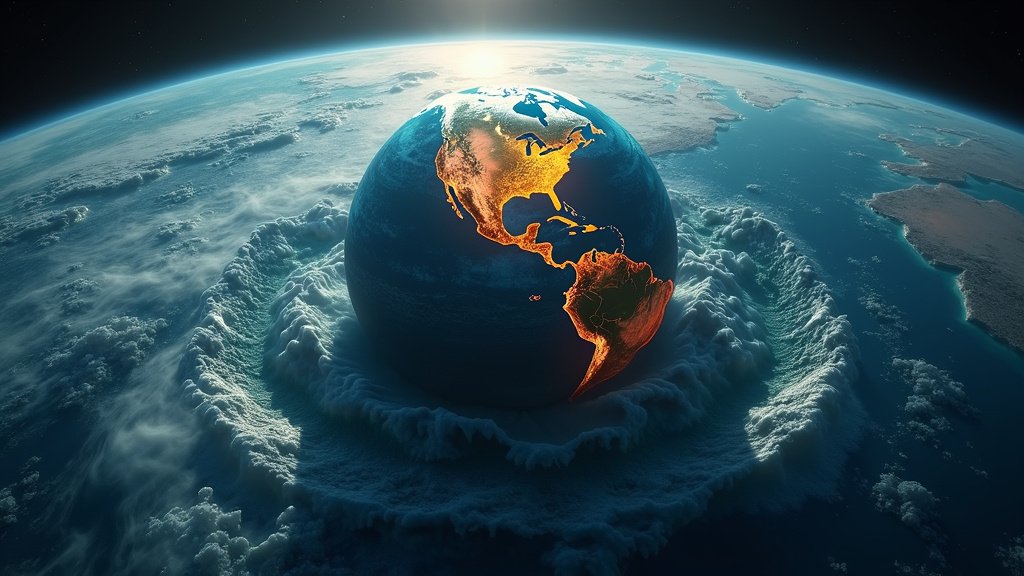
The El Niño-Southern Oscillation (ENSO) drives this connection. ENSO includes El Niño and La Niña, recurring El Niño cycles and other ENSO climate patterns. Over the past 20 years, ENSO has been key, driving extreme changes in total water storage. Total water storage, a crucial climate indicator, includes all water forms: rivers, lakes, ice, soil moisture, and groundwater. By tracking this total, scientists can observe water changes and better understand water movement, revealing the underlying Flood Drought Link.
Satellite Views of Water Mass and the Flood Drought Link
NASA’s GRACE and GRACE-FO satellites helped immensely. They measure Earth’s gravity field, detecting changes in satellite water mass and allowing scientists to spot water storage shifts over large areas (about 300 to 400 kilometers wide). Researchers defined wet extremes as water storage levels above the 90th percentile and dry extremes below the 10th percentile. Unusual ENSO activity can create these extremes, pushing far-flung regions into wet or dry conditions simultaneously, a clear manifestation of the Flood Drought Link.
Synchronized Global Extremes and the Flood Drought Link
ENSO synchronizes these water events. Different continents can face extreme weather, experiencing wet conditions or dangerous dryness occurring simultaneously. This synchronization is a major finding, demonstrating that water crises are global and not isolated incidents. Understanding these synchronized water extremes, including the Flood Drought Link, is vital for water availability, food production, and trade—significant global concerns.
A Shift Towards Dryness: Implications for the Flood Drought Link
The study also noted a global shift about a decade ago, where dry extremes became more common and started to outpace wet extremes. This trend highlights a concerning change towards drier conditions globally, especially worrying for Global Water Security and underscoring the complexity of the Flood Drought Link.
Consequences for Texas and Beyond: The Flood Drought Link
Scientists like Bridget Scanlon emphasize the impact. She is a research professor at UT Austin. Understanding these global links, particularly the Flood Drought Link, matters for identifying areas facing simultaneous stress. For Texas, a state often facing water challenges, this news is critical. Past events like severe droughts and floods underscore the need for such research, providing vital context on how interconnected our planet’s water systems are and reinforcing the significance of the Flood Drought Link.
The Future of Water Extremes and the Flood Drought Link
Climate change impacts may amplify ENSO’s effects. Future El Niño and La Niña events could be more intense, leading to greater impacts on temperature and precipitation, increased wildfire risk, and potentially stronger ENSO activity. Some studies project more extreme US winter weather, with floods becoming more common in some areas and droughts worsening in others. This amplified variability poses greater risks and requires better preparation and management, a direct consequence of the evolving Flood Drought Link.
A Deeper Understanding of the Flood Drought Link
This research goes beyond counting events; it explores how extremes are spatially connected, offering deeper insights into the patterns driving floods and droughts. The findings are crucial for policymakers in water management and for improving early warning systems to mitigate hazards. This comprehensive view of global water, driven by phenomena like El Niño cycles and observed through satellite water mass data, is a significant step forward, revealing the interconnectedness of our planet’s climate and the profound implications of the Flood Drought Link for everyone.