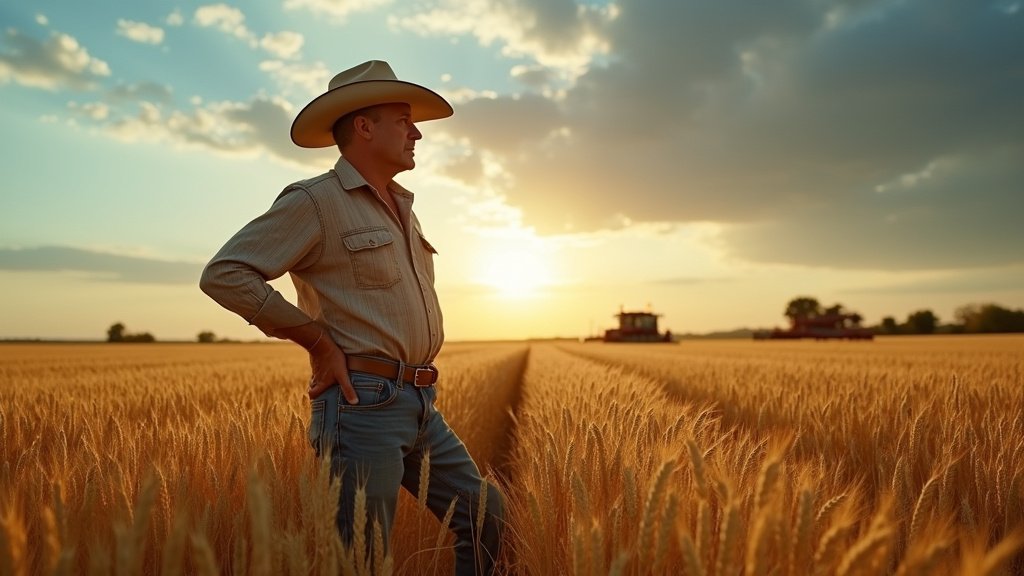
Understanding **Texas Agriculture Policy** is essential for its economic vitality and the livelihoods of its farmers and ranchers. An administration‘s approach directly shapes the policies governing land, resources, and the future of Texas agriculture. Significant policy shifts are currently impacting the state, with ramifications for rural communities across Texas. A recent editorial thoughtfully examined these dynamics within the current **Texas Agriculture Policy** framework.
Federal Regulations and Farmer Concerns in Texas Agriculture Policy
A primary concern within **Texas Agriculture Policy** revolves around federal regulations, particularly the “Waters of the United States” (WOTUS) rule, which dictates federal jurisdiction over water bodies. Different administrations have historically altered this definition, creating uncertainty. The Biden administration’s 2023 rule faced immediate legal challenges from numerous states and farm groups, including the American Farm Bureau Federation, citing significant risks for farmers. Conversely, the Trump administration’s 2020 rule also encountered opposition. Farmers consistently seek clear, commonsense regulations that complement effective **Texas Agriculture Policy**, emphasizing respect for private property rights, a critical component of **farm policy in Texas**. Federal overreach is a frequent complaint in discussions surrounding **Texas Agriculture Policy**, leaving farmers feeling burdened by complex mandates. The potential for fines related to minor land alterations creates immense pressure, underscoring the vital need for robust **land rights** protections. Farmers, as the original conservationists deeply connected to the land, benefit from **conservation policies** that support their stewardship role. This highlights the ongoing dialogue about **federal regulations agriculture** within **Texas Agriculture Policy**.
State Authority vs. Federal Control in Texas Agriculture Policy
Texas officials frequently advocate for local control, arguing that state and local governments possess a superior understanding of regional needs compared to federal mandates. This tension is central to many **Texas Agriculture Policy** debates. Texas Agriculture Commissioner Sid Miller champions “cowboy logic”—practical, on-the-ground knowledge—which can sometimes conflict with federal directives. While federal power is extensive, states retain constitutional authority, and farmers often prefer decisions made closer to home. They trust local leaders more than a distant federal bureaucracy perceived as lacking an understanding of farm realities. This dynamic fuels discussions about **state vs federal** authority in shaping **Texas Agriculture Policy**. The balance of power is a constant consideration in how **Texas Agriculture Policy** is implemented.
Economic Policies and Market Access for Texas Agriculture
Trade policy profoundly impacts Texas agriculture. Varying global strategies, from bilateral deals to broad negotiations, influence market access. Tariffs can disrupt markets, and retaliatory tariffs can severely harm exports, a critical concern for Texas, a major exporter to markets in Mexico and Asia. Trade wars directly affect farmers’ profitability, a significant factor for **Texas Agriculture Policy**. Furthermore, high input costs, including soaring prices for seed, fuel, and fertilizer, place additional stress on producers. While some administrations might prioritize new trade agreements, others may offer direct financial aid, such as programs like the Farmer Bridge Assistance, to mitigate market shocks. However, farmers generally prefer stable markets over aid, a key consideration for effective **Texas Agriculture Policy**. Agricultural news frequently covers these trade dynamics and their impact on the **Texas agriculture** sector, making **trade policy agriculture** a crucial element.
Property Rights and Conservation Policies
Private property rights are a foundational element of **Texas Agriculture Policy**. Farmers and ranchers depend on secure land ownership, and some federal regulations can be perceived as infringing upon these rights. The concept of a government “taking” of property without adequate compensation is a persistent concern. Administrations differ in their emphasis on these rights, directly impacting **land rights** within the scope of **Texas Agriculture Policy**. Conservation efforts are also integral. Recognizing farmers as natural stewards of the land, policies that promote sustainable practices are vital. The approach to conservation can vary, with some administrations favoring voluntary programs and others potentially imposing stricter mandates. This delicate balance between land protection and agricultural productivity shapes agricultural news and influences **conservation policies** related to **Texas Agriculture Policy**. Ensuring effective **conservation policies** is a priority for the future of **Texas Agriculture Policy**.
An Administration Makes a Difference in Texas Agriculture Policy
The impact of any administration on Texas agriculture is undeniably profound. Policy decisions concerning regulations, trade, and property rights are fundamental to **Texas Agriculture Policy** and are experienced daily by farmers and ranchers. Cooperation and understanding from Washington are crucial for developing and implementing effective **Texas Agriculture Policy**. Respect for state leadership and local control is paramount. Texas agriculture remains a powerful economic force, and its continued strength relies on sensible, supportive federal policies that complement robust **Texas Agriculture Policy**. The tangible difference an administration makes is evident, affecting every farmer, rancher, and landowner in Texas. This ongoing news cycle underscores these critical shifts within **Texas Agriculture Policy**, impacting **rural communities** and the broader **Texas agriculture** landscape, while navigating the complexities of **federal regulations agriculture** and **farm policy**.