

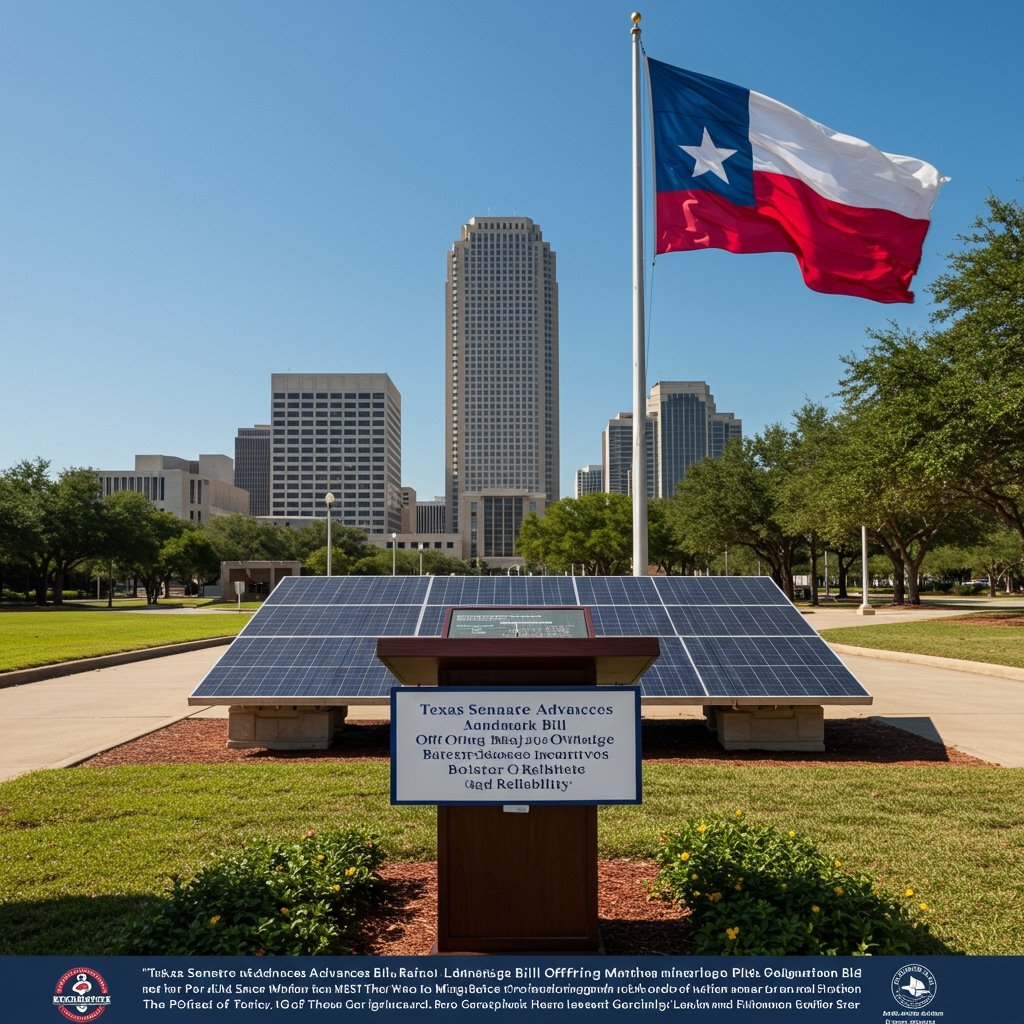
Texas Senate Gives Initial Approval to Key Battery Storage Incentives Bill
AUSTIN, TX – The Texas Senate today advanced a critical piece of legislation aimed at significantly enhancing the state’s power grid stability and reliability. Senate Bill 10 (SB 10), authored by Senator Jane Smith (R-Dallas), received initial approval from the chamber, marking a significant step forward for a measure designed to stimulate investment in utility-scale battery storage projects across Texas.
The bill proposes a package of substantial incentives, primarily focusing on significant tax credits and streamlined permitting processes for developers and operators of large-scale battery energy storage systems. These systems are seen by many as a vital component for modernizing the Texas electricity grid, particularly in its ability to manage the integration of intermittent renewable energy sources like wind and solar power.
Supporters of SB 10 argue that this legislation is not merely an incentive program but a crucial strategic investment in the state’s infrastructure security. They emphasize that enhancing the grid’s ability to store and quickly dispatch electricity is essential for preventing future grid failures, drawing a direct line to the near-collapse experienced during Winter Storm Uri in February 2021. That catastrophic event, which left millions of Texans without power in sub-freezing temperatures, served as a stark and urgent catalyst for legislative action addressing grid vulnerabilities.
Industry stakeholders have largely lauded the bill. The Texas Renewable Energy Association, a key voice for renewable and energy storage sectors in the state, has publicly praised SB 10. The association projects that the incentives proposed by the bill could attract over $5 billion in potential investment in battery storage technology within the next three years alone. This level of investment is expected to not only add significant grid capacity but also create jobs and foster technological innovation within the state.
However, the bill is not without its detractors. Opponents have voiced concerns regarding the long-term fiscal impact of the proposed tax credits. While acknowledging the need for grid improvements, they question the structure and potential cost to the state treasury over time, suggesting that alternative mechanisms might be more fiscally prudent.
Addressing Grid Vulnerabilities: The Rationale Behind SB 10
The Texas grid, managed by the Electric Reliability Council of Texas (ERCOT), faces unique challenges. As the grid incorporates increasing amounts of renewable generation, the inherent variability of these resources becomes a critical factor. Solar power is only available when the sun shines, and wind power is dependent on wind speed. Without effective storage solutions, excess power generated during peak production times can be curtailed, while insufficient power is available during periods of low generation but high demand.
Battery energy storage systems provide a flexible solution. They can store electricity when generation exceeds demand (e.g., a sunny, windy afternoon) and release it rapidly when demand surges or conventional generation falters (e.g., during a morning ramp-up or an extreme weather event). This capability enhances grid stability, improves reliability, and makes better use of the state’s abundant renewable resources.
The devastating impact of Winter Storm Uri underscored the urgent need for dispatchable power sources that can respond quickly and reliably during extreme conditions. The widespread generation failures – impacting natural gas, coal, nuclear, wind, and solar – highlighted a critical lack of flexible capacity. Battery storage, with its rapid response time, is seen as a key tool to fill this gap and provide essential grid services, such as frequency regulation and emergency power supply.
Senator Smith has repeatedly stated that SB 10 is a direct response to the lessons learned from 2021, aiming to build a more resilient grid prepared for future challenges, including extreme weather events and growing electricity demand.
Details of Senate Bill 10: Incentives and Streamlining
SB 10 proposes a multi-pronged approach to incentivize utility-scale battery storage development. While specific details of the tax credit mechanism would be ironed out in the legislative process, such incentives typically involve property tax abatements, sales tax exemptions, or production tax credits, designed to lower the significant upfront capital costs associated with large battery installations.
Complementary to the financial incentives is the focus on streamlined permitting processes. The development cycle for large infrastructure projects can be lengthy and complex, involving numerous state and local permits. By simplifying and accelerating these processes, SB 10 aims to reduce development timelines, bringing critical storage capacity online faster and reducing project risk for investors.
These incentives are specifically targeted at utility-scale projects – large installations typically connected directly to the transmission or distribution grid, rather than residential or small commercial systems. The focus is on adding significant capacity that can benefit the entire grid.
Stakeholder Perspectives and Economic Impact
The support from the Texas Renewable Energy Association is significant, highlighting the energy industry’s readiness to invest in the state’s grid infrastructure if the right policy signals are in place. The projected $5 billion-plus investment over the next three years underscores the substantial capital ready to be deployed. This investment influx is anticipated to not only build megawatts of storage capacity but also stimulate economic activity through construction jobs, manufacturing related to battery components, and ongoing operational and maintenance roles.
Supporters argue that the economic benefits extend beyond direct investment, positioning Texas as a leader in energy storage technology and attracting further innovation and business to the state’s already robust energy sector.
Fiscal Concerns and Ongoing Debate
Despite the broad consensus on the need for grid improvements, the debate surrounding SB 10 centers on the cost of the proposed tax credits. Opponents express apprehension about the potential long-term impact on state and local tax revenues. They argue that while the benefits to the grid are clear, the financial burden on taxpayers through reduced government income needs careful consideration.
Critics question whether the projected grid reliability benefits fully justify the scale and duration of the proposed tax incentives. This perspective emphasizes fiscal responsibility and suggests that the legislature must weigh the cost of these incentives against other state priorities and revenue needs.
The debate reflects the ongoing challenge for policymakers: how to incentivize necessary infrastructure investment and accelerate the energy transition while maintaining fiscal discipline.
The Path Forward for SB 10
The initial approval in the Senate means the bill has successfully navigated a key procedural hurdle, typically requiring a simple majority vote. However, it must still undergo a third and final reading and vote in the Senate before it can be officially passed by the chamber. Assuming it passes the Senate, SB 10 will then move to the Texas House of Representatives, where it will undergo a similar process of committee review and floor votes.
The legislative journey can be complex, with potential for amendments and robust debate in both chambers. If the bill successfully passes both the Senate and the House in identical forms, it will then be sent to the Governor for signature to become law. If there are differences between the versions passed by the two chambers, a conference committee would be convened to reconcile them.
The initial approval today signals strong support for incentivizing battery storage as a means to address grid reliability concerns stemming from the lessons of Winter Storm Uri and the evolving energy landscape.