

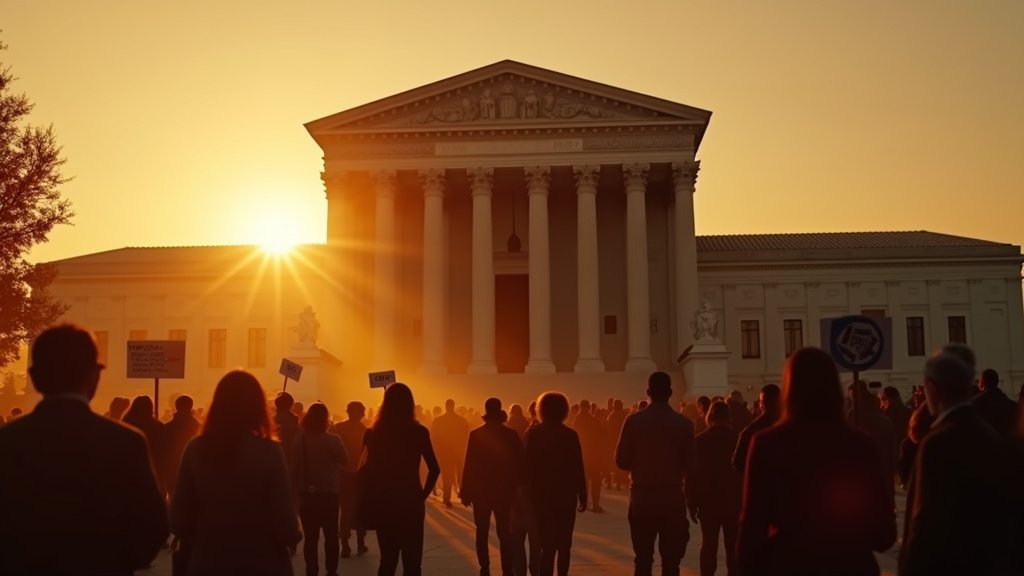
The U.S. Supreme Court has intervened, allowing the **Texas GOP map** to be used for the upcoming 2026 elections amidst ongoing racial gerrymandering claims. This significant Supreme Court redistricting decision pauses a lower court’s ruling that had previously blocked the map, which strongly favors Republicans and aims to increase Republican representation. This development is crucial for the 2026 election impact and has generated considerable buzz within the state.
Background: The “Big Beautiful Map” and the Texas GOP Map
Texas lawmakers passed this new congressional map earlier in 2025, with Governor Greg Abbott signing it into law. President Donald Trump had urged this action as part of a strategy to consolidate Republican strength. The state’s Republican leaders sought to gain seats, and the **Texas GOP map** is specifically designed to add five GOP-friendly districts. Texas Attorney General Ken Paxton championed the map, calling it the “Big Beautiful Map,” and stated it ensures Republican representation, viewing it as a victory against Democratic legal efforts regarding the Texas congressional map.
Lower Court Cites Racial Bias in Texas GOP Map
A lower federal court had found the **Texas GOP map** problematic. A three-judge panel issued a 2-1 decision, ruling that the map likely discriminated based on race, thereby violating the Constitution. The judges cited substantial evidence suggesting race predominated over politics in the map’s creation. This was a significant blow to Texas Republicans who had pushed for this mid-decade redistricting. Voting rights groups had sued, arguing the map diluted minority voting power and constituted racial gerrymandering claims.
Supreme Court’s Rationale for Staying the Texas GOP Map
Texas appealed this decision, and Attorney General Paxton asked the Supreme Court for an emergency stay. The high court granted this request on December 4, 2025, with a 6-3 majority. They cited the timing of elections, as candidate filing was already underway and primary elections are scheduled for March 2026. The Court invoked the “Purcell principle,” a doctrine guiding courts on election changes near deadlines. The majority also noted a “presumption of legislative good faith,” suggesting Texas would likely prevail on appeal. The Court found the lower court may have erred and put the previous injunction on hold, allowing the **Texas GOP map** to stand for now.
Dissenting Voices on the Texas GOP Map
Three liberal justices disagreed with the decision to allow the **Texas GOP map**. Justices Elena Kagan, Sonia Sotomayor, and Ketanji Brown Jackson dissented, arguing the lower court acted properly and that the evidence strongly supported racial gerrymandering claims. Justice Kagan stated the ruling disrespects the lower court’s findings and worries it allows elections under a map violating constitutional strictures. The dissenters felt the majority rushed the decision and questioned the application of the Purcell principle to this specific Texas congressional map.
Implications of the Texas GOP Map for 2026 and Beyond
This ruling significantly impacts the 2026 midterm elections, potentially allowing Republicans in Texas to gain several House seats. This effort is part of a larger national strategy to bolster the GOP’s slim House majority, and the **Texas GOP map**’s use means candidates will file under new lines. This decision could set precedent, influencing other redistricting battles nationwide and being seen as a victory for partisan gerrymandering. The question of racial versus political gerrymandering remains central, with Justice Alito noting the difficulty in distinguishing the two, citing the correlation between race and partisan preference in relation to the **Texas GOP map**.
The National Redistricting Battle and the Texas GOP Map
Texas was not alone in this redistricting effort; Missouri and North Carolina also drew maps favoring Republicans, while California voters approved a map adding Democratic seats, showing a widespread push for partisan advantage. These redistricting changes occur across the country, and legal challenges are ongoing. The Supreme Court’s decision on the **Texas GOP map** may shape future outcomes, suggesting a tolerance for partisan map-drawing that could impact minority representation. The Voting Rights Act’s Section 2 remains a key battleground, its future application uncertain following this development concerning the Texas congressional map.
Future Legal Steps Regarding the Texas GOP Map
The Supreme Court’s order is a temporary stay on the **Texas GOP map** and does not end the legal case; the underlying lawsuit continues. Texas must still defend its map, and the Court will issue a final decision later. This ruling allows elections to proceed as planned for now, providing clarity for candidates and avoiding disruption to the election cycle. However, the core dispute over racial discrimination persists. The ongoing legal fight over the **Texas GOP map** may have lasting effects, highlighting a deep division and the intense political stakes in redistricting, with the buzz around this decision still palpable.