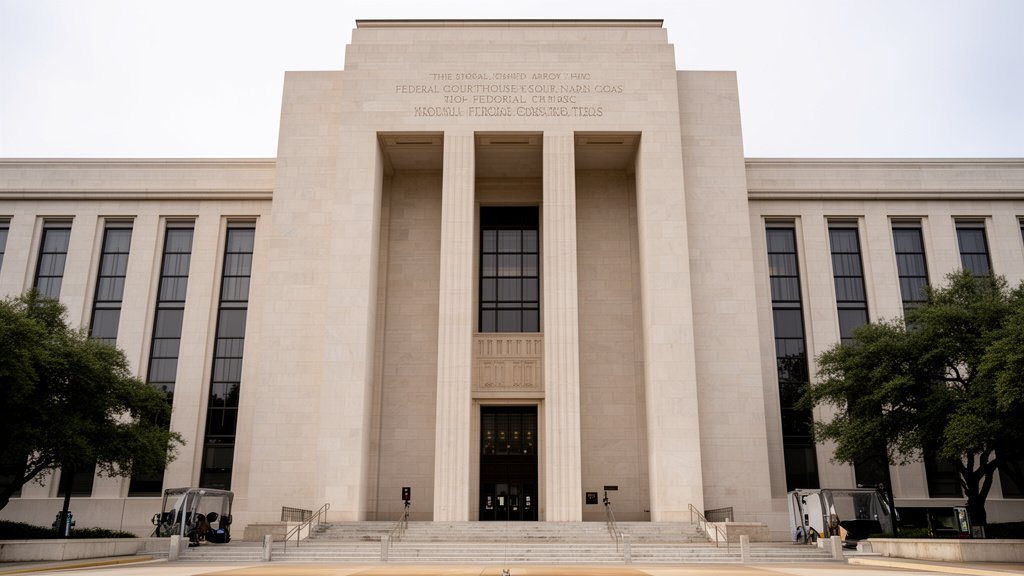

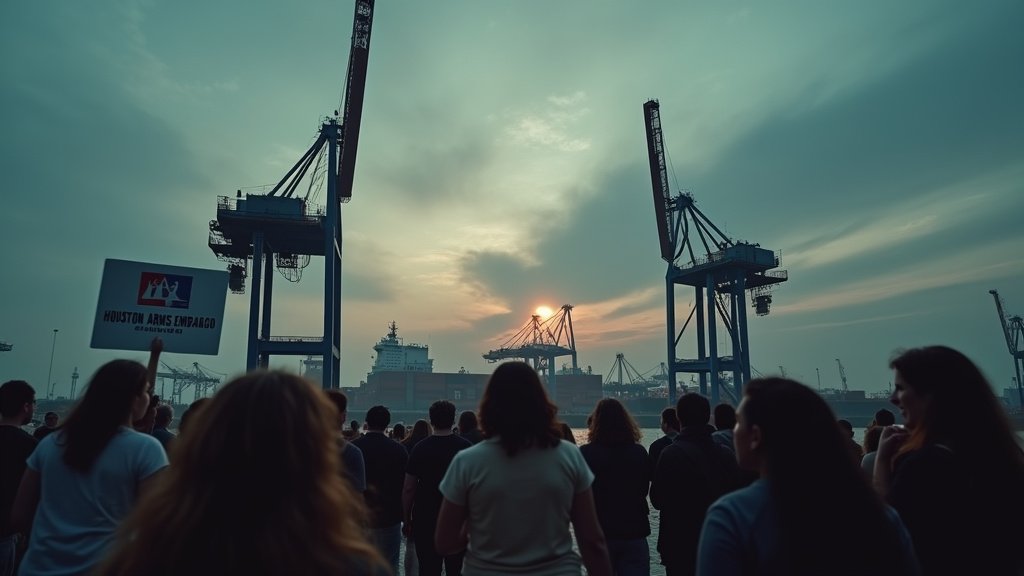
Houston, Texas – November 3, 2025 – A new activist campaign, dubbed the “Houston Arms Embargo Campaign,” was officially launched today in Houston, Texas, marking a significant escalation in efforts to halt the flow of military hardware destined for Israel. The campaign directly targets the Port of Houston, aiming to block any and all military shipments or combat equipment transiting through its facilities en route to Israel.
The launch of the “Houston Arms Embargo Campaign” coincides with the opening of the Houston International Maritime Conference, a major industry event bringing together leaders in maritime trade and supply chain logistics. Organizers have strategically chosen this timing to draw attention to what they describe as the critical role of U.S. logistics infrastructure, and specifically the Port of Houston, in facilitating arms transfers that they allege contribute to violence and human rights abuses.
Core Demands and Rationale
At the heart of the campaign is a demand for an immediate cessation of military shipments via the Port of Houston. Proponents argue that the port has become a pivotal hub for military-related maritime shipping. Their stated goal is to pressure shipping companies, port authorities, and government bodies to re-evaluate and sever ties with the military-industrial complex that arms Israel. The activists assert that stopping these shipments represents a tangible step toward ending U.S. support for Israel and initiating a broader conversation about the ethical responsibilities and legal obligations of the U.S. maritime industry under international law.
“We cannot allow Houston’s infrastructure to be used in the service of genocide,” stated Imran Ghani, Director of CAIR-Houston, a prominent organization supporting the campaign. “It’s time to redirect U.S. funding away from weapons manufacturing and foreign wars, and back toward strengthening our own communities.”
The Port of Houston: A Strategic Logistics Node
The Port of Houston is recognized as one of the busiest waterways in the United States and a crucial gateway for energy products and container trade. Recent reports indicate that the port serves as a significant transit point for components essential to advanced military aircraft, including parts for the F-35 fighter jet. These components reportedly enter the Port of Houston via Maersk container ships before being transported to Lockheed Martin facilities in Fort Worth, Texas, for final assembly. One analysis suggests that in the past five years, the Port of Houston has seen 432 shipments of F-35 parts, with over 40% originating from Israel.
This involvement in the F-35 supply chain, a key component of Israel’s military capabilities, has made the Port of Houston a central focus for activists seeking to disrupt the flow of arms.
A Coalition of Advocacy Groups
The “Houston Arms Embargo Campaign” is not an isolated effort but draws support from a coalition of organizations advocating for Palestinian rights. Groups such as Palestine Solidarity TX, the Palestinian Youth Movement (PYM), and the Council on American-Islamic Relations (CAIR)-Houston have been instrumental in organizing the campaign and its launch events. These organizations have been actively involved in broader movements, including the “Mask Off Maersk” campaign, which targets logistics companies like Maersk for their role in transporting weapons and military components.
Past activism in Texas has seen significant engagement, with demonstrations and protests occurring across the state. In October 2025, for instance, over 20 individuals were arrested in Houston during a protest demanding an end to military cargo shipments to Israel, indicating a sustained commitment from local activists.
Broader Context of Activism and Policy
This initiative emerges amidst a backdrop of heightened global tensions and a surge in pro-Palestine activism. The campaign aligns with calls for a comprehensive arms embargo on Israel, a demand amplified by various international and domestic groups. Similar protests have occurred at ports in New Jersey, Oakland, and across Europe, targeting companies and infrastructure involved in the arms trade. The U.S. government continues to supply military aid and equipment to Israel, a policy that remains a subject of intense debate and protest.
Disrupting the supply chain has become a key strategy for many advocacy groups. By targeting logistics providers and transit points like the Port of Houston, activists aim to make the practical implications of U.S. arms shipments more visible and to impose economic and ethical pressure on corporations and policymakers.
Implications and Future Outlook
The launch of the “Houston Arms Embargo Campaign” signifies a determined effort to leverage the strategic importance of a major U.S. port to influence foreign policy and international relations. By connecting the flow of military hardware through Houston to ongoing conflicts and humanitarian concerns, activists are seeking to spark a critical dialogue within the maritime industry and among the public. The campaign’s success will likely depend on its ability to mobilize sustained public pressure, engage with industry stakeholders during events like the Houston International Maritime Conference, and potentially influence policy decisions regarding arms exports. The news from Texas highlights a growing trend of localized activism aimed at global geopolitical issues, making this a top story for those following international affairs and human rights movements.