
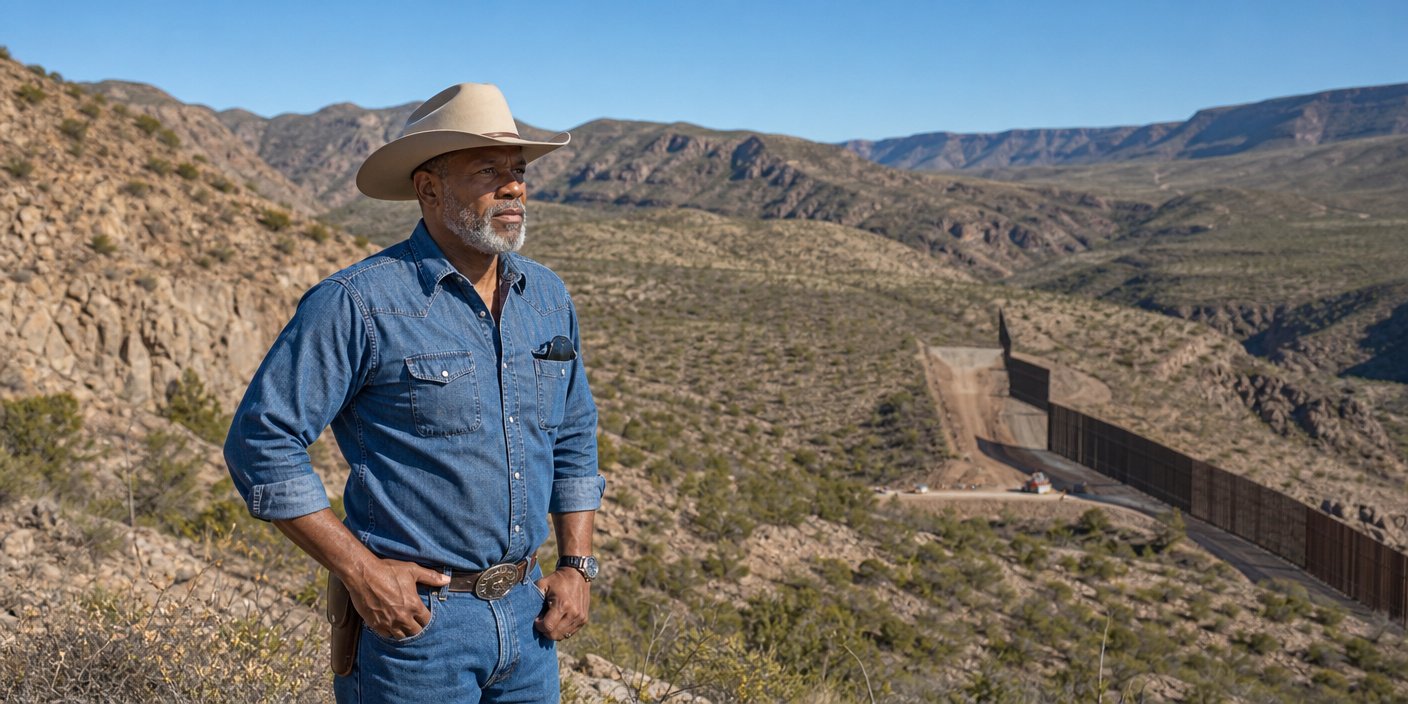
In a significant pivot regarding federal infrastructure policy, the Trump administration has officially paused construction activities on the border wall segment within Big Bend National Park. This development follows a surge of intense bipartisan criticism directed at the project, specifically citing concerns over its environmental impact on protected lands and the logistical realities of building in one of the most remote, rugged regions of the United States. Rodney Scott, the head of Customs and Border Protection (CBP), is currently on-site to conduct a comprehensive “on-the-ground” evaluation, a move seen by observers as a necessary step to reconcile security objectives with the stark realities of the Chihuahuan Desert.
Key Highlights
- Construction Halt: All immediate wall-building operations in the Big Bend National Park sector have been suspended pending a federal review.
- High-Level Oversight: CBP Chief Rodney Scott has arrived at the site to personally oversee the evaluation and assess the viability of the current construction path.
- Environmental & Logistical Hurdles: The pause comes in response to bipartisan pressure highlighting the environmental fragility of the region and the extreme challenges of constructing permanent infrastructure in isolated desert terrain.
- Policy Re-evaluation: The administration is weighing security imperatives against the potential for permanent damage to protected ecological corridors.
The Strategic Pause in Big Bend
The decision to halt construction in Big Bend marks a pivotal moment in the broader narrative of border infrastructure development. Big Bend National Park, known for its sprawling canyons, unique geological formations, and protected river ecosystems, has long been a focal point for those opposing the construction of a physical barrier. The administration’s pivot to an on-the-ground evaluation suggests a recognition of the mounting political and practical pressure. By deploying Rodney Scott to the location, officials are signaling that the decision-making process will shift from abstract planning to concrete, site-specific analysis.
The Environmental and Political Crucible
The border wall project has faced relentless scrutiny from both environmental groups and bipartisan members of Congress. Critics argue that the heavy machinery and permanent structures required for the wall would cause irreversible damage to the fragile Chihuahuan Desert ecosystem. Big Bend is not merely a border zone; it is a critical habitat for diverse species and a protected area under federal land management statutes. The intersection of national security and environmental conservation has placed the CBP in a difficult position, requiring them to justify the permanence of the wall in a location where the natural topography arguably offers a more effective barrier than steel bollards could.
Moreover, the bipartisan nature of the criticism cannot be overstated. Lawmakers from across the political spectrum have expressed concern that the wall’s presence in such a remote sector—where human trafficking and illegal crossings face extreme natural impediments—is a poor allocation of federal resources. The administration’s move to pause indicates that these critiques have reached the upper echelons of the Department of Homeland Security (DHS), forcing a pause to reassess if the projected security benefits truly outweigh the political, environmental, and financial costs of construction in this specific geography.
Logistical Realities of Desert Engineering
Beyond the political and environmental discourse lies the cold reality of civil engineering in Big Bend. The region is characterized by steep, inaccessible canyon walls and shifting riverbeds, presenting a logistical nightmare for construction crews. Maintaining a consistent, contiguous wall structure across this terrain requires significant earthmoving and infrastructure support—roads, access pads, and power lines—that effectively multiply the project’s footprint.
Operational experts have noted that the very elements that make Big Bend so difficult for human traversal—extreme heat, vertical drops, and expansive, isolated desert floor—also render traditional border wall designs less effective or prohibitively expensive to maintain. The current evaluation is expected to focus on whether the terrain itself acts as a sufficient deterrent, and whether the disruption caused by building the wall is a net negative for overall border management efficacy. Scott’s presence is vital here; he is tasked with determining if the engineering resources spent here could be better utilized in more porous, high-traffic corridors where the barrier serves a more immediate security function.
The Future of Border Infrastructure Management
As the evaluation proceeds, the findings will likely influence how the administration approaches infrastructure development in other remote sectors. The Big Bend case study may serve as a precedent, moving toward a more nuanced strategy that evaluates border security on a sector-by-sector basis rather than a blanket approach. If the pause results in a permanent halt or a significant redesign, it would represent a victory for environmental advocates and fiscal conservatives who favor “smart” border security—utilizing technology, surveillance, and personnel over static, expensive, and ecologically disruptive physical walls.
Conversely, if construction resumes, it will likely be with modifications aimed at mitigating environmental impact and improving construction efficiency. The outcome remains in flux, but the suspension of work is a clear signal that the administration is not immune to the complexities of the landscape and the voices calling for a more measured approach to border security.
FAQ: People Also Ask
1. Why was the Big Bend wall construction paused?
The construction was paused due to intense bipartisan criticism regarding environmental impacts and the logistical impracticality of building in such a remote, rugged, and protected desert landscape. The administration is conducting a review to determine the project’s long-term viability.
2. Who is Rodney Scott in this context?
Rodney Scott is the head of U.S. Customs and Border Protection (CBP). He is on-site at Big Bend to lead the “on-the-ground” evaluation, assessing whether the wall project should continue, be modified, or be halted permanently.
3. Is Big Bend National Park protected land?
Yes, Big Bend is a federally protected National Park. The construction of a border wall within or adjacent to park boundaries raises significant environmental and regulatory concerns regarding land use and ecological preservation.
4. What are the main arguments against building the wall in Big Bend?
Critics argue that the wall causes irreversible environmental damage to fragile ecosystems, disrupts local wildlife corridors, is an inefficient use of federal funds given the natural ruggedness of the terrain, and faces significant construction challenges that make the project disproportionately expensive and difficult to maintain.