The Texas Music Revolution documentary, debuting on major streaming platforms tomorrow, offers an unvarnished look at the radio station that changed the trajectory of American roots music. For decades, the mainstream country music machine dictated what listeners could hear, until a small station in North Texas decided to change the channel. This film chronicles the meteoric rise of the Texas Music Revolution (TMR) festival and the pioneering spirit of KHYI-FM 95.3, the station that gave a voice to the independent artists rejected by the commercial industry.
Key Highlights
- The Anti-Playlist Manifesto: How KHYI 95.3 broke the industry standard by refusing to play mainstream commercial country, prioritizing raw, authentic Texas songwriters instead.
- 1997 Origins: An exploration of the humble beginnings of the Texas Music Revolution festival, which has grown into a cornerstone event for independent Americana and Red Dirt artists.
- Genre Defiance: Insights into the economic and cultural impact of the “Texas Country” movement, which has since spawned a multi-million dollar touring industry.
- Streaming Access: The documentary is available for digital purchase and streaming starting tomorrow, providing a rare behind-the-scenes look at the festival’s legendary backstage moments.
Echoes of the Range: How Texas Music Revolution Rewrote the Rules
For anyone who has attended the Texas Music Revolution festival, the experience is more than just a weekend of concerts; it is a pilgrimage. The festival has served as the physical manifestation of a musical philosophy championed by KHYI 95.3, famously known as “The Range.” This documentary does not merely recount the timeline of the festival; it dissects the sociopolitical power struggle between corporate radio conglomerates and the independent artists who refused to compromise their sound to fit a radio-friendly format.
The KHYI Experiment: Radio Without Rules
To understand the magnitude of the Texas Music Revolution, one must first understand the environment of 1990s country radio. During that era, the industry was tightening its grip. Playlists were consolidated, and artists were forced to mold their sound to satisfy demographic studies rather than musical integrity. In the heart of North Texas, the staff at KHYI-FM 95.3 decided to take a gamble. They chose to disregard the national “Top 40” country charts.
Instead, they began spinning the records of local legends—artists like Robert Earl Keen, Pat Green, and eventually a younger generation of songwriters who were finding no support in Nashville. The documentary provides intimate interviews with the station’s original program directors, detailing how they faced immense pressure from labels to “conform or crash.” Their refusal to bend created a unique economic ecosystem where an artist didn’t need a major label deal to sell out venues. They just needed airplay on The Range.
Building the Festival Legacy
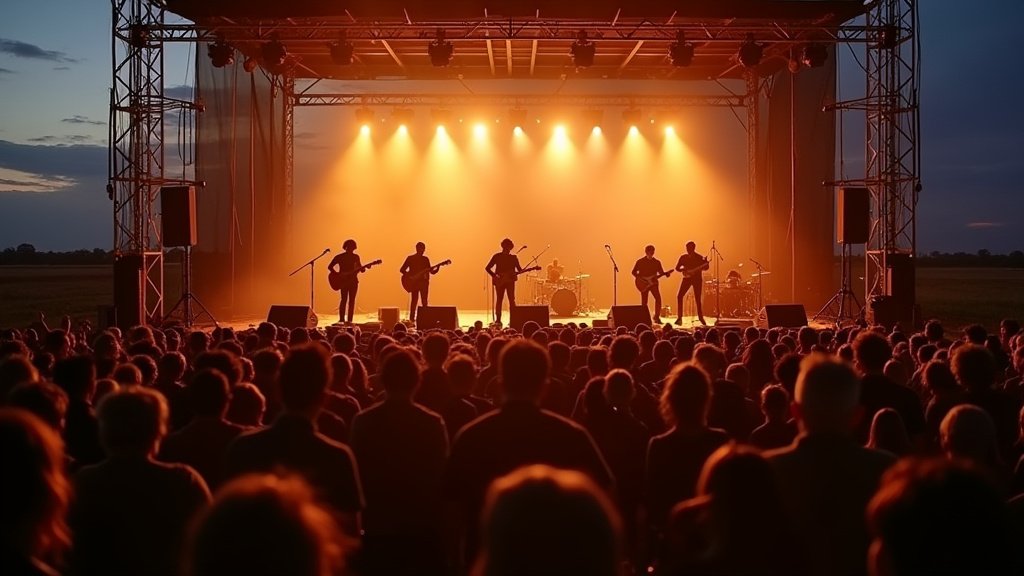
Launched in 1997, the Texas Music Revolution festival began as a relatively modest gathering. However, as the documentary illustrates, it quickly became the cultural epicenter for the “Red Dirt” and “Texas Country” subgenres. The film utilizes archival footage to capture the early years of the festival, highlighting the transition from muddy fields and flatbed trailers to the large-scale production it has become today.
What makes the film compelling is its focus on the “festival as an anchor.” It documents how TMR provided a platform for artists to build a direct relationship with their audience. By stripping away the corporate middleman, the festival created a sustainable business model for musicians who would otherwise have been pushed to the fringes of the industry. The documentary tracks the growth of the festival’s attendance numbers, which grew from hundreds to tens of thousands, serving as an empirical demonstration of the audience’s hunger for authentic storytelling over formulaic pop-country.
The Shift in Power
Perhaps the most fascinating segment of the film involves the economic analysis of the Texas music scene. The documentary features data and testimonials regarding how this independent model influenced the broader music industry. By creating a self-sustaining “touring circuit” in Texas, KHYI and TMR proved that an artist could build a lucrative career without the traditional Nashville infrastructure.
Interviews with industry analysts in the film suggest that this model eventually forced mainstream labels to pay attention. The “Texas Sound”—often characterized by fiddle, steel guitar, and non-conformist lyrical themes—became a marketable commodity. The documentary suggests that the mainstream country industry began “buying back” the sound they once ignored, leading to a complex dynamic where independent spirit meets corporate capitalization.
A Visual and Sonic Time Capsule
For fans, the film acts as a time capsule. It captures the essence of the Texas independent scene, showcasing iconic performances and the intimate atmosphere of the backstage tents where songwriters swapped stories and songs. The film emphasizes that the “Revolution” wasn’t just about music; it was about community. It was about creating a space where the listener was treated as a fan, not a consumer.
As the documentary concludes, it pivots toward the future. It asks the audience to consider the sustainability of the independent model in the age of streaming algorithms. Can the “Radio Rebel” spirit of the 90s survive in an era dominated by Spotify and TikTok? The film doesn’t provide a simple answer, but it makes a compelling case that as long as there is a demand for genuine human connection, the Texas Music Revolution will continue to evolve.
FAQ: People Also Ask
Q: Where can I stream the Texas Music Revolution documentary?
A: The documentary is scheduled for release on all major digital platforms starting tomorrow. Viewers can purchase or rent the film via Amazon Prime Video, Apple TV, and select independent streaming services specializing in music history documentaries. Check your preferred platform’s “New Releases” tab for the direct link.
Q: What artists are featured in the documentary?
A: The film features archival footage and new interviews with a wide array of Texas-based talent, including key figures who played the festival in its early years, along with the DJs and programmers from KHYI 95.3 who broke the mainstream silence.
Q: Does the documentary cover the full history of the festival?
A: Yes, the film spans from the festival’s inception in 1997 through its growth into one of the largest independent music gatherings in the state. It covers the logistical challenges, the cultural clashes, and the triumphant moments that defined the event’s history.
Q: Is this film only for country music fans?
A: While the film is rooted in the Texas country and Americana scene, it serves as a broader case study on the independent music industry. Anyone interested in media history, the radio business, or the struggle of independent creators against corporate monopolies will find the documentary relevant.