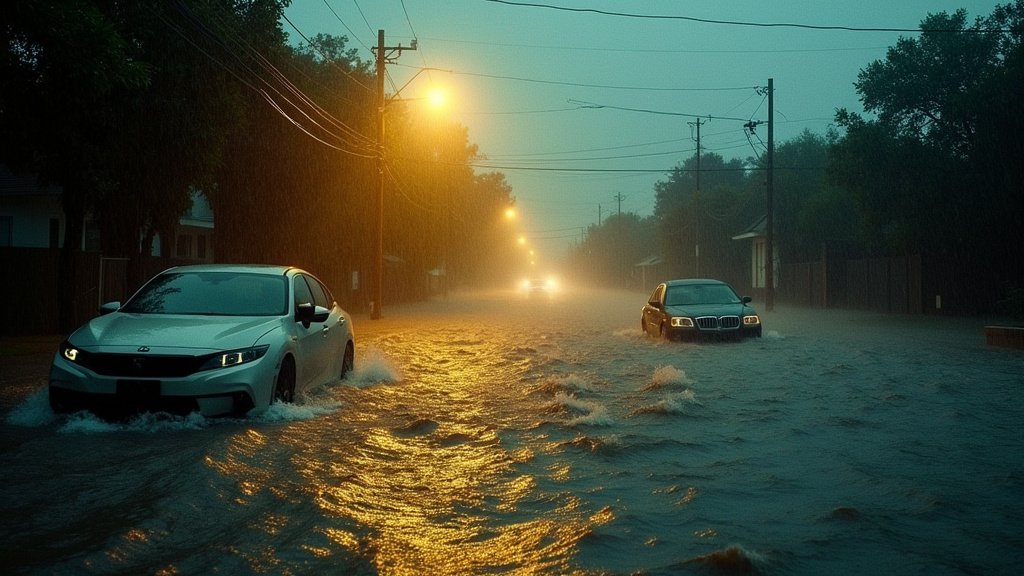
Heavy rainfall has unleashed significant flooding across Texas, prompting emergency responses and widespread disruptions. Residents in several major urban centers are contending with inundated roadways, submerged vehicles, and power outages as the relentless downpour continues. Authorities are urging extreme caution and advising against non-essential travel as the situation rapidly evolves.
- Multiple Texas cities are experiencing severe flash flooding due to intense rainfall.
- Emergency services are actively responding to calls for assistance and rescues.
- Major roadways have been closed, significantly impacting transportation and daily commutes.
- Residents are advised to stay informed and avoid flooded areas.
Texas Under Siege: A Deluge of Record Proportions
Texas is currently battling a severe weather event characterized by torrential downpours and widespread flash flooding, particularly impacting its most populous urban areas. Cities like Houston, Austin, and Dallas have become epicenters of the crisis, with rainfall rates exceeding historical averages in many locations. The sheer volume of water has overwhelmed drainage systems, leading to rapid inundation of streets, highways, and even residential areas. The National Weather Service has issued numerous flood warnings and advisories, underscoring the immediate danger posed by the relentless precipitation. Emergency management agencies are stretched thin, coordinating rescue operations and managing public safety in the face of escalating conditions. The economic and social impact is already substantial, with businesses forced to close and commuters facing perilous journeys or complete immobilization. The situation is being closely monitored by state and local officials, with contingency plans being activated to manage the unfolding crisis.
The Fury of the Sky: Rainfall Intensifies
The meteorological conditions that have led to this catastrophic flooding are complex. A slow-moving weather system, drawing in significant moisture from the Gulf of Mexico, has stalled over the state, delivering a sustained barrage of heavy rain. Radar estimates indicate that some areas have received upwards of ten inches of rain in a 24-hour period, a level that far exceeds the capacity of typical urban drainage infrastructure. This intense precipitation is not only causing surface flooding but is also raising concerns about the saturation of soil, increasing the risk of landslides in more vulnerable terrain, and threatening the integrity of levees and flood control structures. Meteorologists are closely observing the system’s trajectory, with the possibility of continued rainfall over the next several days, exacerbating the already critical situation.
Navigating the Deluge: Impact on Texans
The immediate impact on Texans has been profound. Emergency responders, including fire departments and police, are engaged in numerous water rescues, extracting individuals and families trapped by rising floodwaters. Numerous vehicles have been reported submerged, leading to traffic chaos and posing a severe risk to motorists. Public transportation services have been curtailed or suspended in affected areas, compounding the disruption. Many residents are facing power outages as substations and power lines are compromised by the flooding. The Texas Department of Transportation has reported extensive road closures, effectively cutting off travel between various parts of the cities and surrounding regions. The psychological toll on residents experiencing such a destructive event is also significant, with many facing property damage and displacement.
Historical Parallels and Future Concerns
While Texas is no stranger to severe weather, the intensity and geographical spread of this particular flooding event are notable. Similar widespread flooding events have occurred in the state’s history, notably during hurricane seasons, but this recent deluge driven by a persistent low-pressure system presents its own set of challenges. Experts are increasingly linking the severity of such weather events to broader climate patterns, suggesting a potential increase in the frequency and intensity of extreme rainfall due to global warming. This raises long-term concerns about the resilience of urban infrastructure in Texas and the need for more robust flood mitigation strategies. Planning for future development must increasingly incorporate these climate realities to safeguard communities.
FAQ: People Also Ask
What should I do if my car is caught in floodwaters?
If your vehicle is caught in floodwaters, it is crucial to remain calm. If the water is not rising rapidly and you can safely exit, abandon the vehicle and seek higher ground immediately. If the water is rising rapidly and you are unable to exit, stay in your car, turn off the engine, and if possible, conserve your phone battery to call for help. Do not attempt to drive through fast-moving water, as even shallow water can sweep a vehicle away. The general rule is to turn around, don’t drown.
How can I stay informed about flood warnings and safety information?
Stay informed by monitoring local news channels, listening to NOAA Weather Radio, and following official social media accounts of emergency management agencies and the National Weather Service. Many emergency services also utilize alert systems that can send text messages or app notifications to your phone. Regularly checking official government websites for updates is also recommended.
What are the risks associated with floodwaters?
Floodwaters pose multiple risks, including drowning, electrocution from submerged power lines, exposure to hazardous materials (sewage, chemicals), contaminated drinking water, and the potential for disease transmission. They can also conceal dangerous debris and create unstable ground, leading to structural collapses.
How does Texas prepare for severe flooding events?
Texas employs a multi-faceted approach to flood preparedness, including the development of flood control infrastructure like dams and levees, regular maintenance of drainage systems, and the establishment of early warning systems. State and local emergency management agencies conduct drills and maintain response plans. Public education campaigns also aim to inform residents about risks and necessary precautions. However, the scale of recent events often tests the limits of these preparations.
What is a flash flood and why is it so dangerous?
A flash flood is a rapid and extreme flood that occurs within a short period, typically less than six hours, often in low-lying areas. They are extremely dangerous because they develop with little to no warning, possess immense destructive power due to the speed and volume of water, and can sweep away vehicles, destroy buildings, and pose a lethal threat to life. The suddenness and force make them one of nature’s most perilous phenomena.