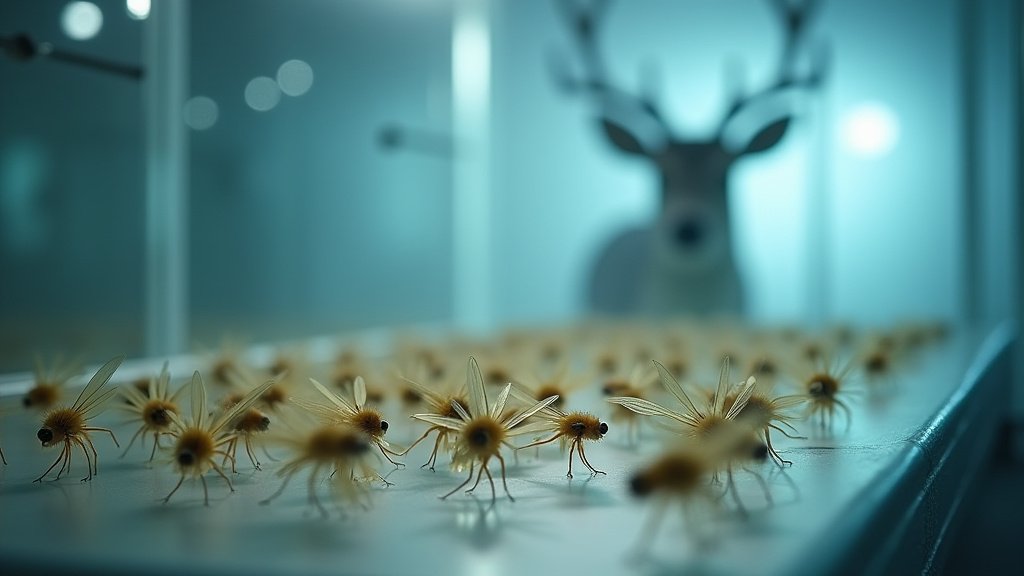
Texas Governor Greg Abbott has declared a state disaster, expanding the emergency declaration to combat the confirmed second case of the New World screwworm affecting a white-tailed deer in South Texas. The initial case was identified in late February, prompting immediate action from state and federal agencies.
Key Highlights:
- A second case of New World screwworm has been confirmed in a white-tailed deer in South Texas.
- Governor Greg Abbott has expanded a state disaster declaration to address the escalating threat.
- The Texas Animal Health Commission (TAHC) and USDA are collaborating on containment and eradication efforts.
- This marks the first detection of the parasite in Texas since 1988.
- Eradication efforts involve sterile insect release and public awareness campaigns.
Texas Confronts Screwworm Infestation: A Growing Concern
The reappearance of the New World screwworm (Cochliomyia hominivorax) in Texas after a 36-year absence poses a significant threat to livestock, wildlife, and potentially human health. The initial confirmed case in February in La Joya, Texas, sent ripples of concern through agricultural and wildlife management circles. The subsequent confirmation of a second case underscores the urgency of the situation and has led Governor Abbott to take decisive action by expanding the state’s disaster declaration. This declaration mobilizes additional resources and streamlines coordination between state agencies, federal partners, and local entities.
The Parasite and Its Impact
The New World screwworm is a parasitic fly whose larvae infest the wounds of warm-blooded animals, feeding on living flesh. This can lead to severe tissue damage, secondary infections, and, if left untreated, death. For decades, the United States, with the help of the USDA’s screwworm eradication program, had kept this pest at bay. The program, which utilizes sterile insect technique (SIT) to disrupt the reproductive cycle of the fly, was highly successful. However, the recent detections highlight the persistent risk of reintroduction, likely through animal movement from regions where the screwworm is endemic.
State and Federal Response
The Texas Animal Health Commission (TAHC), in conjunction with the United States Department of Agriculture (USDA) Animal and Plant Health Inspection Service (APHIS), is leading the charge in containment and eradication. Their strategy centers on a multi-pronged approach:
- Surveillance: Enhanced monitoring of livestock and wildlife populations, particularly in areas surrounding the confirmed cases, to detect any further spread.
- Sterile Insect Release: Utilizing the SIT, where millions of sterilized male screwworm flies are mass-reared and released into affected areas. These sterile males mate with wild females, but their offspring are non-viable, leading to a rapid decline in the wild population.
- Quarantine and Treatment: Implementing measures to prevent the movement of potentially infested animals and providing guidance on wound treatment and animal care to minimize attraction to the screwworm fly.
- Public Awareness: Educating ranchers, veterinarians, and the public on recognizing the signs of screwworm infestation and reporting suspected cases immediately.
The expanded disaster declaration by Governor Abbott is crucial for providing the necessary legal and financial framework to support these extensive efforts. It allows for the swift deployment of personnel, equipment, and funding as required by the evolving situation.
Historical Context and Prevention
The last significant outbreak of screwworm in the United States occurred in 1987-1988, primarily in the Southwest. The successful eradication campaign that followed was a testament to effective interagency cooperation and the power of the sterile insect technique. However, the parasite remains a persistent problem in Central and South America. The threat of reintroduction is a constant concern, particularly given the volume of animal trade and movement across borders. This event serves as a stark reminder of the ongoing need for robust animal health surveillance and preparedness programs.
FAQ: People Also Ask
What is the New World screwworm?
The New World screwworm is a species of fly whose larvae are parasitic and feed on the living flesh of warm-blooded animals, including livestock, wildlife, and occasionally humans. It causes significant tissue damage and can be fatal if left untreated.
How is screwworm detected?
Detection involves close examination of animal wounds. Signs of infestation include visible maggots in a wound, excessive tissue damage, and distressed animals. Ranchers and veterinarians are trained to identify these symptoms and report any suspected cases to authorities like the TAHC or USDA APHIS.
What is the sterile insect technique (SIT)?
SIT is an environmentally friendly pest control method. It involves rearing large numbers of insects in a laboratory, sterilizing them (usually with radiation), and then releasing them into the wild. When these sterile males mate with wild females, no offspring are produced, which suppresses the wild pest population.
Why is the screwworm a threat to Texas?
Texas has a large population of livestock, including cattle and sheep, as well as abundant wildlife like white-tailed deer. Screwworm infestations can cause severe economic losses for ranchers due to animal deaths, reduced productivity, and treatment costs. It also poses a risk to wildlife populations and biodiversity.
What should Texas residents do if they suspect a screwworm infestation?
Residents, particularly those involved in animal husbandry, should remain vigilant. If you notice any unexplained wounds on animals with signs of infestation, such as maggots, you should immediately contact the Texas Animal Health Commission (TAHC) or the USDA APHIS.