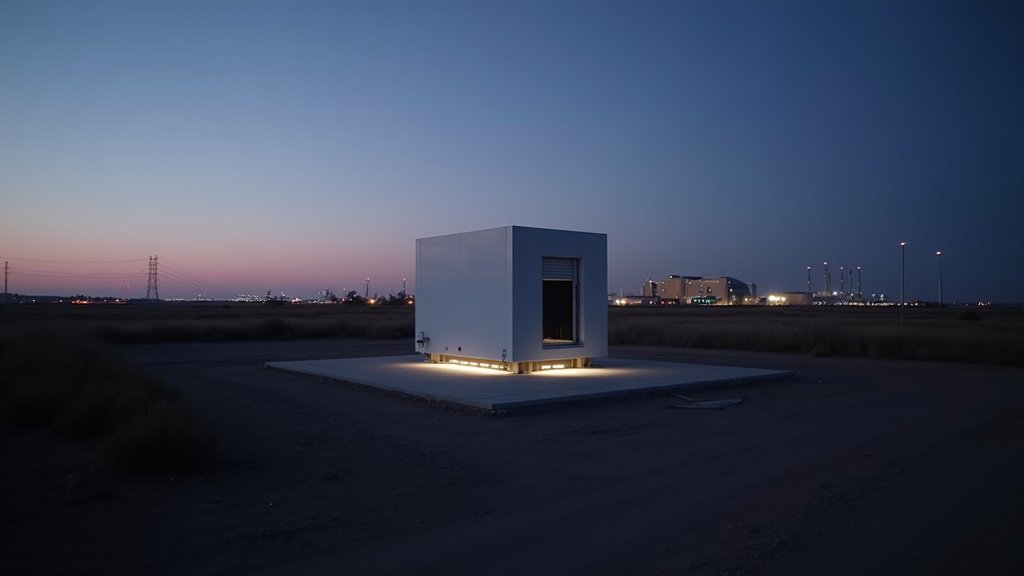
The Texas Microreactor Pilot is a groundbreaking initiative responding to the state’s rapidly escalating energy demands. With electricity needs climbing due to new data centers and increasing industrial loads, ERCOT projects significant demand growth, potentially impacting grid stability. In response to these pressing Texas energy demand challenges, the Texas A&M University System is partnering with Last Energy to launch a pivotal microreactor pilot project. This important demonstration will be situated at the Texas A&M–RELLIS campus, marking a significant stride towards future energy solutions.
The Texas Microreactor Pilot Partnership and Project
Last Energy, an Austin-based innovator in micro-nuclear technology, is collaborating with the vast Texas A&M University System. Together, they will rigorously test a novel reactor design. The Texas Microreactor Pilot will feature Last Energy’s PWR-5 microreactor, capable of producing 5 megawatts. This unit is a scaled-down iteration of their commercial PWR-20. This project represents Last Energy’s inaugural U.S. deployment, with testing scheduled to commence next summer. The initial phase will focus on demonstrating safe, low-power operations, followed by later phases designed to test electricity generation for the grid, a crucial aspect of the microreactor pilot project.
RELLIS Campus: A Hub for Innovation and the Texas Microreactor Pilot
The RELLIS campus serves as the ideal location for this crucial project. It is a renowned applied research hub. RELLIS, embodying Respect, Excellence, Leadership, Loyalty, Integrity, and Selfless Service, actively fosters innovation and supports advanced manufacturing, aerospace, and semiconductor technologies. Its mission is to be a collaborative research center. Local leaders view the Texas Microreactor Pilot as vital, building upon Bryan’s established clean energy focus and extending the region’s research influence. The campus’s infrastructure is well-suited for this advanced nuclear power demonstration.
Driving Forces: Texas Power Demand and the Texas Microreactor Pilot
Texas’s energy requirements are immense, fueled by sustained population growth and the rapid expansion of power-hungry industries like data centers. ERCOT, the state’s grid operator, forecasts this trend, with some reports suggesting demand could double by 2030. ERCOT’s own predictions indicate that demand may outstrip supply as early as the summer of 2026. This looming potential deficit underscores the urgent need for new energy capacity. Microreactors, such as the one being tested in the Texas Microreactor Pilot, offer a promising path to augmenting supply. Last Energy is also pursuing other significant projects in Texas, including plans for 30 commercial microreactors in Haskell County, specifically targeting data center energy needs. This advancement is a trending topic within energy circles, highlighting the significance of the Texas Microreactor Pilot.
Advanced Technology and Support for the Texas Microreactor Pilot
Last Energy has made substantial preparations for the Texas Microreactor Pilot. They have secured a land lease at RELLIS and procured the necessary fuel for the reactor. A critical agreement is in place with the U.S. Department of Energy, as this project was selected for the DOE’s New Reactor Pilot Program, which facilitates an accelerated licensing pathway. The pilot is privately financed, and Last Energy CEO Bret Kugelmass expresses optimism, calling it a step towards the “next Atomic Era” and believing the conditions are ideal for demonstration. Robert Albritton of the Texas A&M Board of Regents concurs, deeming it a “meaningful step forward.” Governor Greg Abbott champions advanced Nuclear power Texas initiatives, recognizing their essential role in securing the state’s grid. This endeavor is a featured development, showcasing the potential of the Texas Microreactor Pilot.
Broader Implications for Energy in Texas and Beyond
The Texas Microreactor Pilot transcends a mere testing phase; it signifies a concerted push for energy innovation aimed at delivering reliable, clean power. Nuclear energy is increasingly viewed as crucial for meeting future demand and supporting emerging technologies, especially the immense power requirements of artificial intelligence and data infrastructure. The RELLIS campus, as an ideal location for advanced testing, coupled with Texas A&M’s strong nuclear engineering program, underscores the university system’s commitment to energy solutions. The exploration of partnerships with other reactor developers positions Texas as a leader, potentially heralding a new era for Nuclear power Texas. This initiative aligns seamlessly with Texas’s goal of energy independence and demonstrates a profound commitment to future prosperity, making the Texas Microreactor Pilot a significant development for the state’s energy landscape.