
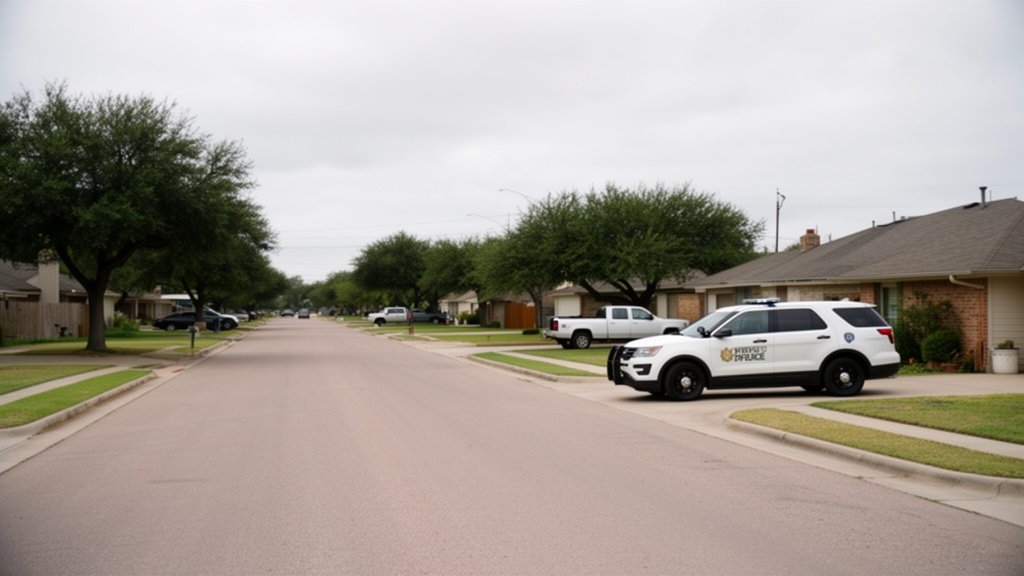
The Department of Homeland Security is currently reviewing an incident in Texas involving an Immigration and Customs Enforcement (ICE) agent who struck a man with a vehicle during an active pursuit. The pedestrian, identified as Parra-Hernandez, sustained a broken leg and was rushed to a local hospital following the collision. As details emerge, federal oversight bodies are focusing on whether departmental policies were followed during the operation, bringing the balance between enforcement necessity and public safety under intense scrutiny.
Key Highlights
- Incident Confirmation: An ICE agent, while engaged in a pursuit, struck a civilian, Parra-Hernandez, resulting in a fractured leg.
- Medical Status: The victim is currently receiving care at a hospital following the collision during the ICE operation.
- Regulatory Oversight: The incident has triggered a formal investigation, likely involving the Department of Homeland Security Office of Inspector General (OIG), to determine policy compliance.
- Operational Debate: The event has reignited local conversations regarding the safety protocols surrounding federal agency vehicle pursuits in residential or public areas.
Accountability and Oversight: The Investigation into the Texas Pursuit
The incident involving Parra-Hernandez has thrust the complexities of federal enforcement operations in Texas into the national spotlight. While ICE agents are authorized to conduct operations in support of immigration enforcement, the methods employed during pursuits—particularly those occurring in busy public spaces or residential neighborhoods—are strictly governed by federal safety guidelines. The primary question now facing officials is whether the agent’s actions aligned with the mandatory ‘due regard’ standard required during any vehicle-involved law enforcement activity.
The Sequence of Events: From Operation to Injury
Reports indicate that the collision occurred during the course of an active ICE-led operation. While specific operational details—such as the nature of the suspect being pursued or the location—remain fluid as the investigation proceeds, the critical juncture occurred when the agent’s vehicle made physical contact with Parra-Hernandez. Law enforcement agencies typically employ strict ‘pursuit policies’ that dictate when an agent can initiate or continue a chase based on the danger posed to the public. The fact that this specific encounter resulted in a broken leg for a civilian suggests that the ‘risk-versus-reward’ assessment protocols are central to the current investigation.
Navigating Legal and Departmental Accountability
When a federal officer is involved in an incident resulting in injury, the internal review process is multifaceted. Beyond local police reports, the ICE Office of Professional Responsibility and potentially the DHS OIG are tasked with determining if the agent acted within the scope of their employment and federal guidelines. Legal experts suggest that this case could hinge on whether the agent was acting in good faith or if the pursuit crossed the line into negligence.
Furthermore, the victim, Parra-Hernandez, now becomes a central figure in a civil liability landscape. Victims of federal vehicle accidents often have specific, albeit complex, avenues for seeking redress under the Federal Tort Claims Act (FTCA). This legal framework allows individuals to sue the federal government for injuries caused by the negligent acts of federal employees acting within the scope of their employment.
Broader Implications for Border Enforcement Tactics
This incident is not occurring in a vacuum. It underscores the broader, systemic tension surrounding federal enforcement in Texas. Secondary angles for this story include the evolution of inter-agency cooperation. Often, ICE operations occur with the knowledge, if not the direct participation, of local law enforcement. A major point of contention is whether federal pursuit policies adequately account for local traffic conditions and pedestrian density.
Secondly, the technological aspect of these pursuits is evolving. There is growing pressure for agencies to utilize less kinetic intervention methods, such as disabling devices or advanced tracking, rather than relying on vehicle maneuvers that inherently pose a threat to bystanders.
Lastly, the role of community transparency is paramount. The speed and thoroughness with which the OIG releases findings on this incident will either bolster or further erode public trust in federal enforcement activities in the region. As the investigation moves forward, the focus remains on whether this was an avoidable tragedy born of policy failure or an unfortunate byproduct of high-stakes enforcement.